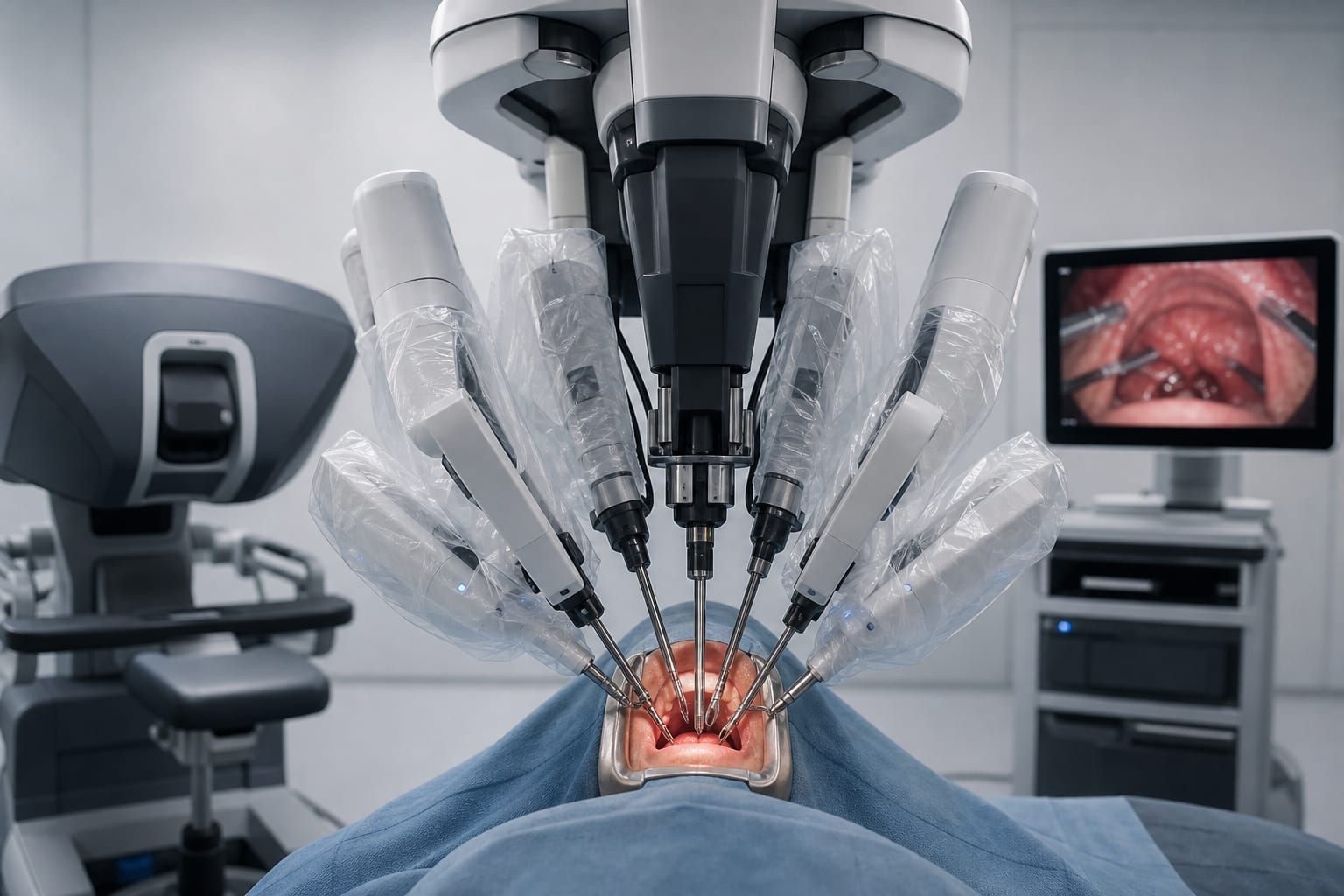
To characterize global practice patterns in transoral robotic surgery (TORS), focusing on differences across oropharyngeal subsites.
Approach:
Survey Design: A 40-item international web-based survey was conducted among TORS-experienced head and neck surgeons from April to June 2024.
Data Analysis: Descriptive statistics summarized responses, with comparisons made using χ² or Fisher’s exact tests and McNemar’s test for paired binary data.
Key Findings:
Sixty-nine surgeons from 22 countries completed the survey, with a response rate of 37.9%.
About 60% of surgeons routinely performed prophylactic neck vessel ligation for both base of tongue and lateral oropharyngectomy.
Lingual artery ligation was significantly more frequent in base of tongue procedures than in lateral oropharyngectomy (p < 0.001).
Routine tracheotomy was uncommon (4-9%) and reserved for high-risk cases.
Postoperative care varied, with most patients hospitalized for ≥4 days and 58-64% requiring nasogastric tubes.
Local flap reconstruction was more common after lateral oropharyngectomy than base of tongue resection.
Interpretation:
The findings indicate considerable variability in perioperative and intraoperative management strategies for oropharyngeal TORS, reflecting a lack of standardized protocols.
Limitations:
The survey was conducted in English, which may limit participation from non-English speaking surgeons.
Responses may be influenced by the surgeons' individual experiences and institutional practices.
Conclusion:
The study highlights the need for consensus-building efforts to harmonize TORS patient management due to observed differences in practices.