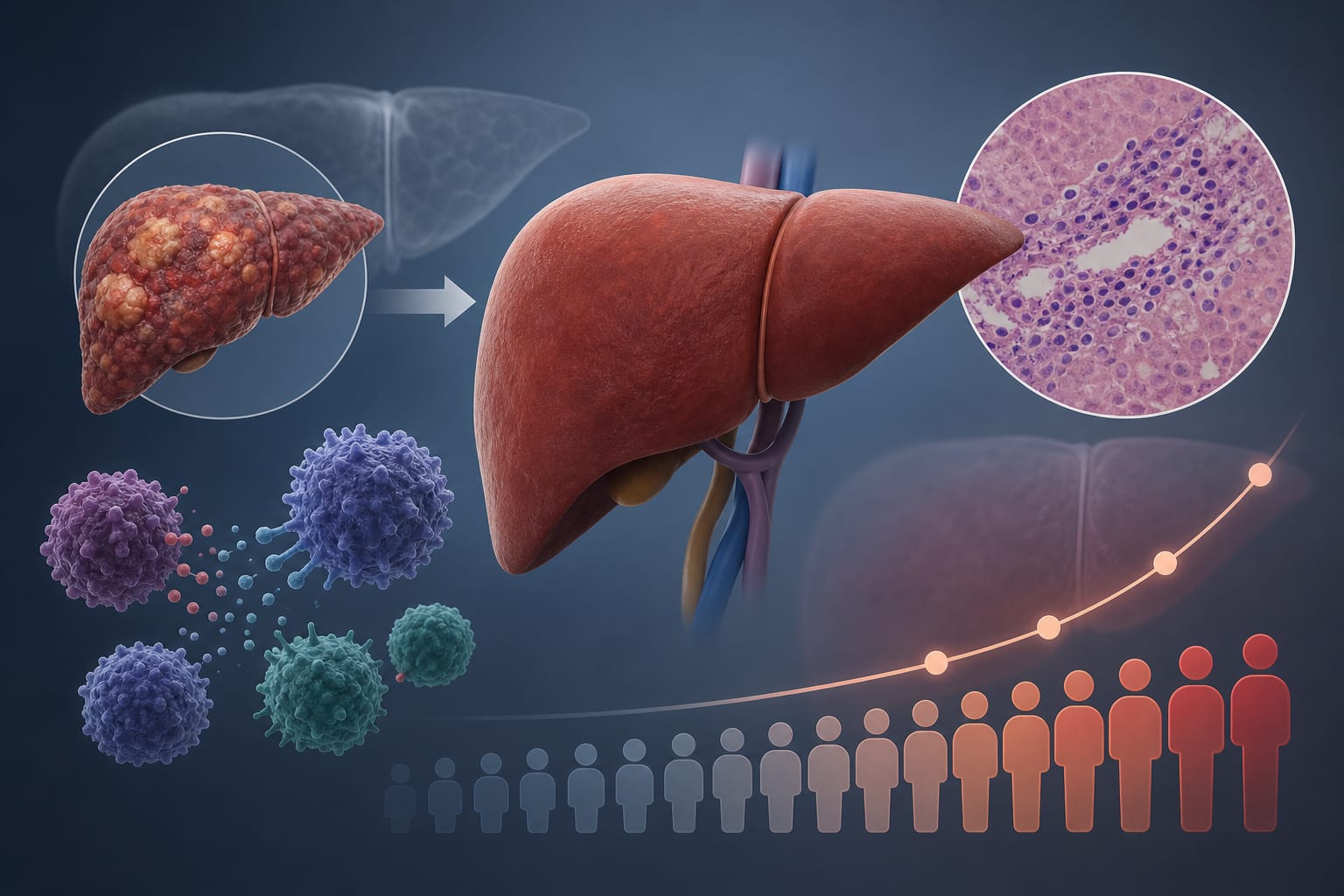
To investigate the association between immune-related adverse events (irAEs) and the risk of allograft rejection in hepatocellular carcinoma (HCC) patients receiving immune checkpoint inhibitors (ICIs) prior to liver transplantation (LT), highlighting the significance of this association in improving patient outcomes.
Key Findings:
IrAEs are a potent predictor of allograft rejection in HCC patients treated with pretransplant ICIs, with implications for clinical management.
A predictive model incorporating irAEs, younger recipient age, and short washout periods demonstrated good discriminatory performance, aiding in risk stratification.
IrAEs are associated with heightened immune activation, reflected by increased peripheral immune cells and elevated proinflammatory factors.
Interpretation:
Identifying irAEs as a potential biomarker may enhance patient selection and risk stratification before liver transplantation, guiding individualized treatment strategies and potentially influencing clinical guidelines.
Limitations:
The study is retrospective and may be subject to biases inherent in such designs.
The predictive model requires validation in larger, independent cohorts.
Findings may not be generalizable to all populations due to the specific patient selection criteria.
Conclusion:
IrAEs can serve as significant predictors of allograft rejection in HCC patients post-ICI therapy, suggesting the need for tailored immunosuppressive strategies to improve graft outcomes and highlighting the importance of further research in this area.
Verve reports phase 1 data for one-time PCSK9 base editing; plus: neuroprotective gene therapy, non-viral DNA delivery, tumour-activated CAR-T, and in vivo CAR-M