Integrating Mendelian randomization, machine learning and retrospective clinical data: an exploratory analysis of the cross-disease association between CHB and PD, with a focus on eosinophil alterations - Summary - MDSpire
Advertisement
Integrating Mendelian randomization, machine learning and retrospective clinical data: an exploratory analysis of the cross-disease association between CHB and PD, with a focus on eosinophil alterations
To explore the potential associations and related molecular signatures between chronic hepatitis B (CHB) and Parkinson's disease (PD) using an integrated approach.
Approach:
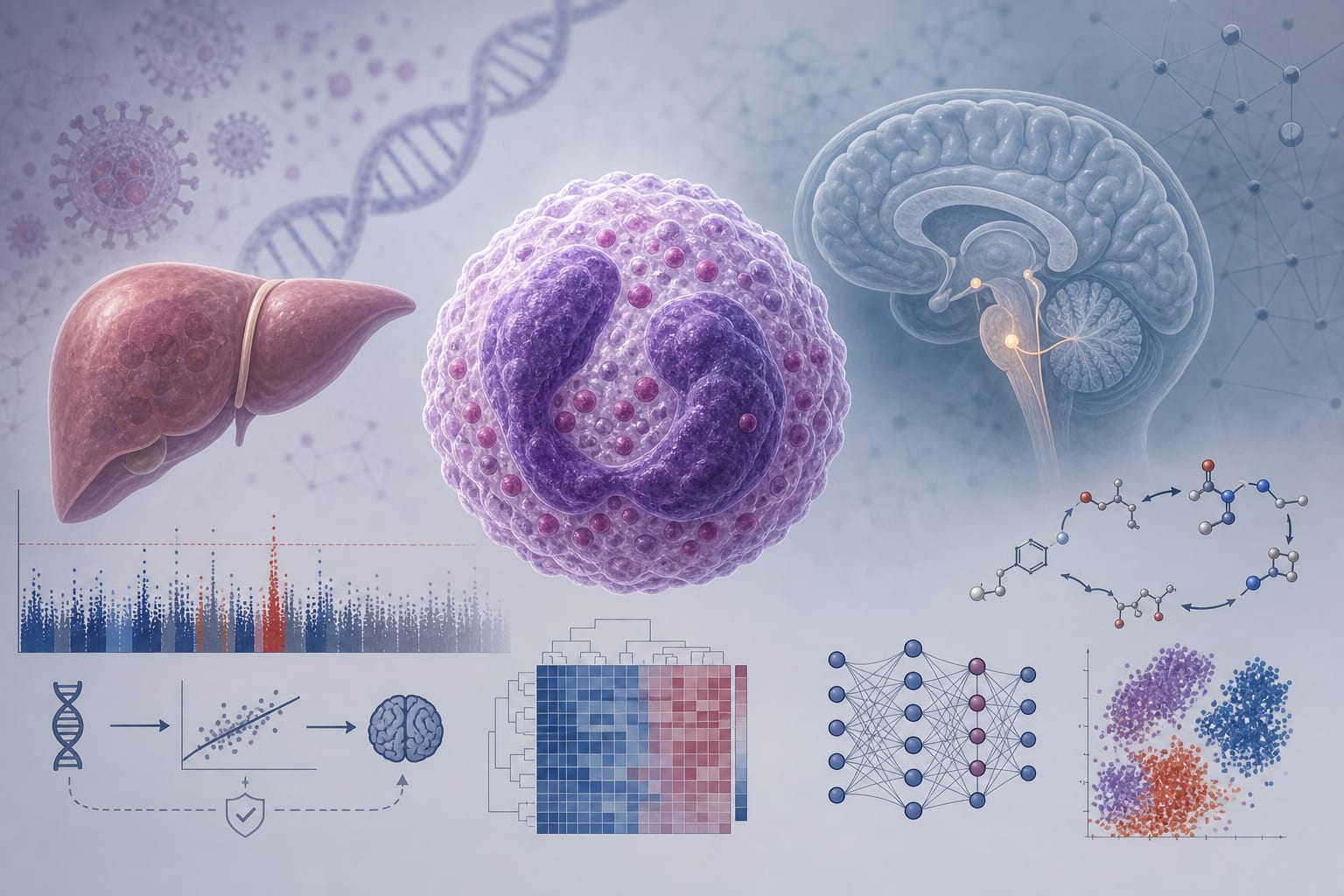
Mendelian Randomization: Two-sample Mendelian randomization (MR) was employed to assess the genetic correlation between CHB and PD.
Multi-Omics Analysis: Integration of transcriptomic data, metabolomic profiles, and GWAS data to identify cross-disease genes and pathways.
Machine Learning: Machine learning-driven gene screening was utilized to prioritize genes linked to both conditions.
Immune Infiltration Profiling: Analysis of immune cell profiles, particularly eosinophils, in relation to CHB and PD.
Retrospective Clinical Validation: Clinical validation was conducted in two independent cohorts to support findings.
Key Findings:
MR analysis indicated a genetically predicted inverse association between susceptibility to CHB and PD risk (OR = 0.82–0.94, p < 0.05).
RTN3 and MAP4K3 were identified as priority cross-disease genes linking CHB and PD.
Phenylalanine metabolism was highlighted as a dysregulated pathway, with elevated levels in CHB and lower levels in PD.
Eosinophil levels were found to decline in CHB but rise in PD, suggesting a potential link to the inverse correlation between the two diseases.
Interpretation:
Limitations:
The study relies on retrospective data, which may introduce biases.
The findings may not be generalizable to all populations due to the specific cohorts used.