Conexiant’s news site is now MDSpire News. Learn more
Advertisement
Significant Rise in Diabetic Ketoacidosis Incidence Linked to Slight Increase in HbA1c Levels at Type 1 Diabetes Diagnosis Among Swedish Pediatric Patients
To analyze the rising incidence of diabetic ketoacidosis (DKA) at diagnosis of type 1 diabetes (T1D) among Swedish children and its association with HbA1c levels.
Approach:
Data Analysis: Utilized data from the Swediabkids/National Diabetes Register from 2000 to 2025 to assess trends in DKA incidence and HbA1c levels at T1D diagnosis.
Cross-Sectional Analysis: Conducted a cross-sectional analysis to explore the relationship between healthcare personnel (HCP) delayed diagnosis and DKA risk.
Key Findings:
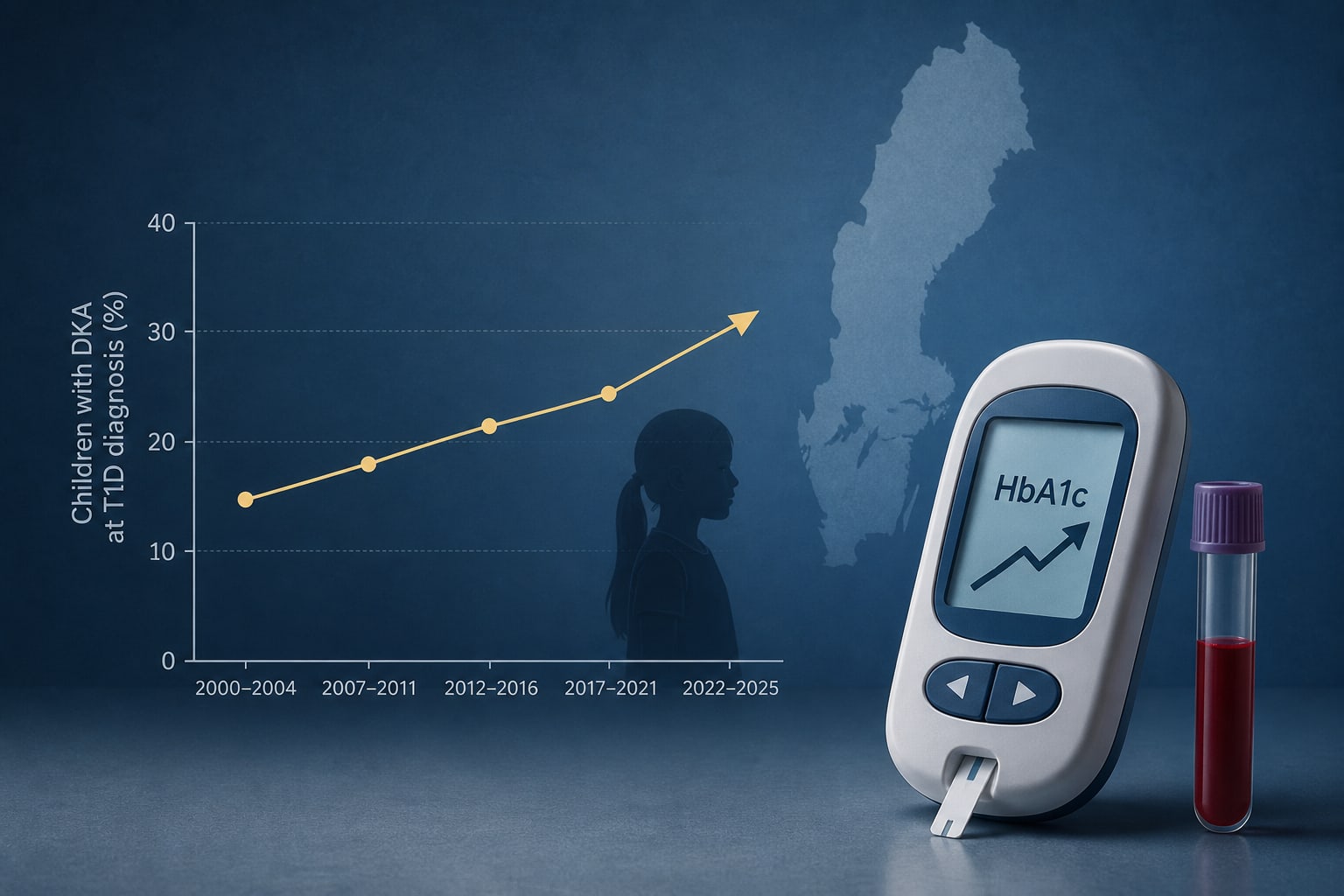
30% of children diagnosed with T1D presented with metabolic acidosis (DKA) in 2025, up from 14%-17% in 2000-2004.
Severe DKA (pH < 7.1) occurred in 8.4%-10% of cases during 2021-2025, compared to 4.3%-8.6% in 2007-2011.
Mean HbA1c levels at diagnosis increased slightly from 92-97 mmol/mol (2007-2011) to 96-98 mmol/mol (2021-2025).
The incidence of T1D among children younger than 15 years has doubled from 1978 to 2019.
Interpretation:
The increase in DKA incidence at T1D diagnosis may indicate a more aggressive disease progression rather than solely delayed diagnosis by healthcare personnel.
Limitations:
The cross-sectional design limits conclusions about trends in HCP-delayed diagnosis over time.
Data collection in earlier years (2000-2004) was incomplete, which may affect the reliability of historical comparisons.
Conclusion:
Further investigation into modifiable risk factors associated with disease progression is warranted, alongside immediate plasma glucose measurement in symptomatic children.