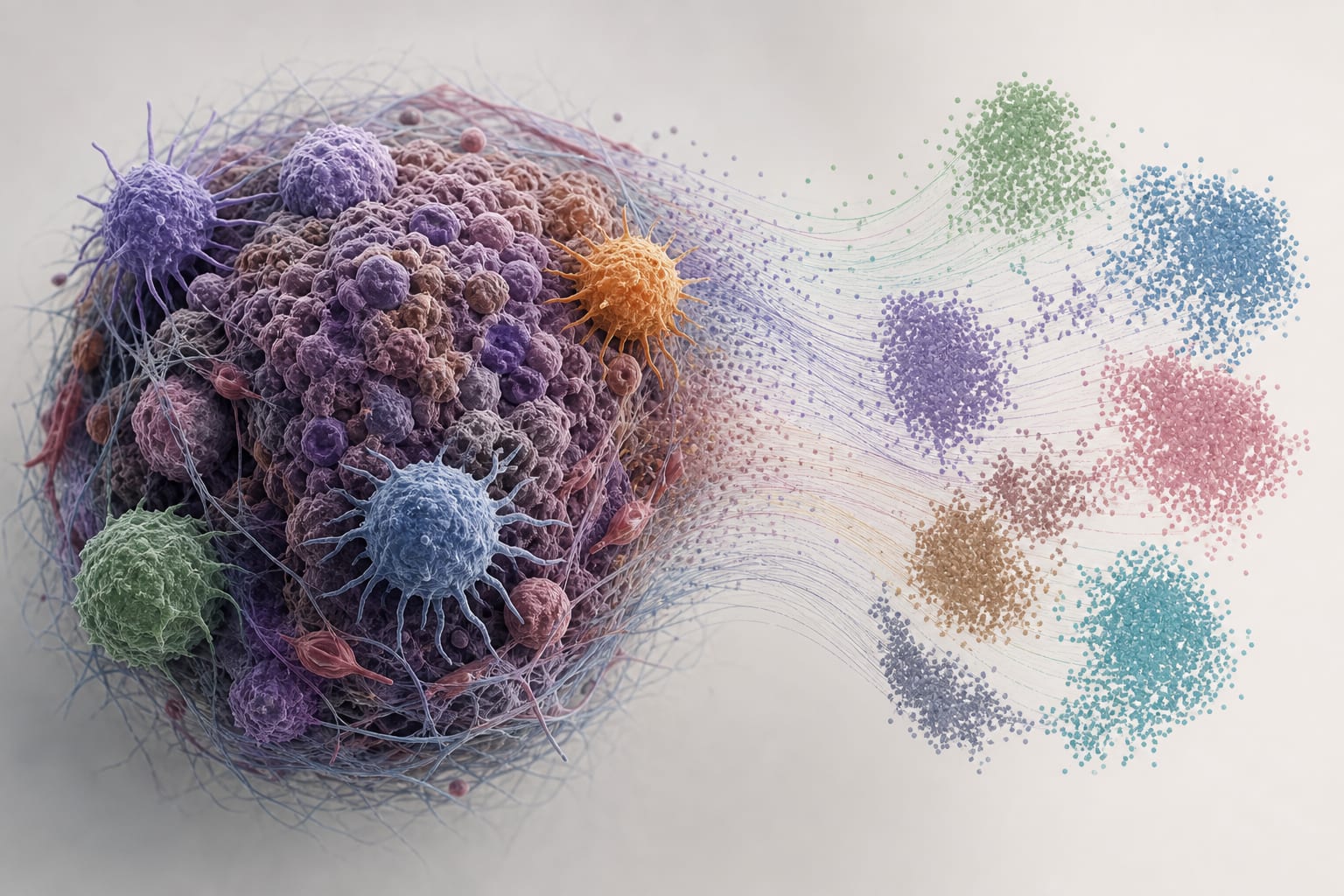
To summarize recent advances in single-cell sequencing across cervical, ovarian, and endometrial cancers, focusing on immune heterogeneity, tumor–microenvironment interactions, therapeutic resistance, and opportunities for precision immunotherapy.
Approach:
Key Findings:
Cervical cancer shows HPV-associated immune suppression, exhausted T/NK-cell populations, and macrophage polarization linked to chemoradiotherapy resistance.
Ovarian cancer reveals insights into fallopian tube origin, molecular subtypes, ascites-associated immune suppression, and platinum resistance.
Endometrial cancer profiling uncovers heterogeneous cancer-associated fibroblast populations, epithelial biomarkers, and stromal–immune interactions with prognostic relevance.
Interpretation:
Single-cell sequencing provides insights into the immune microenvironment and therapeutic resistance mechanisms in gynecological cancers.
Limitations:
The study may not encompass all aspects of immune response variability and treatment resistance across all gynecological malignancies.
Findings are based on specific cancer types and may not be generalizable to all gynecological cancers.
Conclusion:
Single-cell sequencing is a valuable tool for understanding immune heterogeneity and resistance mechanisms in gynecological cancers.