A cost-effective 3D-printed cement spacer reconstruction in a rare case of calcaneal Ewing sarcoma: a case report and surgical technique - Summary - MDSpire
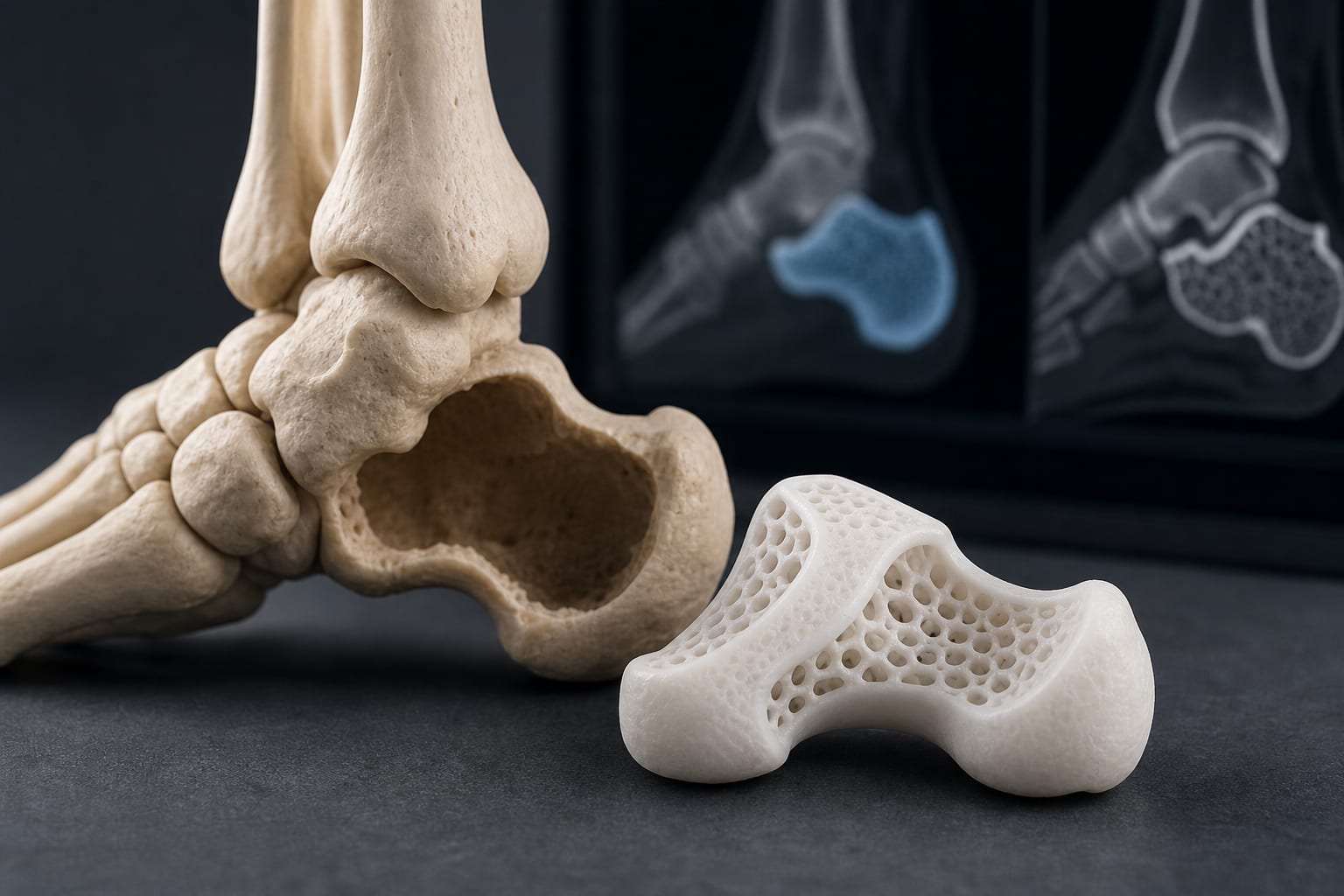
To present a case of Ewing sarcoma of the calcaneus treated with total calcanectomy and reconstruction using a 3D-printed cement spacer, highlighting the surgical approach and outcomes.
Approach:
Case Presentation: A 19-year-old female with a nonmetastatic calcaneal Ewing sarcoma underwent neoadjuvant chemotherapy followed by limb salvage total calcanectomy and reconstruction with a 3D-printed PMMA cement spacer.
Surgical Technique: Reconstruction involved a custom-made 3D-printed mold for an antibiotic-impregnated PMMA cement spacer, secured with cannulated screws.
Key Findings:
The patient experienced tumor regression after neoadjuvant chemotherapy.
Post-surgery, the patient developed wound dehiscence requiring a free radial forearm flap for reconstruction.
At 1-year follow-up, the patient ambulated with a cane and achieved a Toronto Extremity Salvage Score of 62.5%.
A deep surgical site infection occurred at 2.5 years, which was managed by irrigation, debridement, and implant removal.
Interpretation:
This case illustrates the application of limb salvage surgery for calcaneal Ewing sarcoma using a 3D-printed reconstruction technique.
Limitations:
The findings are based on a single patient report, which limits the generalizability of the results.
The management of infection required multiple interventions, indicating potential complications associated with the procedure.
Conclusion:
This case demonstrates the use of 3D-printed prosthetic implants in limb salvage surgery for malignant bone tumors.
An updated clinical practice guideline from the American Society for Radiation Oncology substantially expands and modernizes recommendations for the use of radiation therapy in pancreatic cancer.