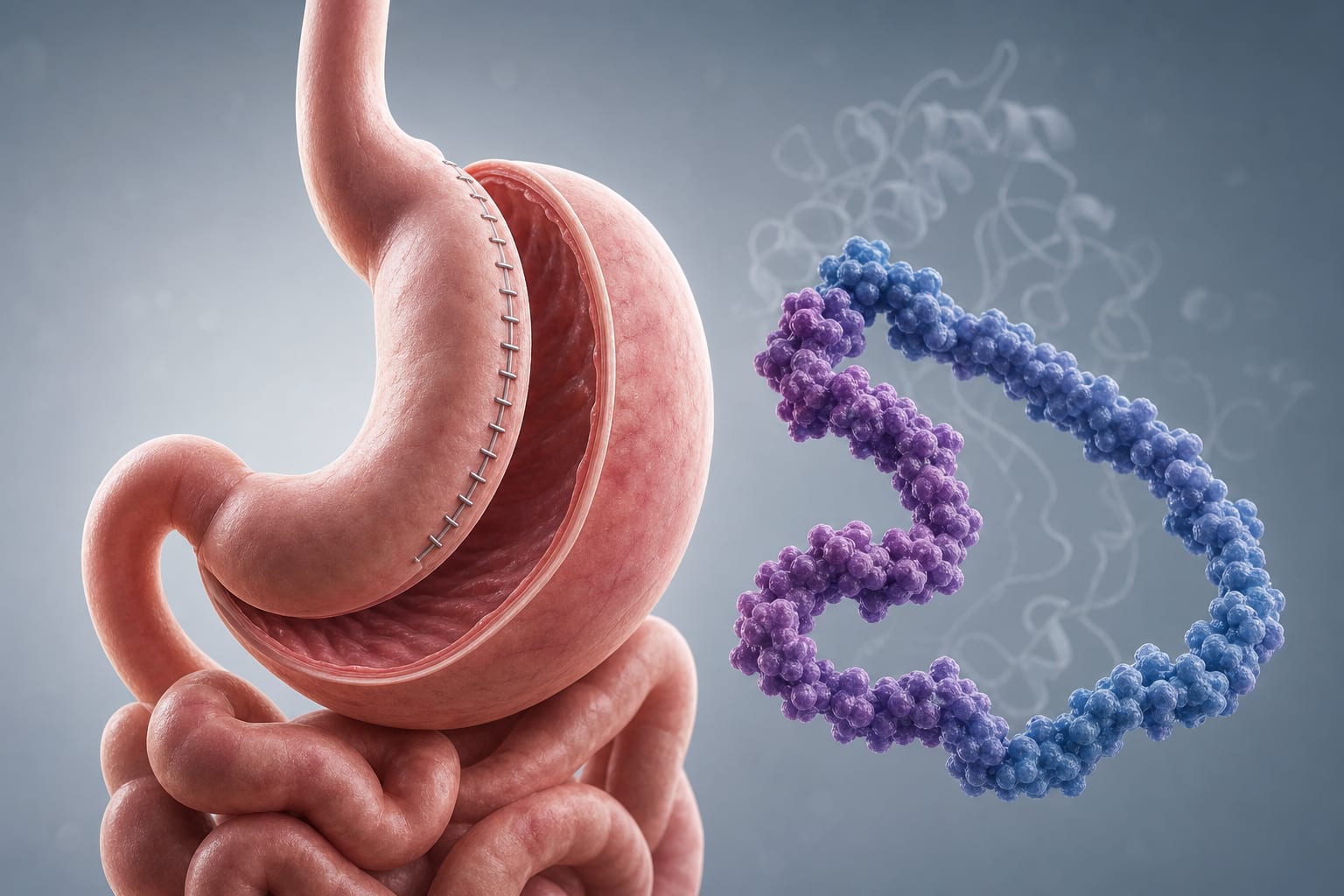
To investigate longitudinal changes in clusterin levels following metabolic and bariatric surgery (MBS) and their associations with weight loss and type 2 diabetes (T2D) remission, emphasizing the potential role of clusterin as a biomarker.
Key Findings:
Clusterin levels significantly decreased post-surgery, correlating with weight loss and T2D remission, indicating its potential as a biomarker for metabolic health.
Patients achieving sufficient weight loss (≥20% total weight loss) showed greater reductions in clusterin levels, suggesting a dose-response relationship.
T2D remission was associated with lower clusterin levels at 1 year post-surgery, highlighting its relevance in monitoring metabolic outcomes.
Interpretation:
The reduction in serum clusterin levels early after MBS may serve as a biomarker for weight loss and metabolic improvement in patients with obesity and T2D, warranting further investigation into its clinical applications.
Limitations:
Retrospective design may introduce selection bias and limit causal inferences.
Limited sample size may affect generalizability of the findings to broader populations.
Lack of a control group for comparison restricts the ability to draw definitive conclusions about the effects of MBS on clusterin levels.
Conclusion:
Early postoperative reductions in clusterin levels are linked to successful weight loss and T2D remission, suggesting its potential role in monitoring metabolic outcomes after bariatric surgery, and highlighting the need for further research to validate these findings.