Evaluating the Safety and Tolerability of Intranasal Insulin in Patients with Parkinson's Disease
-
By
-
Julia C. Johnson
-
Bhavani Kashyap
-
Sally K. Gustafson
-
Meghan O'Brien
-
William Howard Frey
-
Aleta L. Svitak
-
Leah R. Hanson
-
September 9, 2026
Objective:
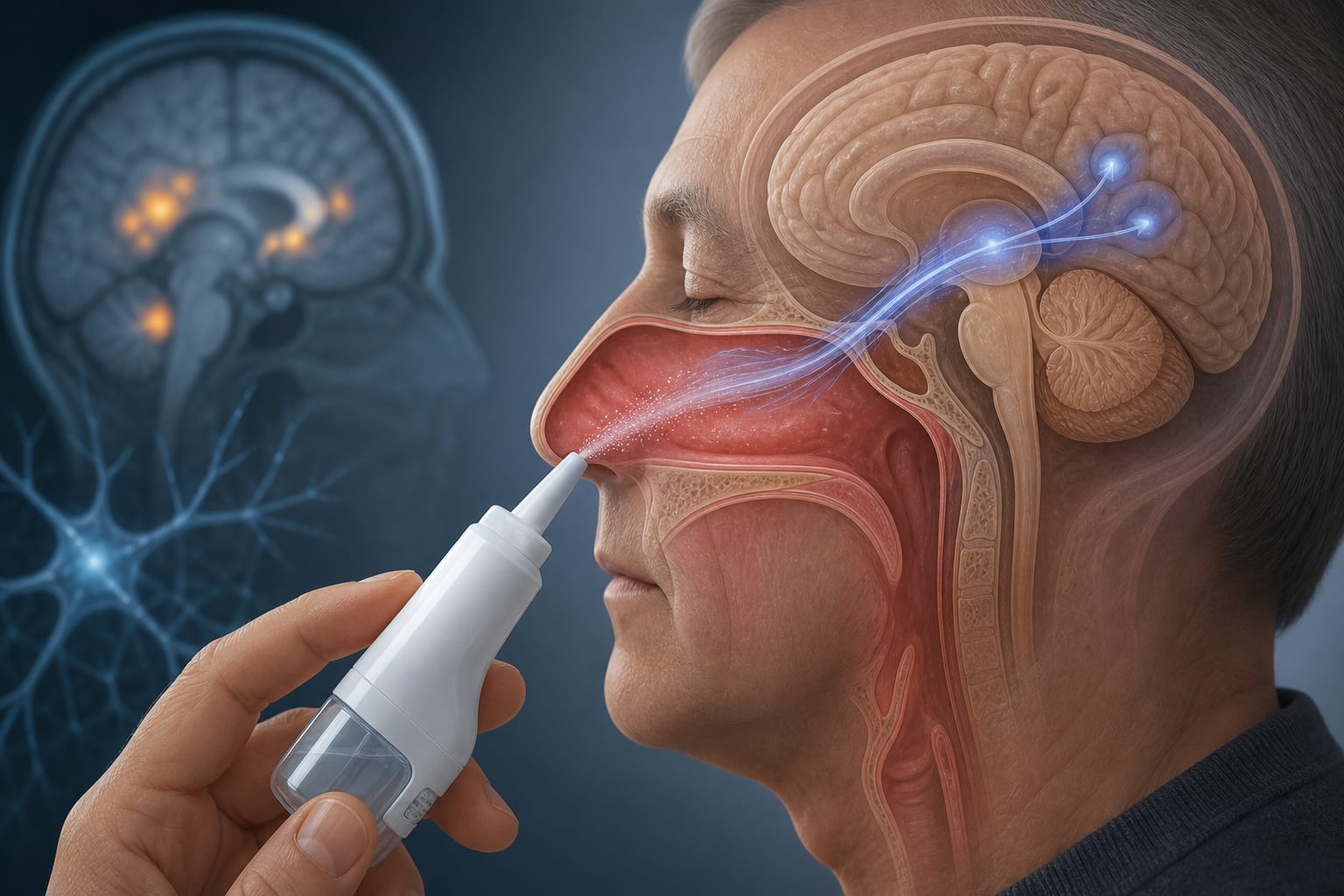
To evaluate the safety and tolerability of intranasal insulin (INI) in patients with Parkinson's Disease (PD).
Approach:
- Study Design: A phase II, single-center, randomized, double-blind clinical trial with 30 participants aged 41–89 years.
- Intervention: Participants received intranasal placebo or regular insulin (INI) at doses of 20, 40, or 80 IU over 21 days.
- Outcomes: Primary outcomes included safety and tolerability, evaluated through monitoring of hypoglycemia, weight, and adverse events.
- Secondary Outcomes: Cognitive, mood, and motor measures were assessed before and after treatment in 28 participants.
Key Findings:
- No significant changes in body weight or serum insulin levels were observed.
- No hypoglycemic events (<70 mg/dL) were documented at 15 and 30 minutes post-IN dose.
- Common adverse events included mild nasal irritation and epistaxis.
- Improvements in verbal fluency and recall were noted in the 40 IU/INI group, but not significantly greater than placebo.
- No improvements were observed in mood, apathy, or motor function.
Limitations:
- Small sample size of 30 participants.
- Short duration of the study (21 days).
- Limited generalizability due to single-center design.
Conclusion:
Further studies are warranted to explore the potential cognitive and motor benefits of intranasal insulin in patients with Parkinson's Disease.
Sources: