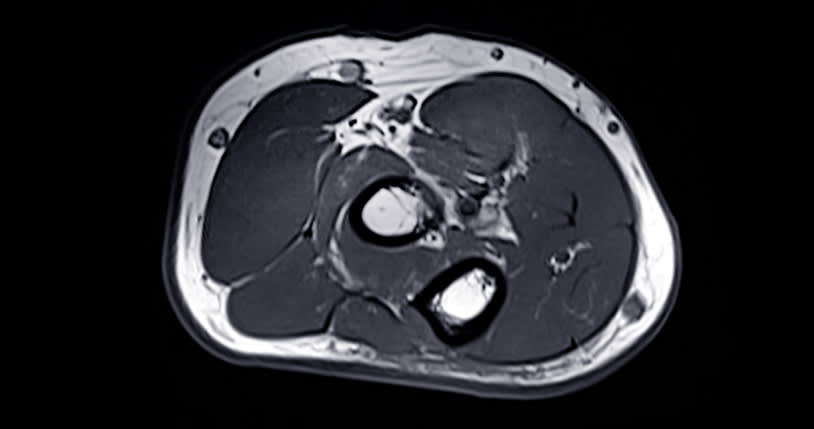
To evaluate the efficacy of oral diacerein in reducing knee pain in patients with symptomatic knee osteoarthritis and effusion-synovitis detected on MRI, highlighting its potential impact on treatment strategies.
Key Findings:
Mean VAS scores decreased by 19.9 mm in the diacerein group and 18.6 mm in the placebo group, with a between-group difference of -1.3 mm.
Secondary outcomes showed similar results between groups for pain and function scores.
MRI findings indicated no structural improvement; effusion-synovitis volume increased in the diacerein group.
Quality-of-life measures favored placebo, with significant differences in scores.
Adverse events were more frequent in the diacerein group, particularly gastrointestinal symptoms, affecting treatment adherence.
Interpretation:
Diacerein did not provide significant pain relief compared to placebo in patients with knee OA and effusion-synovitis, despite targeting an inflammatory phenotype, suggesting a need for alternative therapies.
Limitations:
MRI evidence of effusion-synovitis was obtained without contrast, limiting differentiation between synovial thickening and joint effusion, which may affect the study's conclusions.
Results may not generalize to patients without inflammatory features of OA, indicating a need for further research in diverse populations.
Conclusion:
Diacerein (50 mg, twice daily) over 24 weeks resulted in no greater improvement in knee pain compared with placebo in patients with symptomatic knee OA and effusion-synovitis, raising questions about its efficacy as a treatment option.