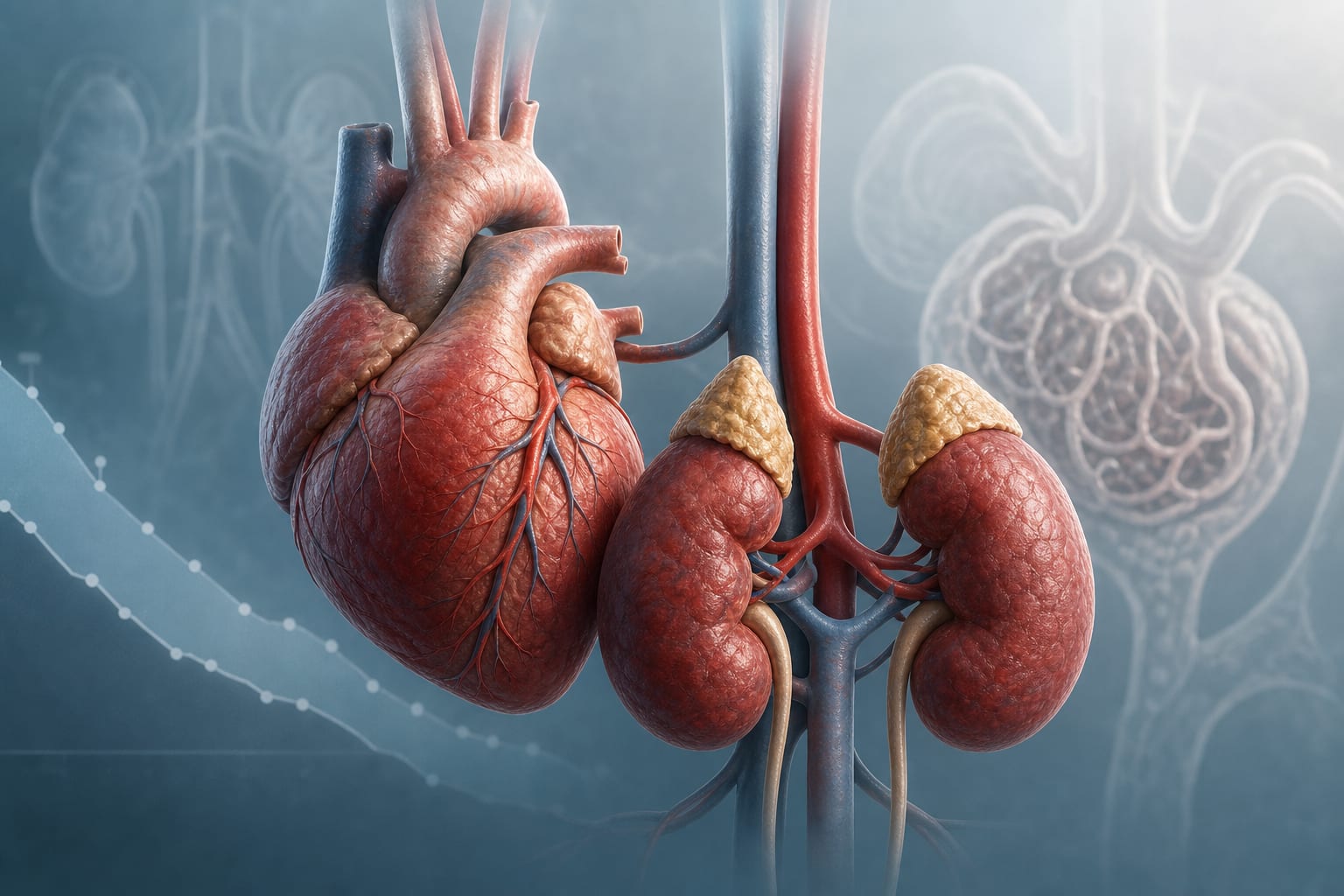
To summarize the development of aldosterone synthase inhibitors (ASi) and their potential impact on residual risk in cardiorenal disease, particularly focusing on cardiovascular and kidney outcomes.
Key Findings:
Residual risk for adverse cardiovascular and kidney outcomes remains substantial despite RAAS blockade, indicating a need for new therapeutic strategies.
Aldosterone synthase inhibitors (ASi) may help reduce this residual risk, offering a novel approach to treatment.
Preliminary evidence from ASi clinical trials shows efficacy in improving blood pressure control and decreasing albuminuria in chronic kidney disease, suggesting potential benefits for patient outcomes.
Interpretation:
ASi agents are being investigated further in ongoing phase III trials, which may lead to their adoption as a new addition to cardiorenal therapies, potentially transforming treatment paradigms.
Limitations:
Limited specificity of early ASi candidates led to side effects due to off-target activity, which may hinder their clinical application.
Current data from ASi trials are preliminary and ongoing, necessitating cautious interpretation of results.
Conclusion:
The therapeutic potential of ASi in improving cardiorenal outcomes is under investigation, with data expected in the coming months and years that could significantly influence treatment strategies.