Saccharomyces boulardii CNCM I-745 protects against small intestinal injury in a model of gliadin-peptide-induced sterile inflammatory enteropathy - Summary - MDSpire
Advertisement
Saccharomyces boulardii CNCM I-745 protects against small intestinal injury in a model of gliadin-peptide-induced sterile inflammatory enteropathy
To evaluate the effects of the probiotic yeast Saccharomyces boulardii CNCM I-745 (Sb) on inflammation-induced enteropathy in a mouse model based on intragastric administration of the gliadin peptide p31-43.
Approach:
Mouse Model: Mice were challenged with a single or multiple doses of p31-43, with or without Sb coadministration. Intestinal damage was assessed through histologic features, mRNA gene expression, caspase-1 activation, and cell death.
Key Findings:
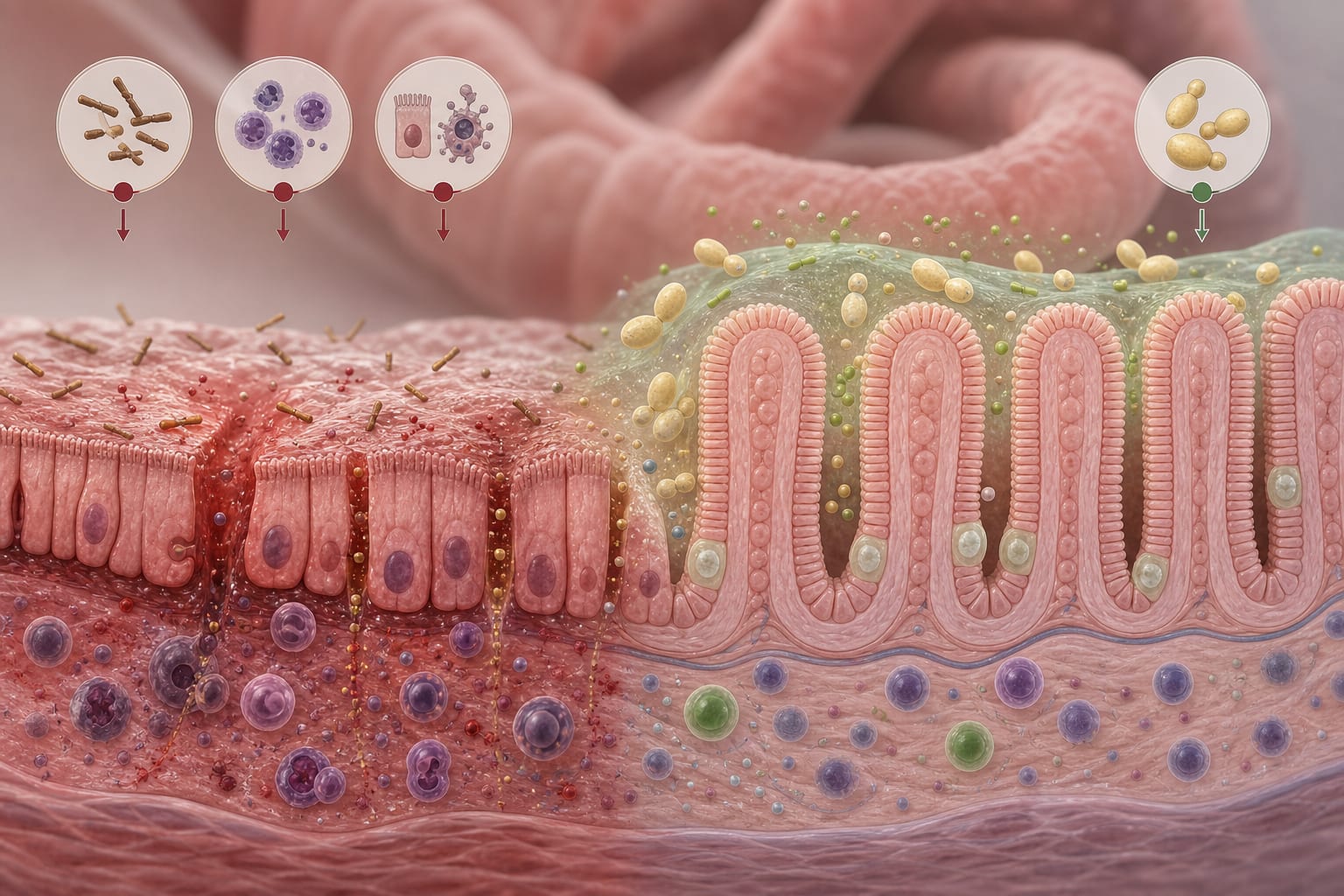
Sb treatment improved histological parameters compared to p31-43 alone, restoring the villus-height-to-crypt-depth ratio and reducing intraepithelial lymphocyte infiltration.
Sb prevented the upregulation of Cxcl10 expression induced by p31-43.
Sb attenuated caspase-1 activation, indicating suppression of inflammasome activation.
Sb reduced cell death associated with p31-43 treatment.
Interpretation:
Saccharomyces boulardii CNCM I-745 significantly attenuated mucosal damage, inflammation, and cell death in a murine model of small intestinal inflammation, suggesting its potential role in modulating host responses in the gut.
Conclusion:
The study highlights the importance of probiotic yeasts in managing inflammation-induced damage to the small intestine.