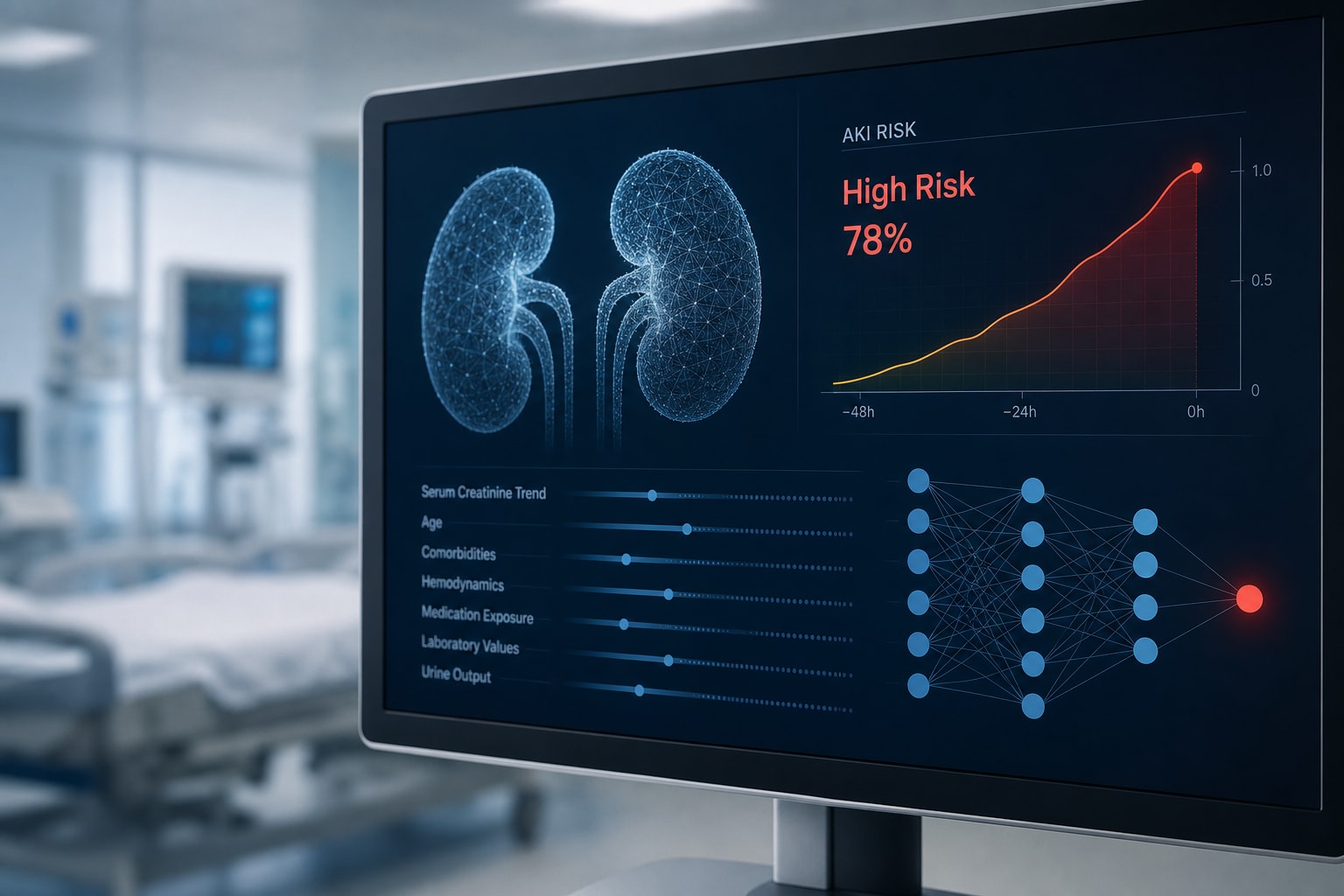
To evaluate whether a structured early nephrology consultation, triggered by an AI machine-learning AKI risk score, can reduce subsequent kidney injury among hospitalized patients without AKI at enrollment.
Approach:
Study Design: A randomized clinical trial using the ESTOP-AKI model to identify patients at increased risk of stage 2 AKI.
Intervention: Patients were randomized to receive early nephrology consultation or usual care.
Key Findings:
Early nephrology consultation did not reduce peak change in serum creatinine, incident AKI, severe AKI, kidney replacement therapy, mortality, readmission, or 90-day outcomes.
Consult recommendations in the early consultation arm were often not followed.
The distinction between overt clinical problems and predicted future events affected the perceived urgency of recommendations.
Interpretation:
The trial highlights that risk identification is only the first step in clinical translation; actions based on risk predictions require implementation.
Limitations:
Consult recommendations may not have been perceived as urgent due to competing acute problems.
The primary endpoint of peak change in serum creatinine may not be the optimal measure for prevention trials.
Conclusion:
Future AI-enabled AKI prevention trials should focus on risk-triggered actions rather than just risk-triggered advice, emphasizing the need for structured and adhered-to interventions.
A Korean cohort study found fewer kidney cancer cases among patients with type 2 diabetes who initiated sodium-glucose cotransporter 2 inhibitors vs dipeptidyl peptidase-4 inhibitors.