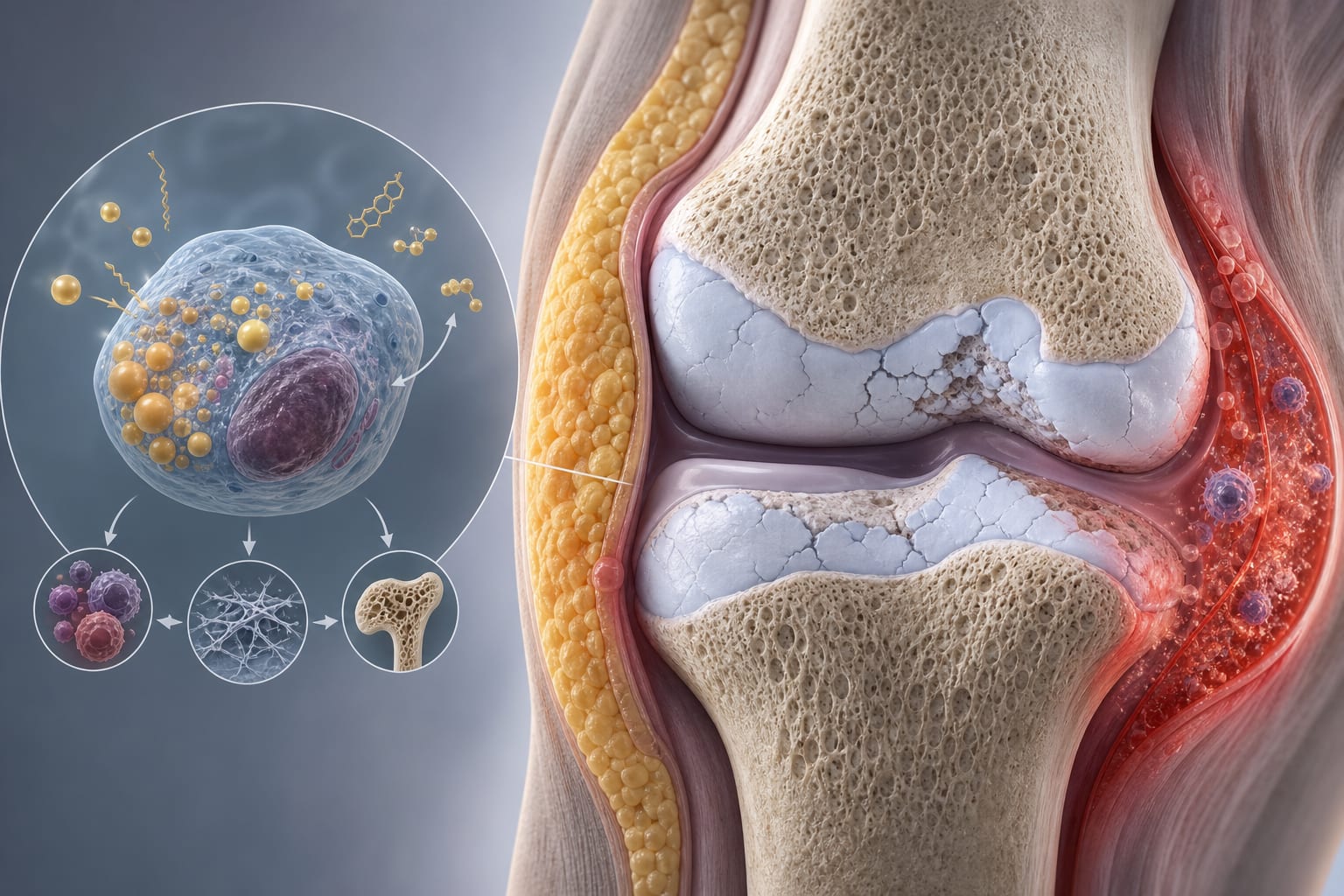
To review how lipid metabolic dysregulation contributes to osteoarthritis (OA) susceptibility, symptom burden, and disease progression, focusing on cartilage-centered mechanisms and whole-joint metabolic interactions.
Approach:
Literature Search: A structured literature search was conducted using PubMed, Web of Science, and Scopus with specific search terms related to osteoarthritis and lipid metabolism.
Key Findings:
Osteoarthritis is a biologically heterogeneous whole-joint disorder characterized by multiple tissue-level failures.
Lipid metabolic dysregulation, including cholesterol handling and fatty-acid exposure, is linked to chondrocyte injury and inflammatory signaling in OA.
Specific lipid signatures are associated with OA severity and advanced knee OA.
Metabolic syndrome is related to structural progression in knee OA, indicating systemic metabolic abnormalities influence OA beyond mechanical factors.
Adipose-associated signals from obesity can shape the inflammatory and metabolic state of the joint.
Key pathways linking lipid imbalance to OA pathology include the CH25H-CYP7B1-RORα axis, fatty-acid-induced lipotoxic stress, mitochondrial oxidative injury, and phospholipid peroxidation-driven ferroptosis.
Interpretation:
Current evidence supports the role of lipid metabolism in OA pathology, highlighting the need for understanding disease mechanisms.
Limitations:
Gaps remain in linking circulating lipid alterations to tissue-specific mechanisms.
Identification of patient subsets most likely to benefit from lipid-targeted interventions is still needed.
Conclusion:
The review highlights the importance of lipid metabolic dysregulation in OA.