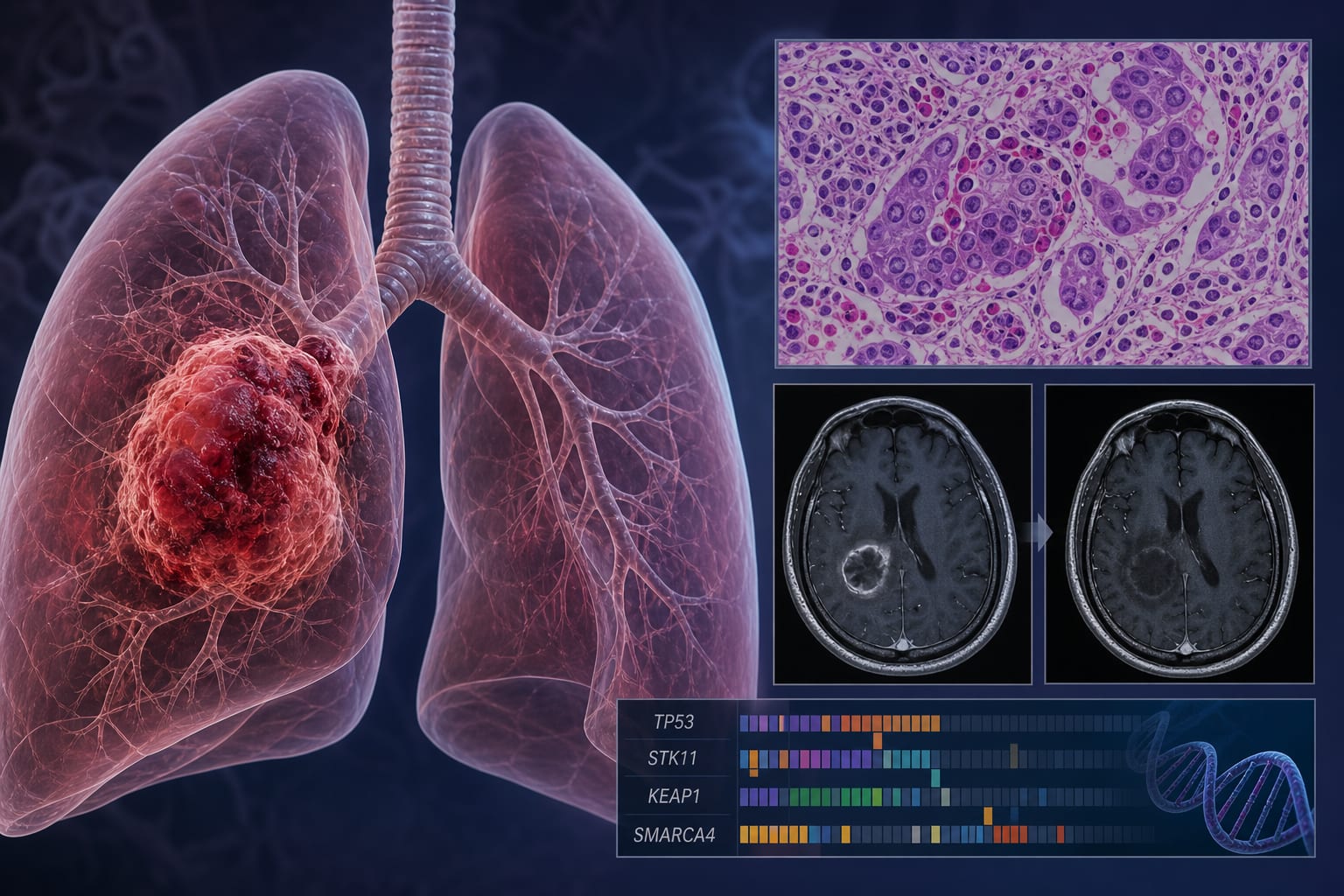
To report a case of primary pulmonary choriocarcinoma (PPC) and review existing literature on the disease.
Approach:
Case Presentation: A 61-year-old man with PPC and brain metastases underwent various treatments including radiotherapy and chemotherapy, followed by immunotherapy.
Literature Review: A systematic review of 45 previously reported PPC cases was conducted to assess clinical characteristics and treatment outcomes.
Key Findings:
PPC is a rare and aggressive malignancy with no established standard treatment.
Molecular profiling revealed loss-of-function or deleterious alterations involving TP53, STK11, KEAP1, and SMARCA4.
The patient experienced prolonged extracranial disease control with a second-line immunotherapy-based regimen, although the independent contribution of immune checkpoint inhibition could not be isolated.
Interpretation:
PPC may be clinically and molecularly distinct from gestational choriocarcinoma; however, these findings are based on a single patient and should be regarded as hypothesis-generating.
Limitations:
The molecular observations are derived from a single patient, limiting the generalizability of the findings.
There is a limited evidence base for PPC treatment options.
Conclusion:
Further investigation into multimodal treatment incorporating immune checkpoint inhibition is warranted in collaborative rare-tumor cohorts.
An updated clinical practice guideline from the American Society for Radiation Oncology substantially expands and modernizes recommendations for the use of radiation therapy in pancreatic cancer.