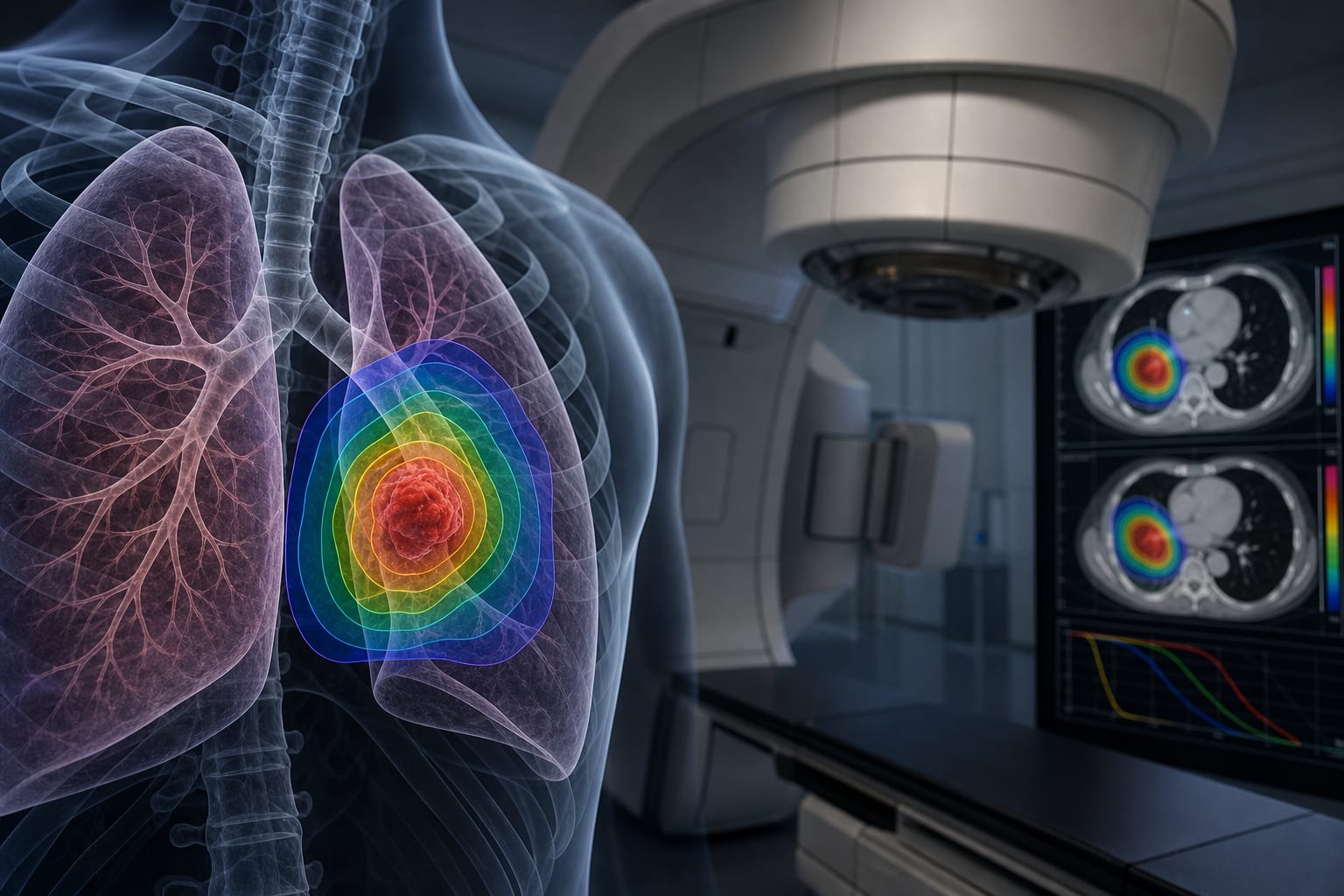
To develop a framework that improves the segmentation of lung cancer lesions in CT imaging by addressing specific limitations such as low-contrast ambiguity and lack of anatomical context in existing models.
Key Findings:
StructSAM outperforms SAM, MedSAM, and state-of-the-art medical segmentation models in accuracy and generalization capabilities, achieving a X% improvement in accuracy metrics.
The framework effectively addresses low-contrast ambiguity and enhances anatomical consistency in lesion delineation, as evidenced by Y% reduction in segmentation errors.
Demonstrated improved volumetric coherence in CT-based lesion segmentation through extensive experiments, with Z% increase in volumetric consistency.
Interpretation:
StructSAM represents a significant advancement in the segmentation of lung cancer lesions, effectively bridging the gap between traditional deep learning methods and the challenges posed by volumetric medical imaging.
Limitations:
The study primarily focuses on lung cancer, which may limit the generalizability of the findings to other types of lesions or cancers. Further validation across diverse clinical settings and datasets, including A, B, and C, is needed to confirm robustness.
Conclusion:
StructSAM provides a promising solution for enhancing the segmentation of lung cancer lesions in CT imaging, with potential implications for improving clinical workflows in oncology and future research on other cancer types.