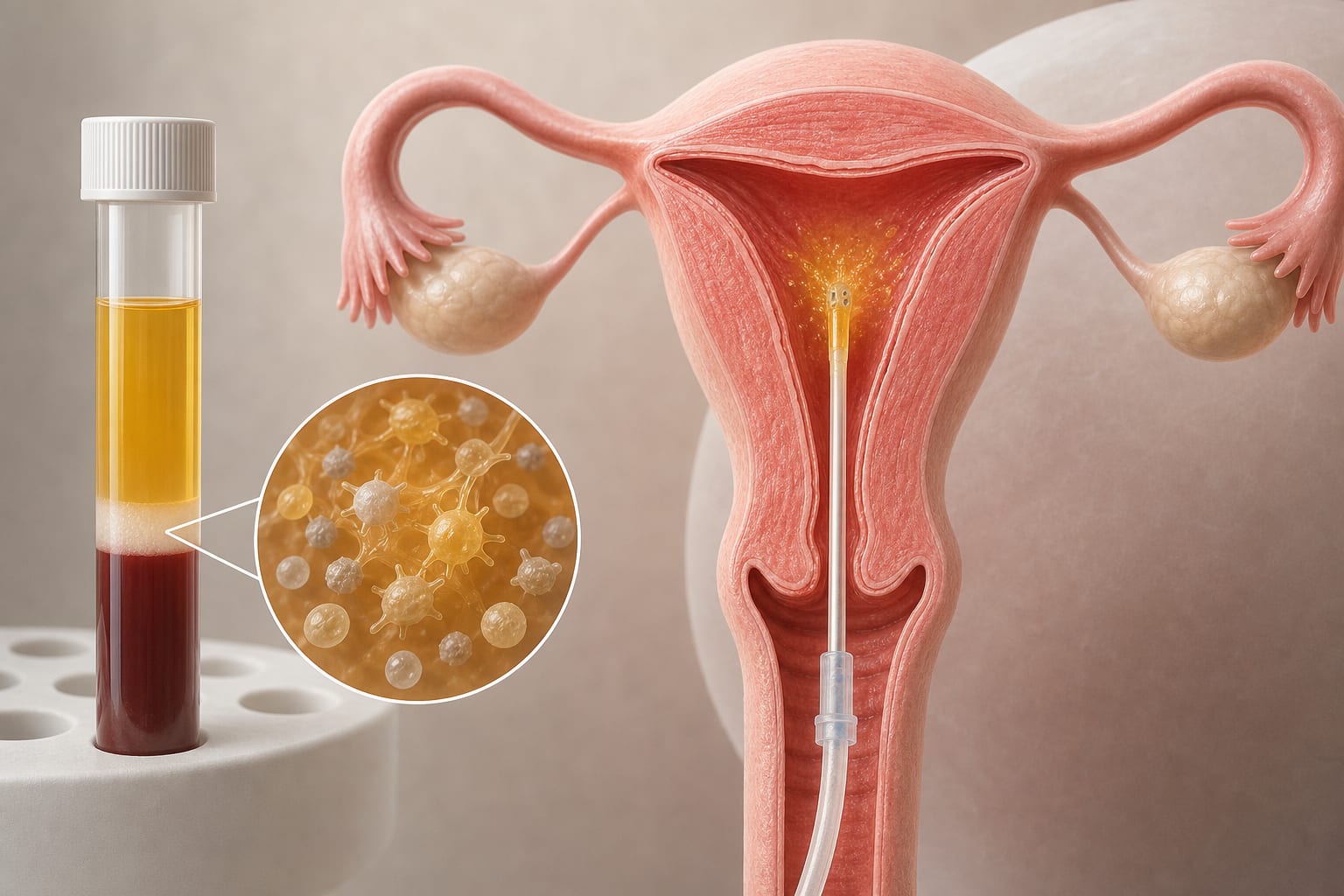
To explore the impact of GnRH agonist (GnRHa) vs. dual trigger (GnRHa plus hCG) for final follicular maturation on peripheral immune profiles in women undergoing oocyte cryopreservation.
Approach:
Study Design: Prospective proof-of-concept hypothesis-generating pilot study.
Setting: University-affiliated single center.
Participants: Five healthy women undergoing fertility preservation (n = 3 GnRHa trigger, n = 2 dual trigger).
Intervention: Ovarian stimulation with either GnRHa alone or dual trigger (GnRHa + hCG).
Immune Profiling: Performed at two time points: before trigger and on the day of oocyte retrieval.
Key Findings:
Dual trigger was associated with a trend toward lower CD4/CD8 T cell ratio.
An apparent increase in highly differentiated cytotoxic (CD57+) cell populations was observed.
No cases of ovarian hyperstimulation syndrome (OHSS) were reported; however, findings should not be interpreted as definitive.
Interpretation:
The addition of hCG to GnRHa trigger was associated with a shift toward a more cytotoxic lymphocyte profile post trigger; however, findings are exploratory and require validation in larger cohorts.
Limitations:
Small sample size limits the definitiveness of findings and introduces potential selection bias due to trigger allocation based on physician discretion.
Conclusion:
Findings require validation in larger, randomized cohorts to better understand their implications for reproductive outcomes and OHSS risk.