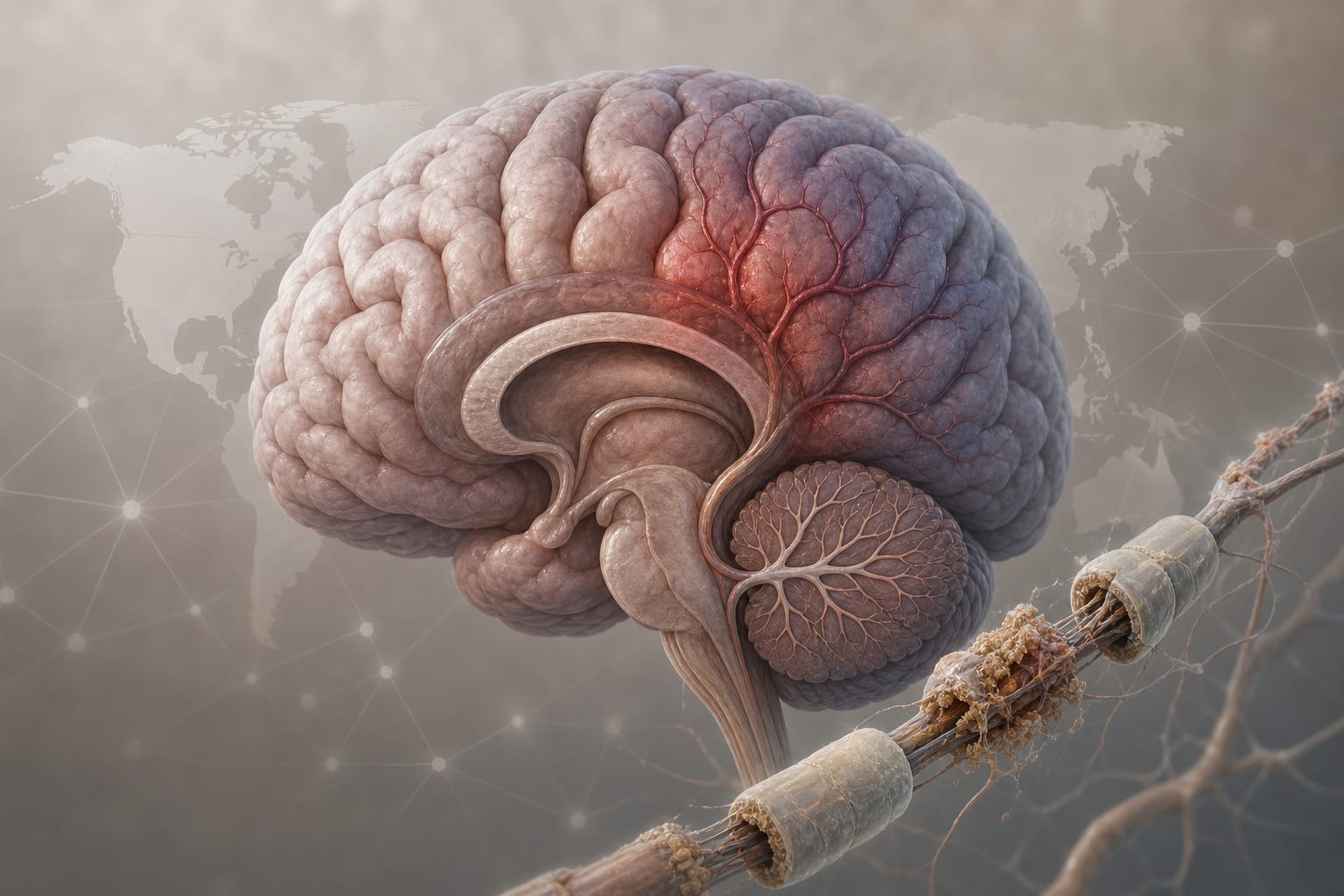
To evaluate the efficacy and safety of Ginkgo biloba extract in managing dizziness associated with central neurological disorders through a systematic review and meta-analysis of randomized controlled trials.
Approach:
Key Findings:
Nine RCTs (N = 2,394) were included, predominantly from dementia populations (71.6%).
Ginkgo biloba significantly reduced dizziness severity on the 11-point box scale (MD −0.76, 95% CI −1.35 to −0.18; p = 0.01) and VAS (SMD −0.38, 95% CI −0.58 to −0.19; p = 0.0001).
Moderate-certainty evidence indicated improvements in functional outcomes and quality of life, including the Alzheimer’s Disease Activities of Daily Living International Scale (MD = −0.17, 95% CI: −0.22 to −0.13) and the Dementia Quality of Life – Proxy (MD = 2.00, 95% CI: 0.85 to 3.15).
The intervention was well tolerated with lower risks of angina pectoris (OR 0.51, 95% CI 0.31 to 0.85) and tinnitus (OR 0.37, 95% CI 0.22 to 0.63).
Interpretation:
Ginkgo biloba extract may reduce dizziness severity and improve daily functioning in patients with central neurological disorders accompanied by dizziness or vertigo, with a favorable safety profile.
Limitations:
Small number of eligible trials.
Substantial clinical and statistical heterogeneity was observed, which may affect the reliability of the results.
Predominance of dementia-derived data.
Conclusion:
Further well-designed RCTs in clearly defined central vestibular populations are needed to confirm these results.