Clinical characteristics, tongue manifestations, and traditional Chinese medicine syndrome patterns of spring influenza A in children: a single-center retrospective study - Summary - MDSpire
Conexiant’s news site is now MDSpire News. Learn more
Advertisement
Clinical Features, Tongue Signs, and TCM Syndrome Classifications of Spring Influenza A in Pediatric Patients: A Retrospective Study from a Single Center
To systematically analyze the clinical manifestations, dynamic changes in hematological parameters, traditional Chinese medicine (TCM) tongue characteristics, and syndrome differentiation patterns in children with influenza A during spring.
Approach:
Study Design: A single-center retrospective study involving 143 children diagnosed with influenza A.
Data Collection: Collected general information, initial symptoms, hematological parameters, tongue characteristics, and TCM syndrome differentiation.
Hematological Analysis: Measured parameters included WBC, NEU, LYM, NLR, PCT, and CRP, with comparisons made across three disease duration stages.
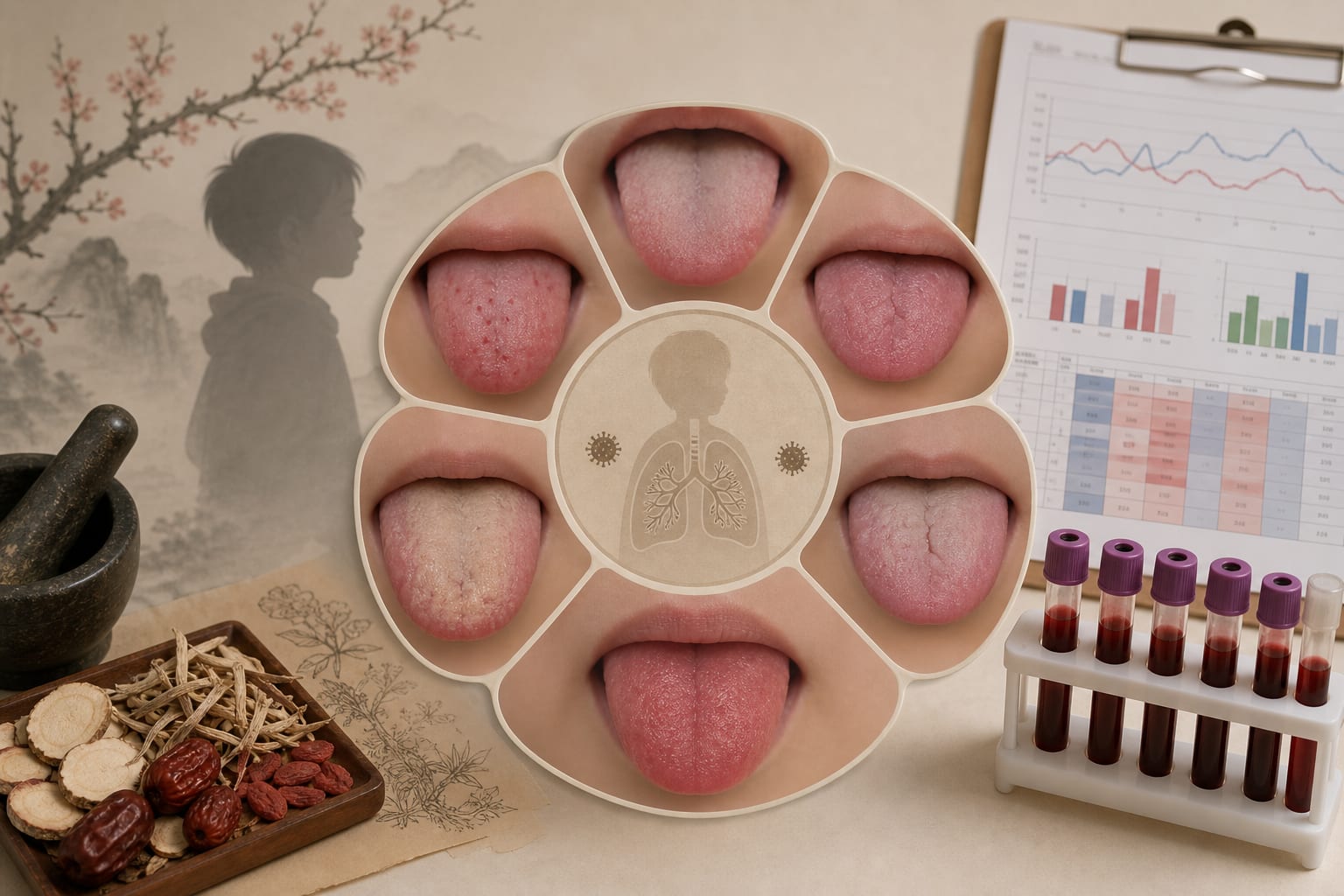
Tongue Characteristics: Recorded tongue color, coating texture, and coating color.
Key Findings:
Fever was the most common initial symptom (92.31%), with 'fever + cough' being the most frequent symptom combination (81.12%).
At initial visit, 90.21% had LYM below normal, and 58.74% had elevated PCT.
Red tongue was predominant (93.71%), with increased prevalence as disease progressed.
Heat-toxin attacking the lung syndrome was the most common TCM syndrome (34.97%).
Interpretation:
The findings indicate a fever-dominant onset with changes in hematological parameters and tongue characteristics throughout the disease duration.
Small late-stage subgroup may affect the robustness of findings.
Absence of treatment/outcome data.
Lack of standardized digital tongue imaging.
Conclusion:
The study provides exploratory reference for integrated clinical assessment of pediatric influenza A, highlighting the need for prospective multicenter studies to validate findings.