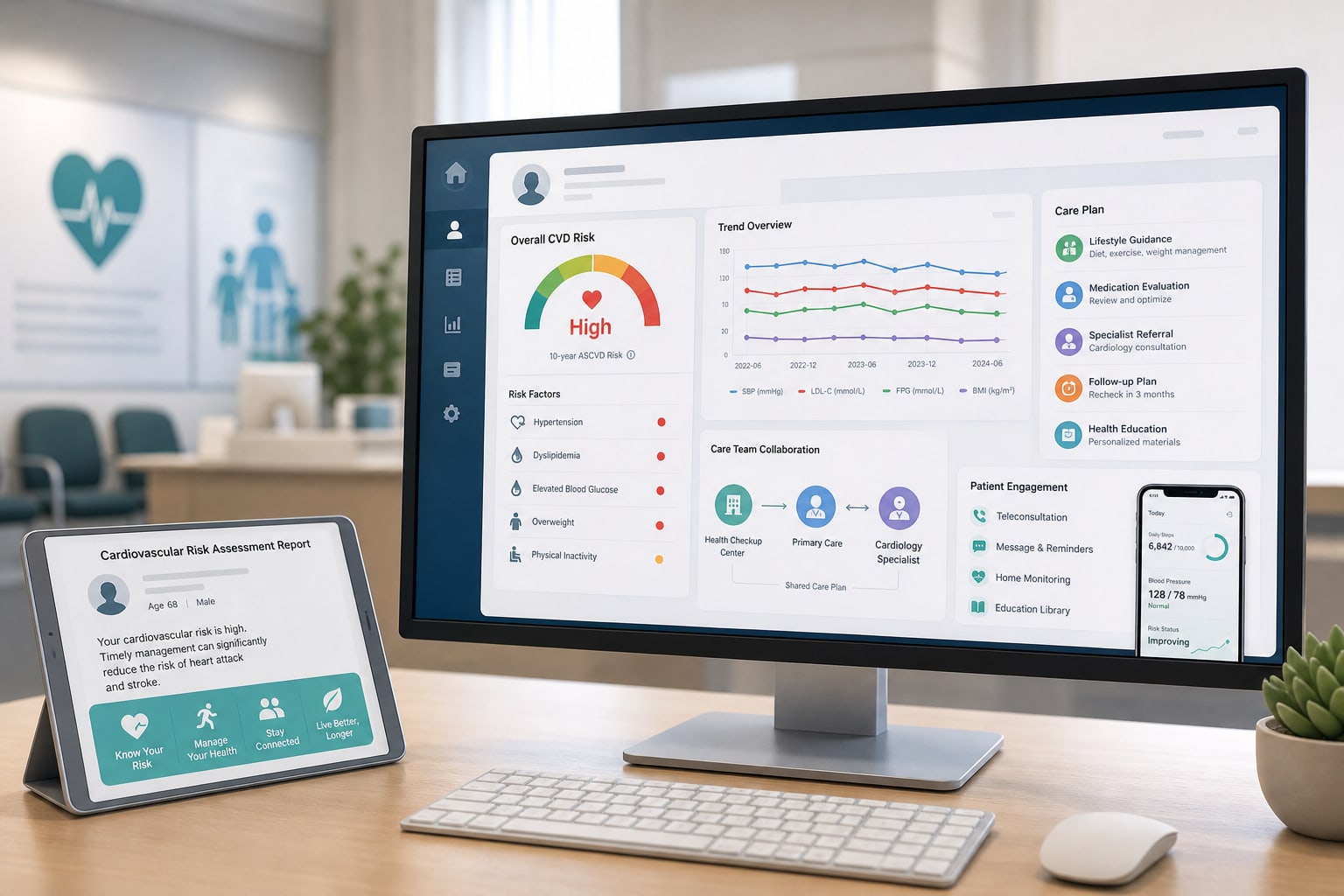
To develop and evaluate the CardioCare system, a digital CVD risk assessment and management tool integrated into health checkup centers, focusing on its usability and effectiveness.
Approach:
Study Design and Setting: Phase 1 focused on system development at the Health Management Center of the First Affiliated Hospital of Sun Yat-sen University, including usability testing to ensure the system meets user needs and integration into clinical workflow.
CardioCare System Overview: The system integrates cardiovascular risk screening with personalized management tools, utilizing a validated 10-year CVD risk prediction model based on the Guangzhou Biobank Cohort Study.
Key Findings:
The CardioCare system automates the calculation of 10-year CVD risk scores using patient data, which may enhance the identification of high-risk individuals.
It aims to improve risk factor control and encourage preventive care actions among high-risk individuals through personalized management.
Interpretation:
The CardioCare system is designed to enhance patient engagement and continuity of care in post-checkup management of cardiovascular risk.
Limitations:
The report focuses on the initial phase of development and does not include long-term outcomes or effectiveness data, and the preliminary data on user engagement is limited to the context of pilot implementation.
Conclusion:
The CardioCare program represents a digital health intervention aimed at improving cardiovascular disease prevention in older adults in China, pending further evaluation.
Three of 23 patients experienced heart failure deterioration following medication withdrawal, while adverse drug events occurred only among patients who continued therapy.