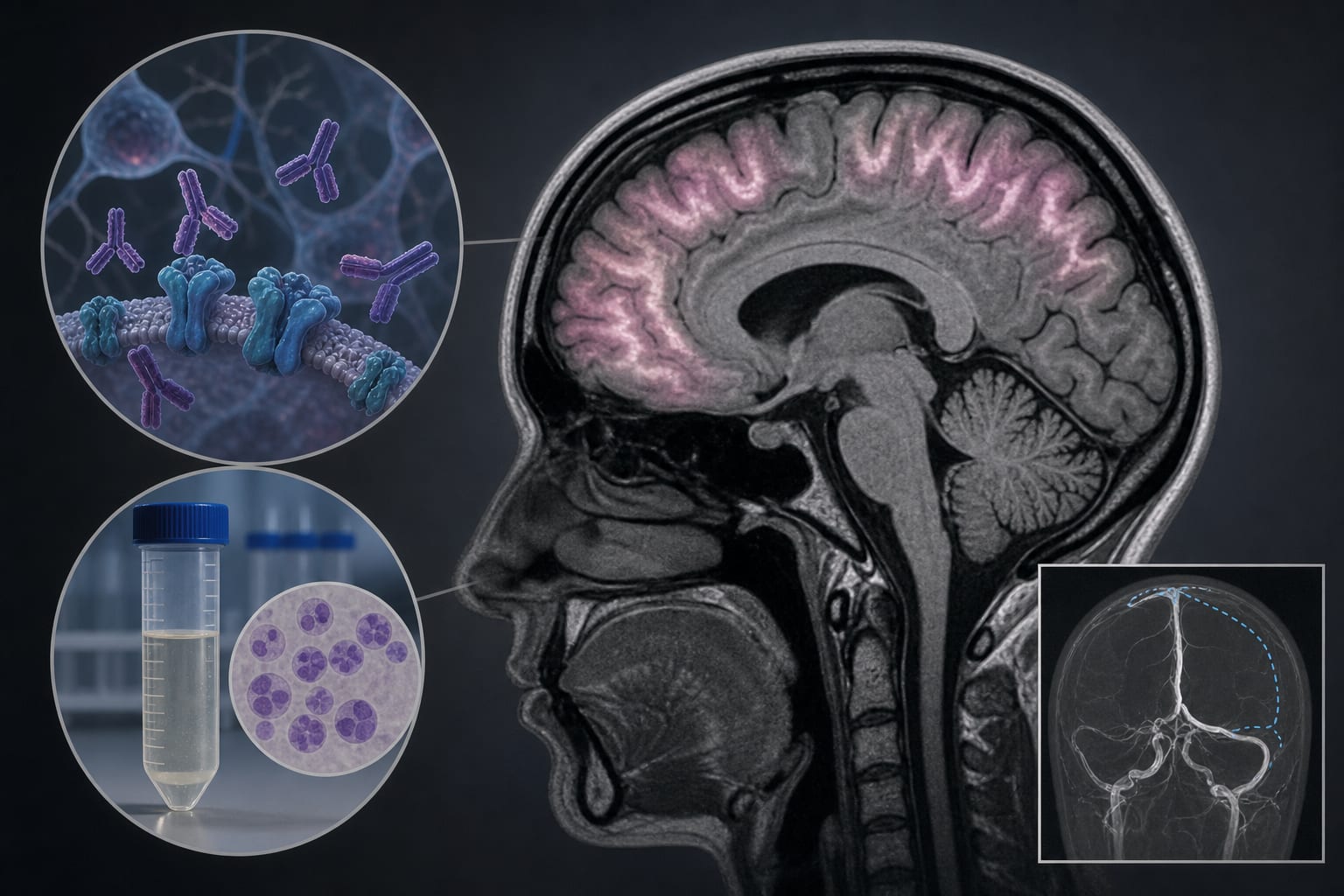
To illustrate the diagnostic challenges and clinical features of pediatric overlap of MOGAD and anti-NMDA receptor encephalitis, particularly when initial diagnostic clues are misleading.
Approach:
Case Presentation: A 16-year-old girl presented with a 20-day history of progressive headache, transient focal deficits, meningeal irritation, and inflammatory CSF abnormalities.
Diagnostic Assessment: The patient underwent multiple imaging studies and lumbar punctures, revealing inflammatory CSF and MRI abnormalities over time, including a left parieto-occipital cortical-sulcal FLAIR abnormality.
Treatment: The patient was treated with high-dose corticosteroids and intravenous immunoglobulin, leading to clinical improvement without further documented seizures during follow-up.
Key Findings:
Initial imaging may not reveal definitive findings, complicating diagnosis.
CSF analysis showed positivity for both anti-NMDAR-IgG and MOG-IgG.
Longitudinal reassessment of clinical and imaging data is crucial for accurate diagnosis, as initial findings may be misleading.
Interpretation:
The case emphasizes the need for integrated reassessment of clinical features, imaging, and laboratory results in diagnosing overlapping neuroinflammatory conditions, rather than relying on isolated findings.
Limitations:
The rarity of the condition may limit generalizability to broader populations.
Potential for misdiagnosis due to overlapping symptoms with other conditions, particularly in the absence of clear initial imaging findings.
Conclusion:
This case highlights the importance of comprehensive evaluation in distinguishing between MOGAD and anti-NMDA receptor encephalitis, particularly when initial diagnostic clues are misleading and require longitudinal reassessment.
Nearly 90% of patients who met algorithmic criteria for postacute sequelae of SARS-CoV-2 infection had at least 1 chronic or potentially chronic condition requiring ongoing clinical management.