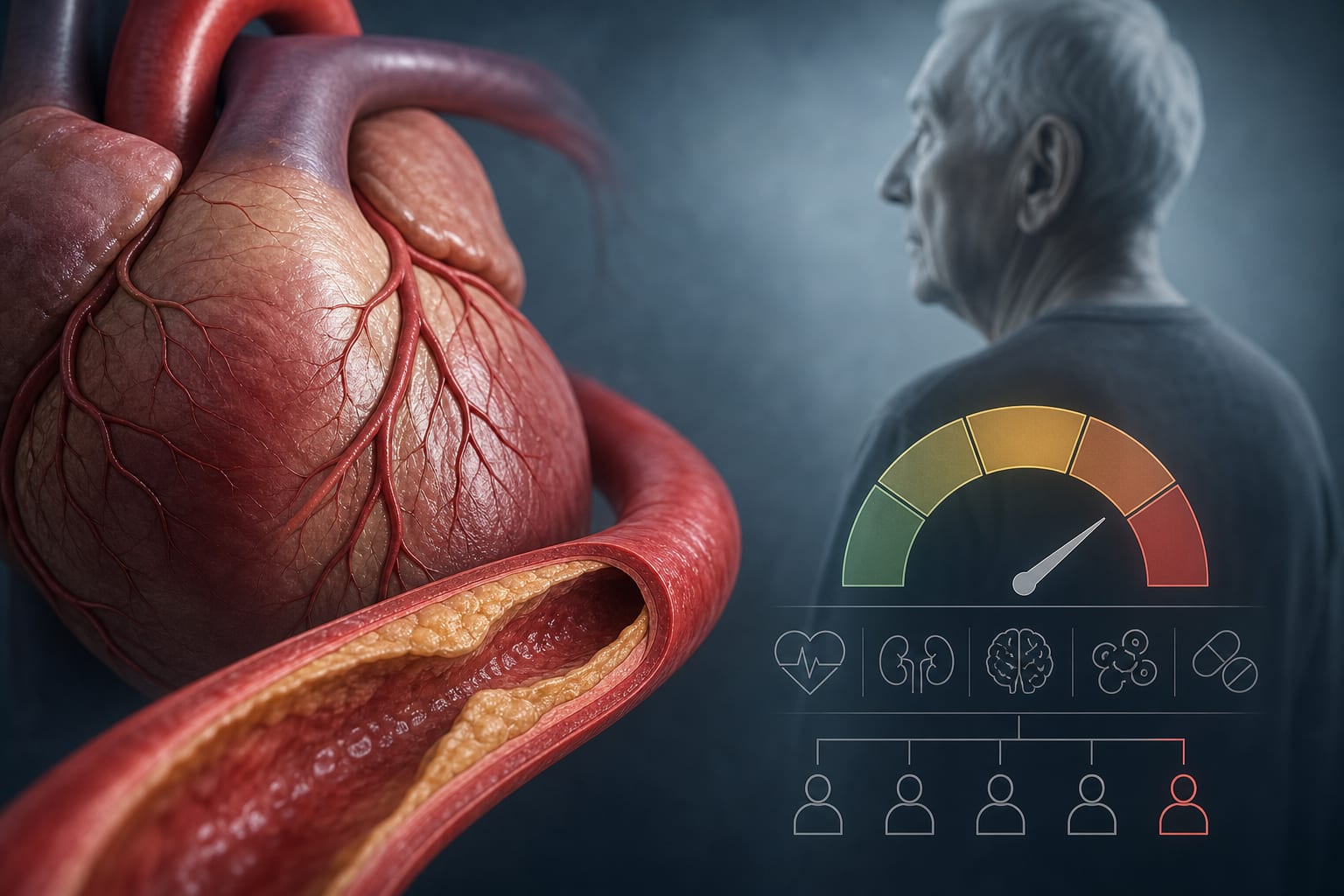
To investigate the clinical characteristics of elderly patients with CAD, analyze 1-year prognostic factors, and evaluate the predictive value of the OPT-CAD score in their long-term prognosis.
Approach:
Study Design: A cross-sectional study of 4,836 patients aged ≥60 years with coronary artery stenosis of 50% or greater, followed by a retrospective cohort study of 508 elderly patients for 1 year.
Data Collection: Baseline characteristics, laboratory results, echocardiography, and angiography data were collected. MACE was defined and tracked during follow-up.
Key Findings:
Elderly patients (≥75 years) had lower male prevalence, lipid levels, and BMI but more severe coronary lesions.
Among elderly patients, 10.3% (n = 51) experienced major adverse cardiovascular events (MACE), with a mortality rate of 3.2% (n = 16).
Independent predictors of MACE included anemia, left main lesion, multivessel disease, and LVEF < 50%.
The OPT-CAD score showed moderate predictive capacity (AUC=0.628) and was comparable to the GRACE score.
Interpretation:
Cardiovascular risk factors in elderly patients with CAD differ from younger patients, with specific factors like anemia and multivessel disease being significant predictors of adverse events.
Limitations:
The study was observational and lacked intervention.
The sample may not be representative of all elderly CAD patients.
Conclusion:
Anemia, left main lesion, multivessel disease, and low ejection fraction are independent risk factors for adverse events in elderly CAD patients 1 year post-discharge.
Patients with gout who reached serum urate targets had modestly higher 5-year cardiovascular event-free survival, with associations strongest among high-risk patients