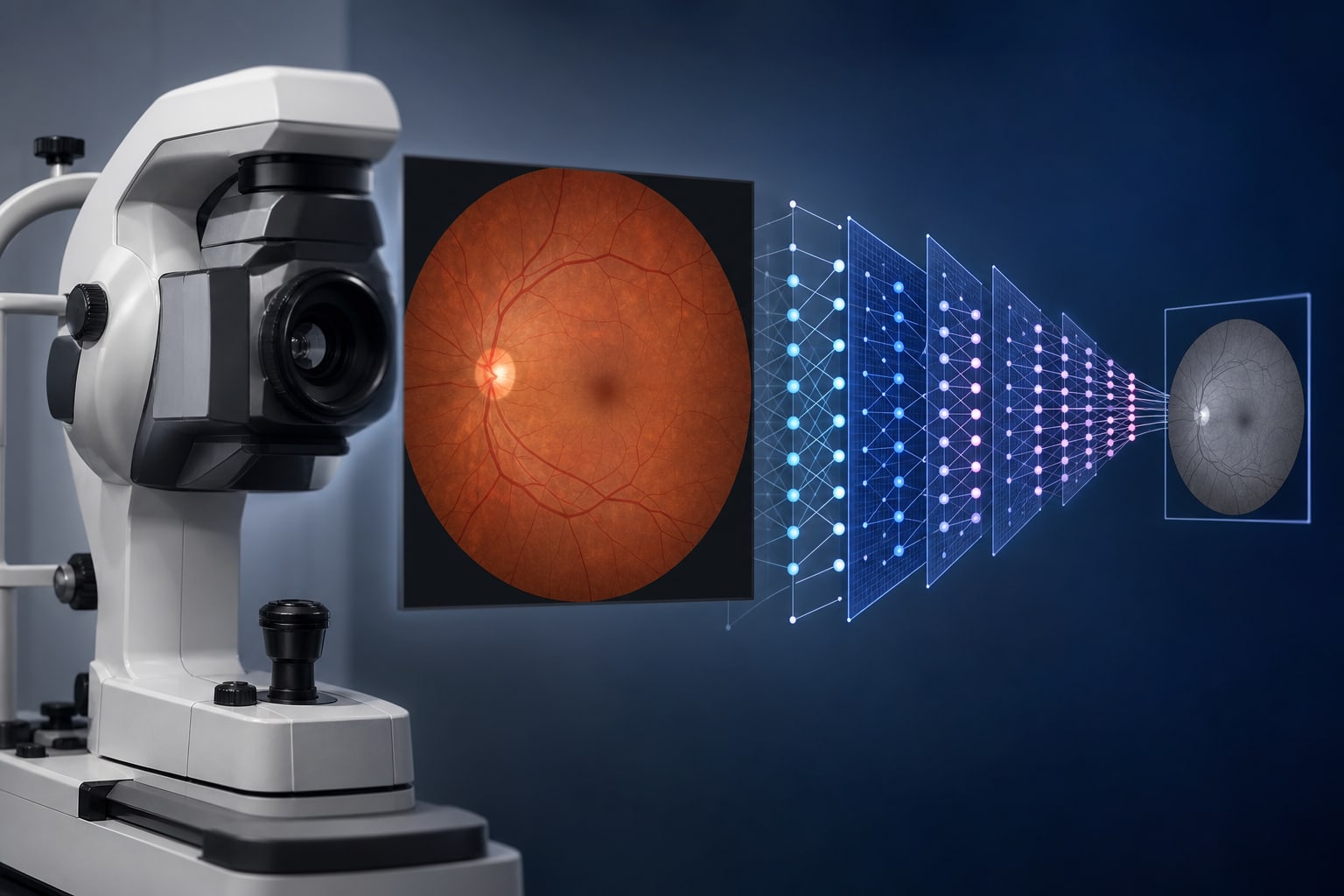
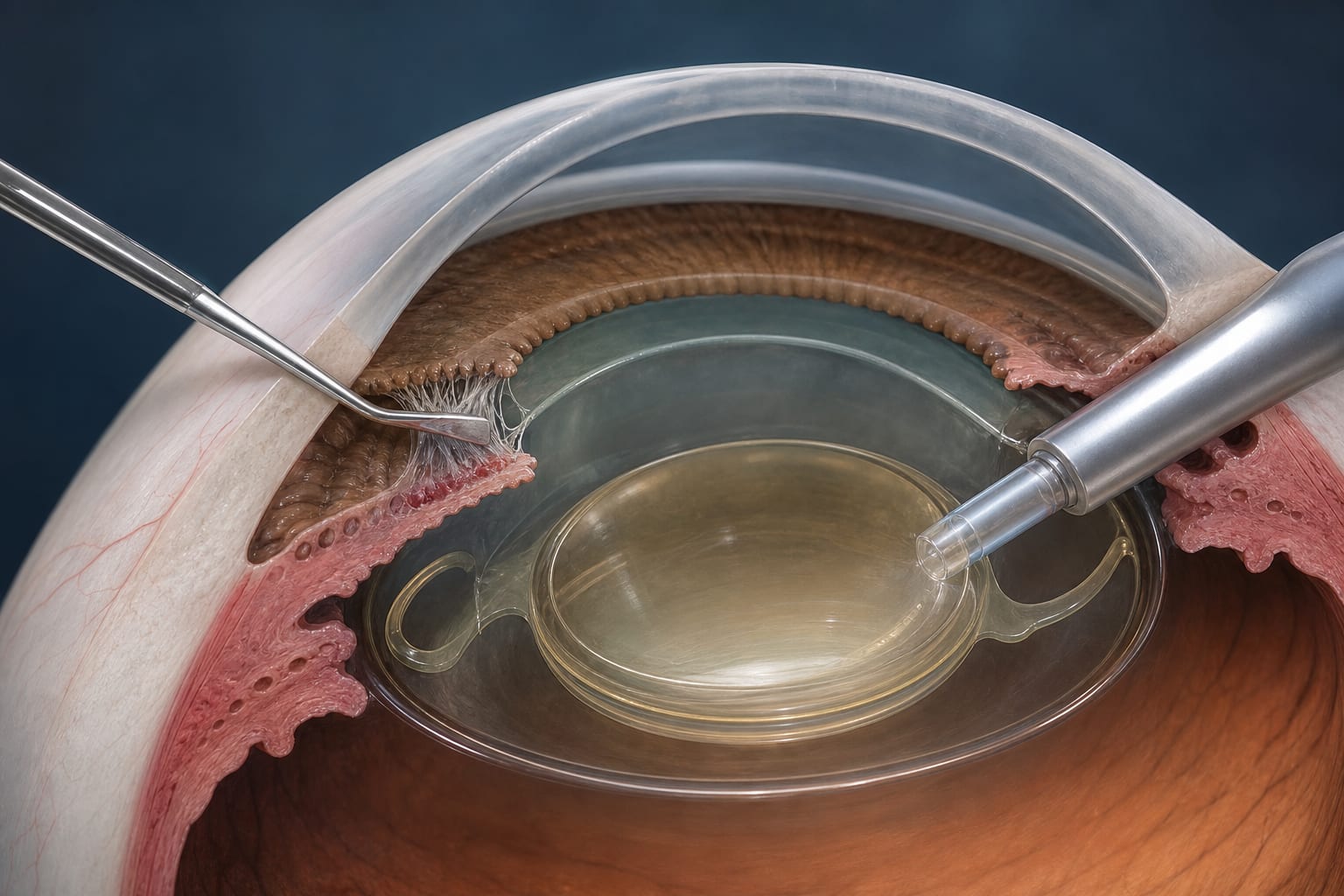
To develop and evaluate an automated cataract detection system based on deep learning using retinal fundus images to support early screening and improve accessibility to ophthalmological diagnosis.
Approach:
Methodology: An experimental quantitative approach was employed, including dataset preparation, image preprocessing, model training, and performance evaluation using a labeled subset of 2,658 retinal fundus images from the ODIR-5K dataset.
Image Processing: Images underwent normalization, noise reduction, and data augmentation techniques such as random rotations (±10°), scaling (90%–110%), and brightness and contrast adjustments to create a balanced dataset of 4,840 images.
Model Training: Six deep neural network architectures were trained and evaluated: ResNet152, EfficientNet-v2S, Inception v3, MobileNet v3, DenseNet201, and Vision Transformer (ViT), with transfer learning applied using ImageNet pre-trained weights.
Key Findings:
ResNet152 achieved the highest performance with an accuracy of 99.10%, precision of 99.72%, sensitivity of 98.46%, and F1 score of 99.08%.
Deep convolutional neural networks, particularly ResNet152, provide effective performance for automated cataract detection.
Interpretation:
The proposed system shows potential as a clinical decision-support tool for large-scale screening programs, especially in resource-limited settings.
Limitations:
Challenges remain in implementing these systems in real-world clinical settings, particularly due to the limited availability of trained professionals and specialized equipment.
Diagnostic accuracy may decrease outside controlled study environments.
Conclusion:
The automated diagnostic system aims to optimize the accuracy, accessibility, and efficiency of clinical diagnosis, particularly in rural or low-income areas.
by Hugo Vega-Huerta, Camila Isabela Cuba-Aquino, Gari Mario Suca-Mariño, Ivan Adrianzén-Olano, Gisella Luisa Elena Maquen-Niño, Frida López-Córdova, Juan Carlos Lázaro-Guillermo, Gilberto Carrión-Barco, Katherin Vanessa Rodriguez-Zevallos, Denny John Fuentes-Adrianzén, Mario Chauca, Javier Elmer Cabrera-Díaz