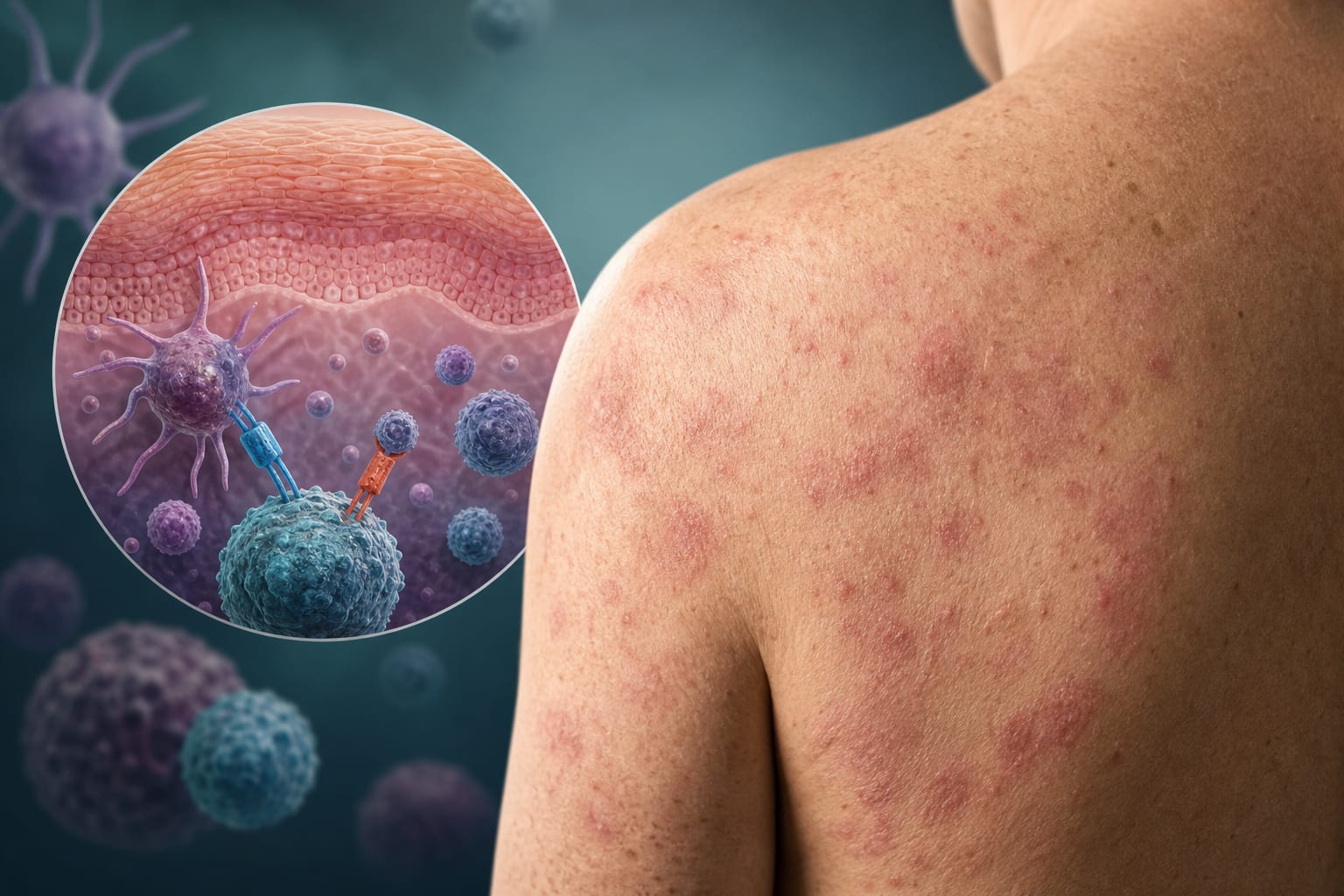
To evaluate the incidence and management of cutaneous immune-related adverse events (d-irAEs) in melanoma patients treated with immune checkpoint inhibitors (ICIs), highlighting their impact on patient management.
Key Findings:
d-irAEs range from mild to life-threatening and can occur at any stage of treatment.
Dermatologic adverse events are the most common irAEs, affecting 30-40% of patients on anti-PD-1 therapy, with specific data points.
Real-world reporting of mild-to-moderate d-irAEs is significantly underreported, impacting patient management.
Interpretation:
Continuous dermatological surveillance and a multidisciplinary approach are essential for early detection and management of d-irAEs in melanoma patients receiving ICIs, with implications for clinical practice.
Limitations:
Underreporting of mild-to-moderate d-irAEs in clinical practice, which may skew understanding of their true incidence.
Variability in the incidence and severity of skin toxicities, affecting treatment strategies.
Conclusion:
A systematic approach to reporting d-irAEs is crucial for personalized patient management and improving outcomes in melanoma treatment, emphasizing the importance of addressing these events.