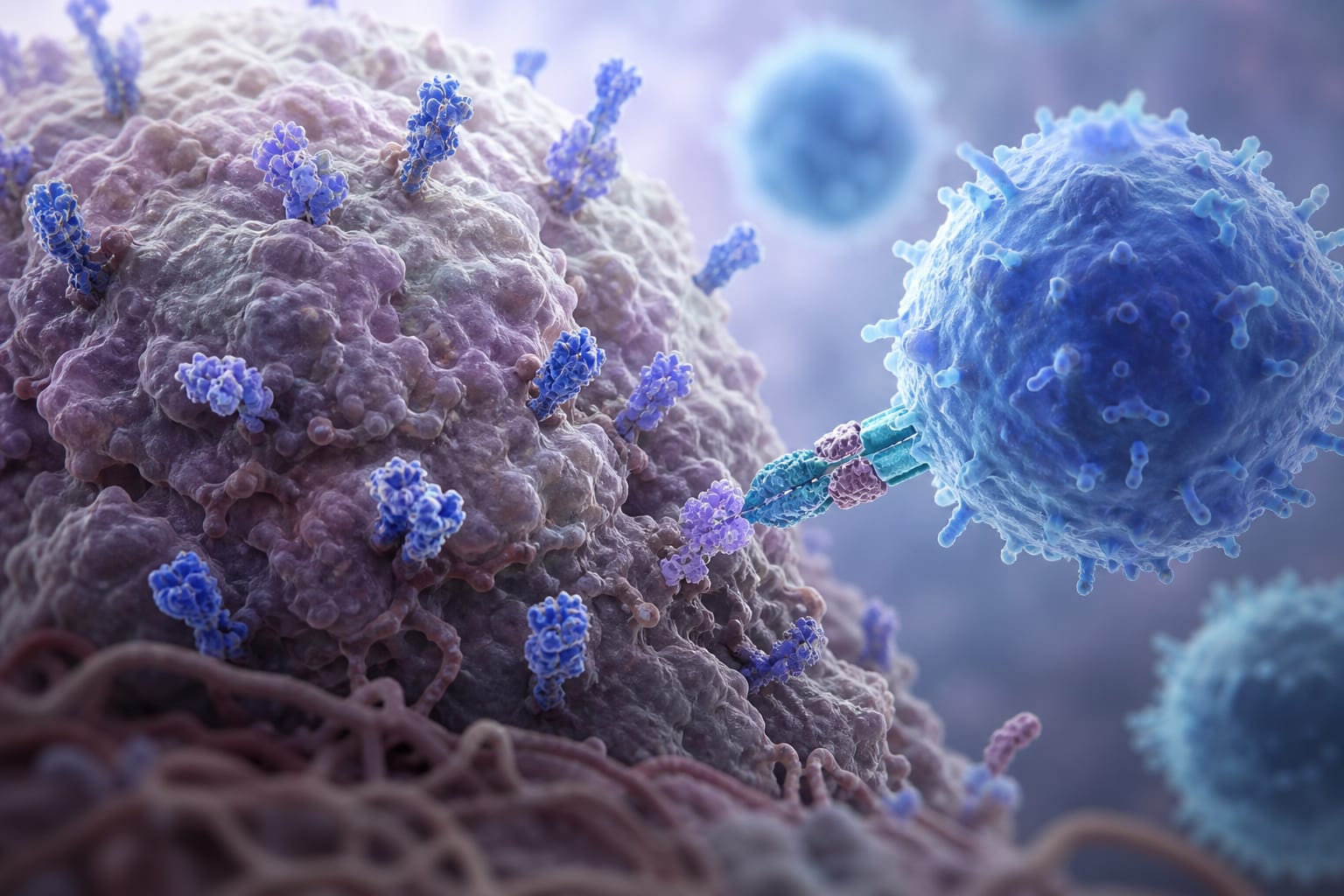
To investigate the metabolic alterations in myeloid-derived suppressor cells (MDSCs) within the tumor microenvironment of cervical cancer (CC), focusing on sphingolipid metabolism.
Approach:
Timer 2.0 dataset analysis: Utilized TIMER 2.0 for immune microenvironment infiltration estimation in cervical cancer.
Flow cytometry: Analyzed and sorted CD11b+Gr1+ MDSCs from single-cell suspensions using flow cytometry.
Clinical specimens: Collected paraffin-embedded tissues from 50 CC cases and 10 normal controls, approved by the Ethics Committee.
Tissue immunofluorescence: Performed immunofluorescence staining on tissue sections to visualize MDSCs.
Induction and differentiation of bone marrow cells into MDSCs: Induced differentiation of bone marrow cells into MDSCs using specific cytokines.
RNA isolation and qPCR: Isolated RNA from samples and performed quantitative PCR to analyze gene expression.
Western blotting: Conducted Western blotting to assess protein expression related to MDSC metabolism.
Key Findings:
MDSCs are critical components of the cervical cancer tumor microenvironment, influencing disease progression and immune evasion.
Proteomic and metabolomic profiling revealed significant alterations in lipid metabolism, particularly sphingolipid metabolism, in CC tumor-conditioned MDSCs.
Kng1–sphingosine 1-phosphate was identified as a key protein–metabolite network in CC cell-conditioned MDSCs.
Limitations:
The study is limited to a specific patient cohort and may not be generalizable to all cervical cancer patients.
Further research is needed to fully elucidate the functional implications of the identified metabolic alterations.