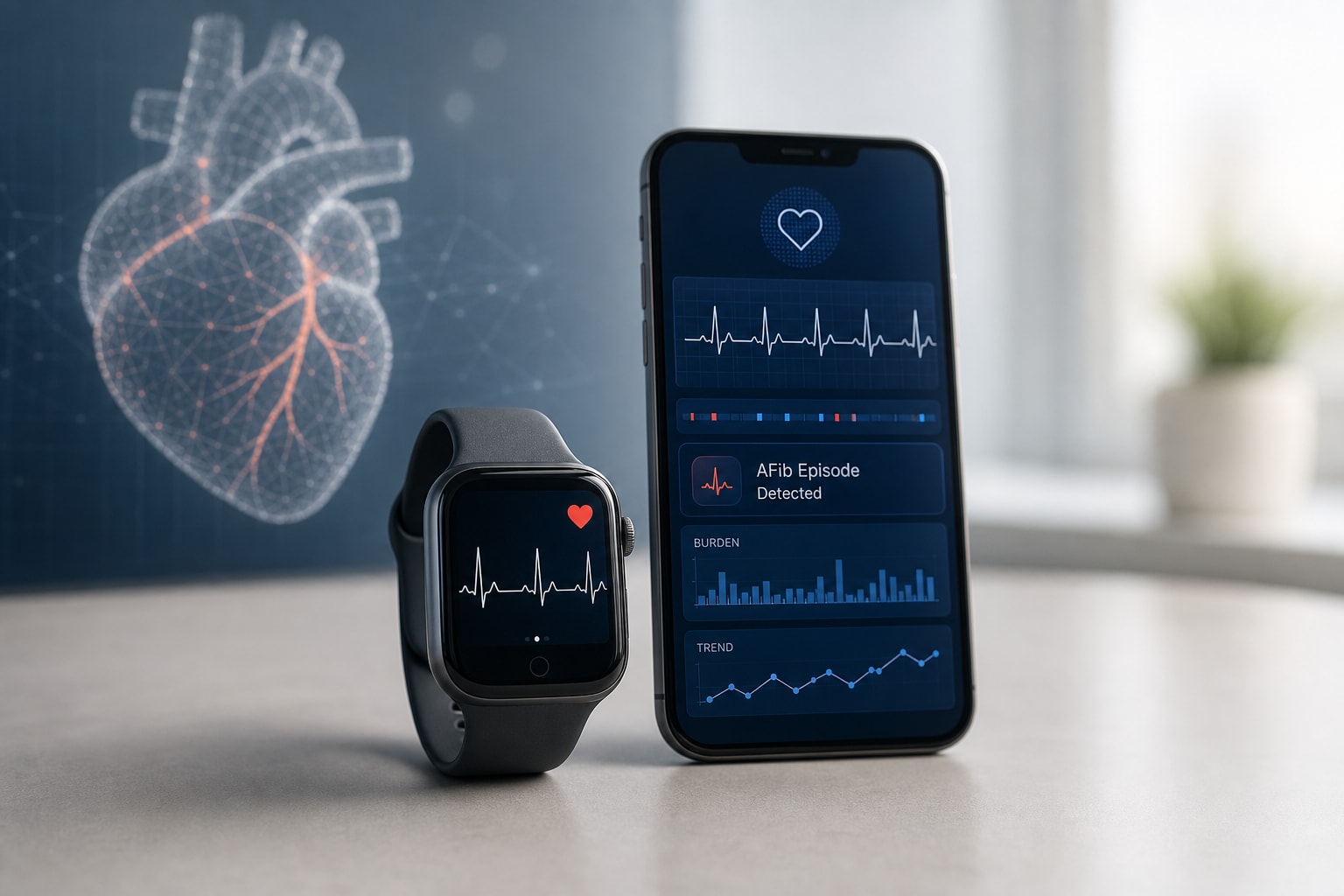
To evaluate the technical principles of wearable sensors and their integration into clinical practice for atrial fibrillation (AF) screening, monitoring, and management, focusing on their potential impact on patient outcomes.
Approach:
Review Methodology: Conducted a comprehensive literature search across multiple databases for articles on wearable devices and AF published between January 2010 and March 2026, focusing on clinical relevance, methodological rigor, and including original research or clinical trials.
Key Findings:
AF is the most prevalent cardiac arrhythmia, affecting approximately 59.7 million individuals globally.
Traditional episodic screening often fails to detect paroxysmal or asymptomatic AF.
Wearable devices using PPG and ECG enable continuous monitoring and improve AF detection rates.
The rise in detection of subclinical AF raises questions about the initiation of oral anticoagulation.
Interpretation:
Limitations:
Heterogeneity across device technologies and study designs may affect generalizability.
The review did not conduct a formal systematic review or meta-analysis.
Conclusion:
Successful clinical translation of wearable technology for AF management requires standardized algorithms and validated hardware.