CD19-negative non-IgM type lymphoplasmacytic lymphoma: a case report and literature review - Summary - MDSpire

CD19-negative non-IgM type lymphoplasmacytic lymphoma: a case report and literature review

  • By

  • Feng Lu

  • Fugang Li

  • Hongying Zhan

  • Yuanfeng Huang

  • Rong Huang

  • Xuchuan Jiang

  • Chengjie Ji

  • Gang Wang

  • Tao Chen

  • Xia Fu

  • Tao Wei

  • Weijie Jiang

  • July 13, 2026

Share

Objective:

To report a rare case of CD19-negative non-IgM type lymphoplasmacytic lymphoma (LPL) and discuss the diagnostic challenges associated with this atypical immunophenotype.

Approach:
  • Method: A
  • Method: 6
  • Method: 9
  • Method: -
  • Method: y
  • Method: e
  • Method: a
  • Method: r
  • Method: -
  • Method: o
  • Method: l
  • Method: d
  • Method: m
  • Method: a
  • Method: n
  • Method: w
  • Method: a
  • Method: s
  • Method: e
  • Method: v
  • Method: a
  • Method: l
  • Method: u
  • Method: a
  • Method: t
  • Method: e
  • Method: d
  • Method: f
  • Method: o
  • Method: r
  • Method: e
  • Method: l
  • Method: e
  • Method: v
  • Method: a
  • Method: t
  • Method: e
  • Method: d
  • Method: M
  • Method: -
  • Method: p
  • Method: r
  • Method: o
  • Method: t
  • Method: e
  • Method: i
  • Method: n
  • Method: a
  • Method: n
  • Method: d
  • Method: g
  • Method: l
  • Method: o
  • Method: b
  • Method: u
  • Method: l
  • Method: i
  • Method: n
  • Method: l
  • Method: e
  • Method: v
  • Method: e
  • Method: l
  • Method: s
  • Method: f
  • Method: o
  • Method: u
  • Method: n
  • Method: d
  • Method: d
  • Method: u
  • Method: r
  • Method: i
  • Method: n
  • Method: g
  • Method: a
  • Method: r
  • Method: o
  • Method: u
  • Method: t
  • Method: i
  • Method: n
  • Method: e
  • Method: h
  • Method: e
  • Method: a
  • Method: l
  • Method: t
  • Method: h
  • Method: e
  • Method: x
  • Method: a
  • Method: m
  • Method: i
  • Method: n
  • Method: a
  • Method: t
  • Method: i
  • Method: o
  • Method: n
  • Method: .
  • Method: C
  • Method: o
  • Method: m
  • Method: p
  • Method: r
  • Method: e
  • Method: h
  • Method: e
  • Method: n
  • Method: s
  • Method: i
  • Method: v
  • Method: e
  • Method: d
  • Method: i
  • Method: a
  • Method: g
  • Method: n
  • Method: o
  • Method: s
  • Method: t
  • Method: i
  • Method: c
  • Method: t
  • Method: e
  • Method: s
  • Method: t
  • Method: s
  • Method: i
  • Method: n
  • Method: c
  • Method: l
  • Method: u
  • Method: d
  • Method: i
  • Method: n
  • Method: g
  • Method: s
  • Method: e
  • Method: r
  • Method: u
  • Method: m
  • Method: p
  • Method: r
  • Method: o
  • Method: t
  • Method: e
  • Method: i
  • Method: n
  • Method: e
  • Method: l
  • Method: e
  • Method: c
  • Method: t
  • Method: r
  • Method: o
  • Method: p
  • Method: h
  • Method: o
  • Method: r
  • Method: e
  • Method: s
  • Method: i
  • Method: s
  • Method: ,
  • Method: b
  • Method: o
  • Method: n
  • Method: e
  • Method: m
  • Method: a
  • Method: r
  • Method: r
  • Method: o
  • Method: w
  • Method: b
  • Method: i
  • Method: o
  • Method: p
  • Method: s
  • Method: y
  • Method: ,
  • Method: i
  • Method: m
  • Method: m
  • Method: u
  • Method: n
  • Method: o
  • Method: h
  • Method: i
  • Method: s
  • Method: t
  • Method: o
  • Method: c
  • Method: h
  • Method: e
  • Method: m
  • Method: i
  • Method: s
  • Method: t
  • Method: r
  • Method: y
  • Method: ,
  • Method: a
  • Method: n
  • Method: d
  • Method: f
  • Method: l
  • Method: o
  • Method: w
  • Method: c
  • Method: y
  • Method: t
  • Method: o
  • Method: m
  • Method: e
  • Method: t
  • Method: r
  • Method: y
  • Method: w
  • Method: e
  • Method: r
  • Method: e
  • Method: p
  • Method: e
  • Method: r
  • Method: f
  • Method: o
  • Method: r
  • Method: m
  • Method: e
  • Method: d
  • Method: t
  • Method: o
  • Method: a
  • Method: s
  • Method: s
  • Method: e
  • Method: s
  • Method: s
  • Method: t
  • Method: h
  • Method: e
  • Method: p
  • Method: a
  • Method: t
  • Method: i
  • Method: e
  • Method: n
  • Method: t
  • Method: '
  • Method: s
  • Method: c
  • Method: o
  • Method: n
  • Method: d
  • Method: i
  • Method: t
  • Method: i
  • Method: o
  • Method: n
  • Method: a
  • Method: n
  • Method: d
  • Method: e
  • Method: s
  • Method: t
  • Method: a
  • Method: b
  • Method: l
  • Method: i
  • Method: s
  • Method: h
  • Method: a
  • Method: d
  • Method: i
  • Method: a
  • Method: g
  • Method: n
  • Method: o
  • Method: s
  • Method: i
  • Method: s
  • Method: .
Key Findings:
  • The patient exhibited elevated serum IgG and an IgG-λ monoclonal protein.
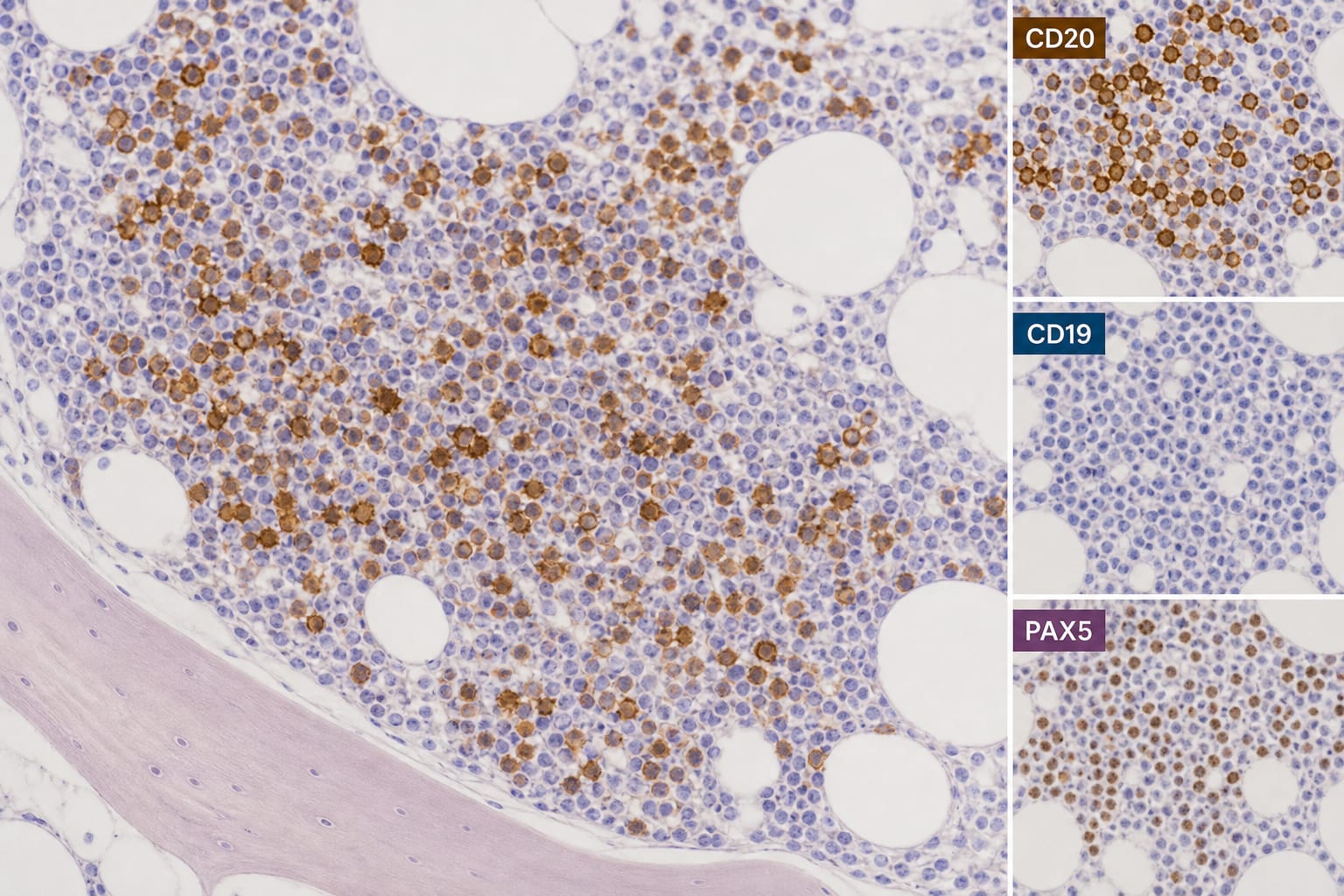
  • Bone marrow biopsy revealed normocellular marrow with approximately 40% cellularity and no characteristic lymphoid aggregates.
  • Flow cytometry identified a CD19-negative, CD20-positive monoclonal B lymphocyte population.
Interpretation:

The case highlights the importance of a multi-platform diagnostic approach in identifying atypical immunophenotypes in hematologic malignancies.

Limitations:
  • The study is based on a single case report, limiting generalizability.
  • Potential for misdiagnosis due to the atypical immunophenotype of CD19-negative clonal populations.
Conclusion:

Accurate diagnosis of non-IgM type LPL requires integration of morphological, immunophenotypic, and molecular findings.

Original Source(s)

Related Content