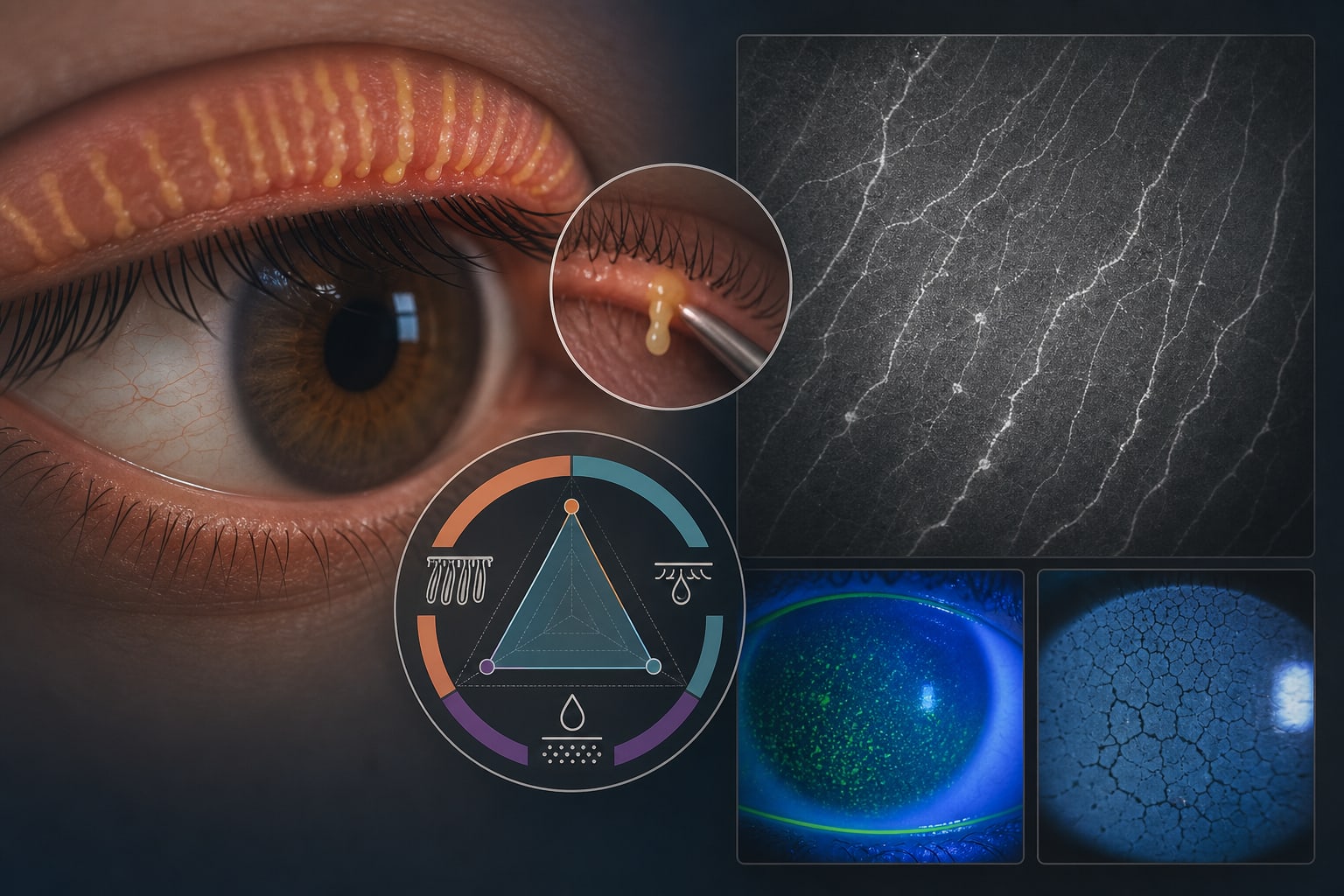
To evaluate the efficacy of intense pulsed light (IPL) therapy in improving dry eye disease (DED) symptoms and tear film dynamics, particularly in patients with meibomian gland dysfunction (MGD).
Approach:
Key Findings:
Both groups showed improvements in NITBUT, meibomian gland expressibility, corneoconjunctival staining, and OSDI scores by week 6.
At week 12, Group A demonstrated superior outcomes in NITBUT, tear meniscus height, and tear-film lipid layer quality compared to Group B.
Only the three-session regimen resulted in a significant increase in lymphotoxin-alpha (LT-α) levels, indicating a potential restoration of immune homeostasis.
Interpretation:
IPL therapy not only alleviates symptoms of DED but also enhances tear film stability and reduces ocular surface inflammation, suggesting a biologically active role in treatment.
Limitations:
The study involved a small sample size of 30 patients.
Subjective symptom scores did not show significant differences at 12 weeks, indicating a potential plateau in perceived benefits.
Conclusion:
IPL should be considered a core strategy in managing evaporative DED rather than a supplementary option, due to its ability to improve both symptoms and objective measures of ocular health.