Conexiant’s news site is now MDSpire News. Learn more
Advertisement
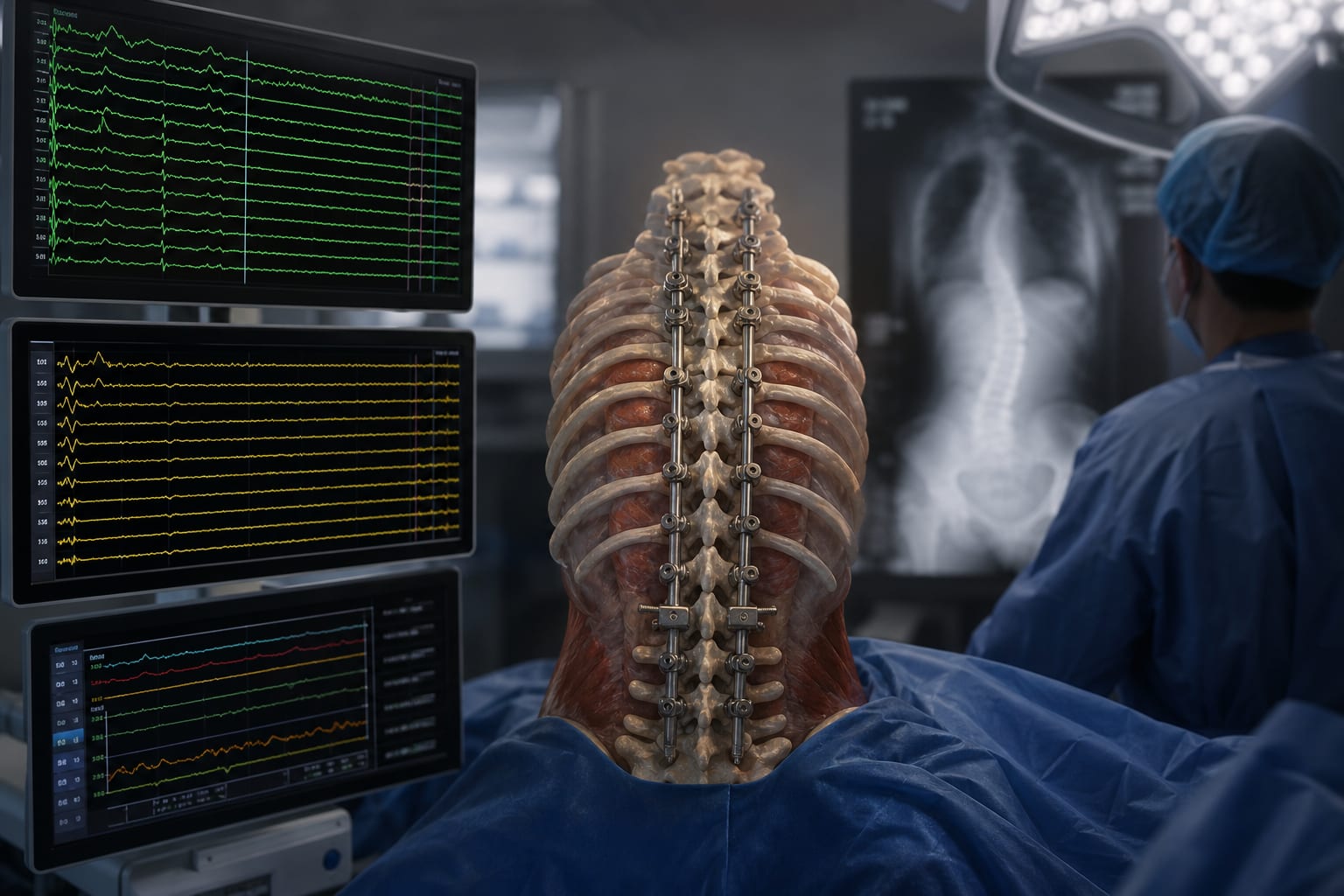
Utilizing Intraoperative Motor Evoked Potentials and Electromyography During the Wake-Up Phase as Complementary Tools to the Wake-Up Test in Complex Spinal Deformity Surgery
To evaluate the adjunctive value of intraoperative motor evoked potential (MEP) recovery and electromyographic (EMG) activity during the wake-up phase in predicting postoperative neurological outcomes in high-risk patients with intraoperative MEP alerts during severe spinal deformity surgery.
Approach:
Key Findings:
78.0% of patients without immediate postoperative complete lower-limb paralysis recovered motor function immediately after surgery.
34.6% of patients with immediate postoperative complete lower-limb paralysis recovered within 1 month.
The false-positive rate for predicting complete paralysis was 20.3% for the wake-up test alone, 10.2% for MEP recovery alone, and 33.9% for EMG alone.
The false-positive rate decreased to 6.8% when MEP and EMG were combined, and to 0% when all three modalities were considered together.
MEP and EMG responses were obtained earlier during arousal than direct wake-up test responses.
Interpretation:
In high-risk severe spinal deformity cases with intraoperative MEP alerts, MEP recovery and EMG activity during the wake-up phase may provide useful complementary information to the traditional wake-up test for assessing postoperative neurological risk.
Limitations:
The study focused on a specific high-risk subgroup of patients, limiting generalizability.
Retrospective design may introduce biases.
Conclusion:
A multimodal intraoperative assessment strategy may improve the interpretation of neurological status during arousal and help reduce false-positive findings in selected patients.