Trends in liver failure-related mortality among middle-aged and older adults with digestive system malignant tumors in the United States, 1999–2023 - Summary - MDSpire
Advertisement
Trends in liver failure-related mortality among middle-aged and older adults with digestive system malignant tumors in the United States, 1999–2023
To quantify national temporal trends and disparities in deaths involving both digestive system malignant tumors (DSMTs) and liver failure among middle-aged and older adults in the United States.
Approach:
Study Design: Population-based retrospective repeated cross-sectional study using CDC WONDER database.
Data Analysis: Analyzed death records from 1999 to 2023 for patients aged ≥45 years with DSMTs, using ICD-10 codes.
Mortality Rates: Calculated age-adjusted mortality rates (AAMRs) and assessed temporal trends using Joinpoint regression.
Key Findings:
82,796 liver failure-related deaths occurred among patients aged ≥45 years with DSMTs from 1999 to 2023.
Annual deaths declined from 4,131 in 1999 to 3,250 in 2023 (−21.33%).
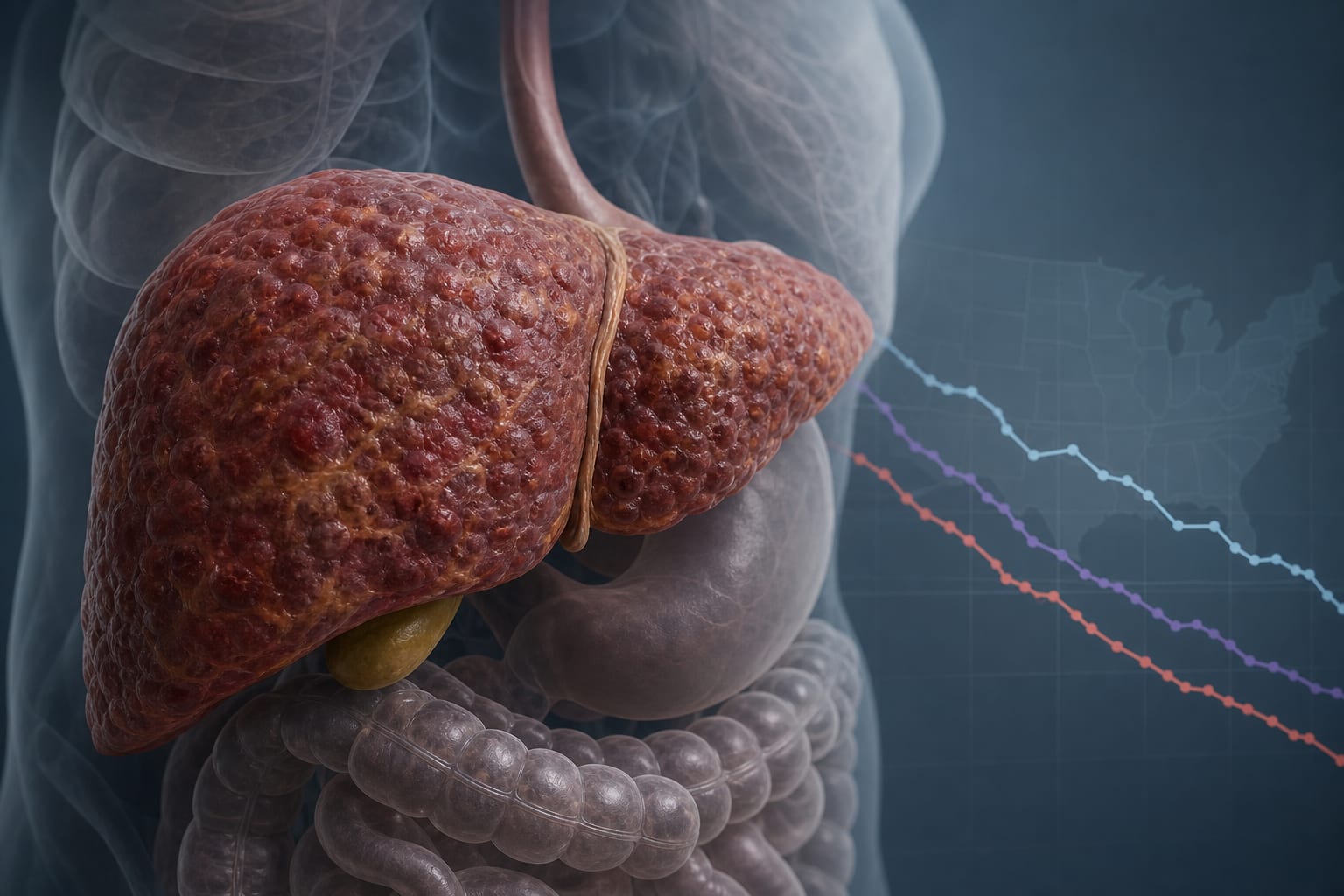
AAMR decreased from 4.34 per 100,000 population (95% CI: 4.21–4.47) to 2.08 per 100,000 (95% CI: 2.01–2.15) (AAPC = −2.94%, 95% CI: −3.18 to −2.69).
Males exhibited higher mortality than females, with increased deaths among Hispanic individuals.
Geographic variation in mortality trends was noted, with some regions showing attenuated declines.
Interpretation:
Liver failure-related mortality among middle-aged and older patients with DSMTs has declined significantly over the past two decades, but improvements have slowed and remain uneven across different populations and regions.
Limitations:
Study relies on death certificate data, which may have inaccuracies.
Temporal trends may not account for all confounding factors affecting mortality.
Conclusion:
Liver failure-related mortality among middle-aged and older patients with DSMTs has declined significantly over the past two decades, but this improvement has slowed and remains uneven across populations and regions.