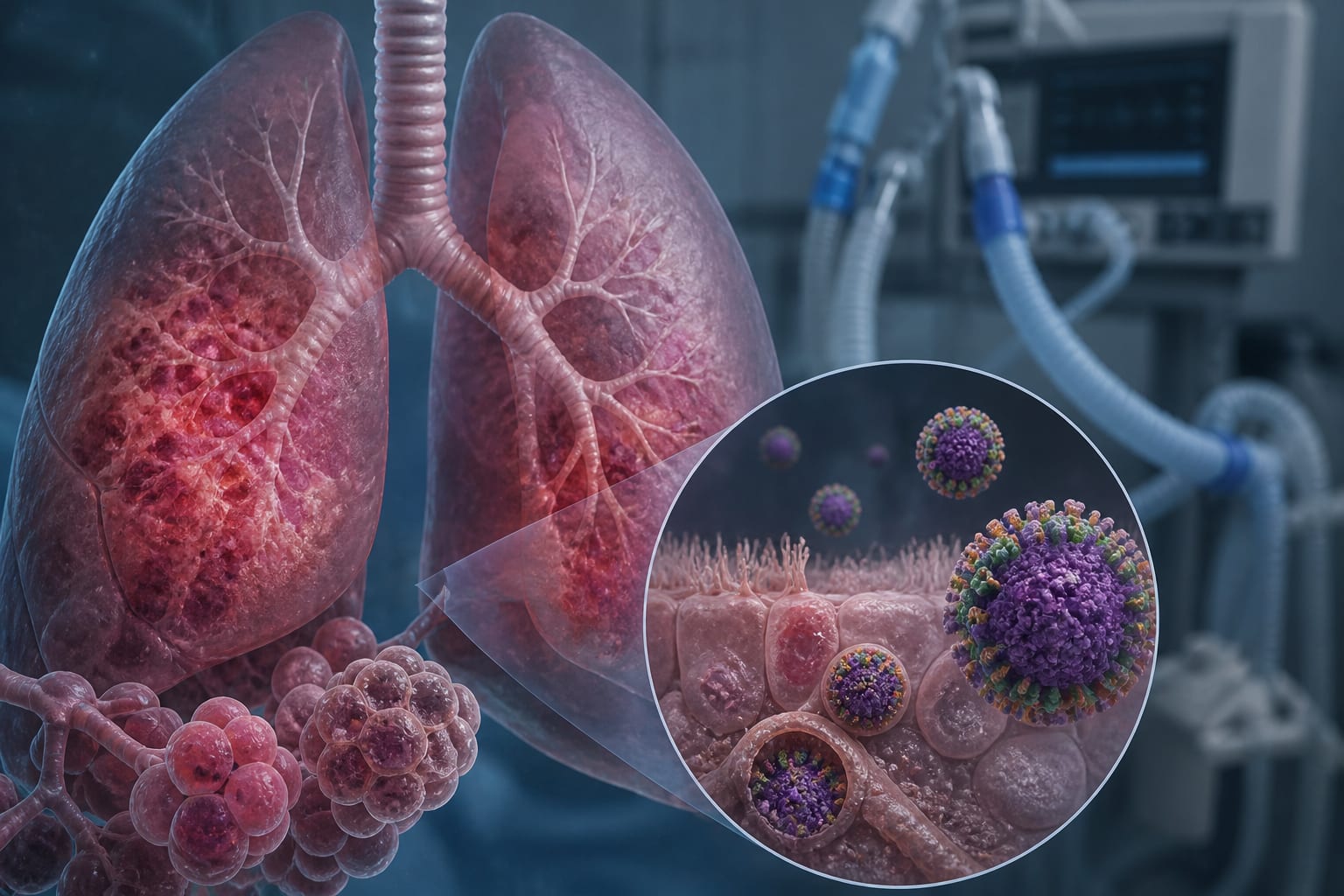
Assess whether Particles in Exhaled Air (PExA) can noninvasively measure antigen-specific antibodies in the lower airways.
Approach:
Sampling: PExA collected aerosolized respiratory tract lining fluid from distal airways after participants inhaled HEPA-filtered air.
Study group and analysis: The analysis included samples from 28 health care workers, 18 of whom had confirmed COVID-19, influenza, or RSV. Researchers measured antigen-specific IgA and IgG.
Key Findings:
PExA measurements of antigen-specific IgA and IgG showed low variability.
PExA and serum IgG were strongly correlated; the authors suggested systemic contribution may account for lower-airway IgG levels.
IgA correlations between PExA and serum were weaker, which the authors suggested might reflect local lung production.
PExA antibody levels correlated with those in nasal secretions, which had a higher IgA/IgG ratio.
Interpretation:
The authors concluded that PExA offers a practical way to study lower-airway mucosal immunity and evaluate vaccines intended to induce mucosal responses.
Limitations:
The study was a proof of concept and included samples from 28 health care workers.
The authors called for further research to assess broader applicability and potential use in clinical or interventional studies.
Conclusion:
The authors identified PExA as a potential tool for evaluating next-generation mucosal vaccines and called for further study.