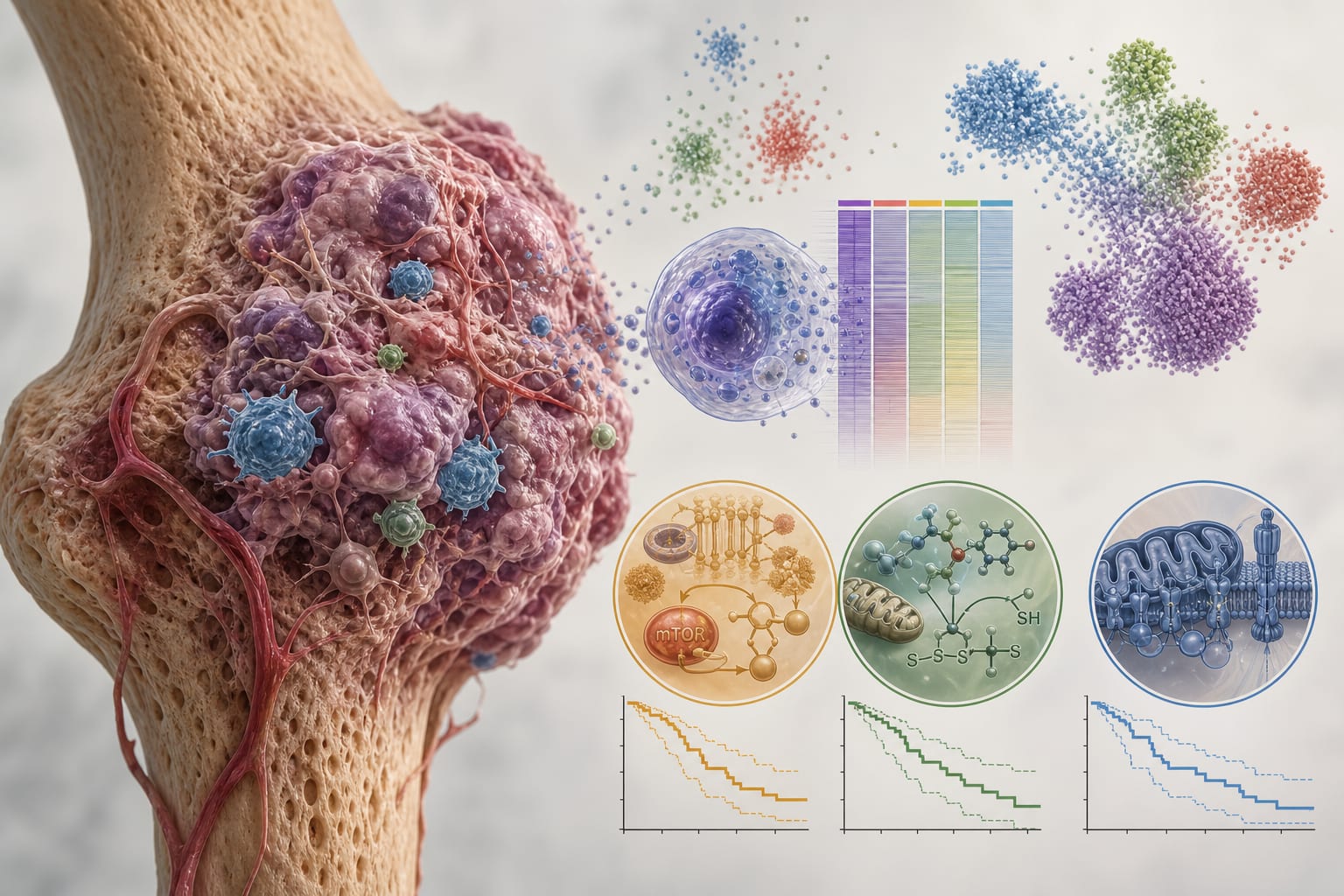
To delineate metabolic subtypes in osteosarcoma using a pathway-level and cell-aware framework, connecting them to clinical phenotype and microenvironmental context, emphasizing the implications for treatment.
Approach:
Key Findings:
C2 subtype showed favorable survival (3-year overall survival: 90.8%), while C1 and C3 had adverse trajectories (overall survival: 60.0% and 61.9%, respectively), indicating potential for targeted therapies.
C1 signatures predominantly mapped to stromal/mesenchymal populations, C2 to immune cells, and C3 to malignant tumor cells, suggesting distinct therapeutic targets.
The study provides a cell-of-origin map of metabolic subtypes that supports risk stratification and therapeutic hypothesis generation, enhancing clinical relevance.
Interpretation:
The findings illustrate that bulk transcriptomic signatures reflect cellular composition, emphasizing the importance of metabolic heterogeneity in osteosarcoma and its implications for treatment strategies.
Limitations:
Current classification schemes may miss alternative metabolic configurations due to narrow pathway windows, such as focusing solely on glycolysis or lipid metabolism.
Tissue-level metabolic signals often lack clear cellular provenance, complicating the translation of subtype labels into mechanisms and therapeutic interventions.
Conclusion:
The study offers a comprehensive framework for understanding metabolic subtypes in osteosarcoma, linking them to clinical outcomes and immune landscapes, and suggesting avenues for future research.