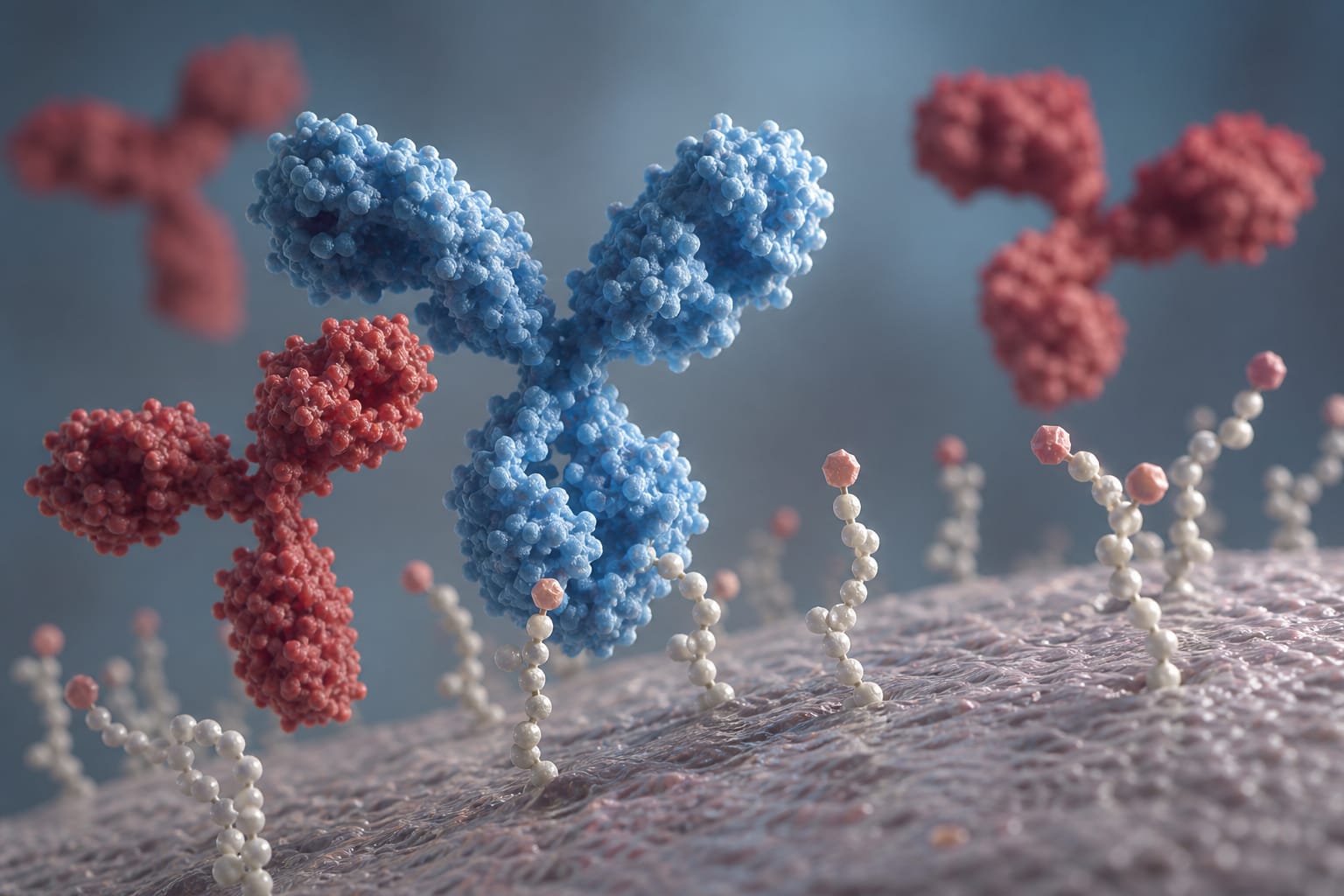
NIH Scientists Discover Uncommon Antibodies That May Help Address Alpha-Gal Syndrome
-
September 1, 2026
Objective:
To identify uncommon antibodies that may guide the development of an intervention for alpha-gal syndrome (AGS).
Approach:
- Research Background: The study emerged from malaria research, aiming to find antibodies that could prevent malaria infection.
- Antibody Isolation: Researchers isolated 42 alpha-gal-specific antibodies from individuals exposed to malaria.
- Screening for AGS: The team screened these antibodies for their potential to combat AGS, identifying 13 that could bind AGS allergens.
- Functional Testing: Two antibodies were found to prevent IgE from attaching to AGS allergens, while another disrupted basophil activation.
Key Findings:
- Approximately 110,000 suspected AGS cases have been identified in the U.S. since 2010.
- The study identified 13 antibodies that could bind to AGS allergens.
Limitations:
- The study primarily focused on antibodies derived from individuals exposed to malaria, which may limit generalizability.
- Further studies are needed to assess the efficacy of identified antibodies in preventing allergic reactions.
Sources:
Based on findings from:
NIH researchers identify rare antibodies with potential to combat alpha-gal syndrome
National Institutes Of Health, 2026.
https://www.nih.gov/news-events/news-releases/nih-researchers-identify-rare-antibodies-potential-combat-alpha-gal-syndrome
This content is an AI-generated, fully rewritten summary based on a published scholarly article. It does not reproduce the original text and is not a substitute for the original publication. Readers are encouraged to consult the source for full context, data, and methodology.