Electroacupuncture as an eosinophil-targeting treatment in ovalbumin-induced allergic rhinitis involving β2-adrenergic receptor in a mouse model - Summary - MDSpire
Advertisement
Electroacupuncture as an eosinophil-targeting treatment in ovalbumin-induced allergic rhinitis involving β2-adrenergic receptor in a mouse model
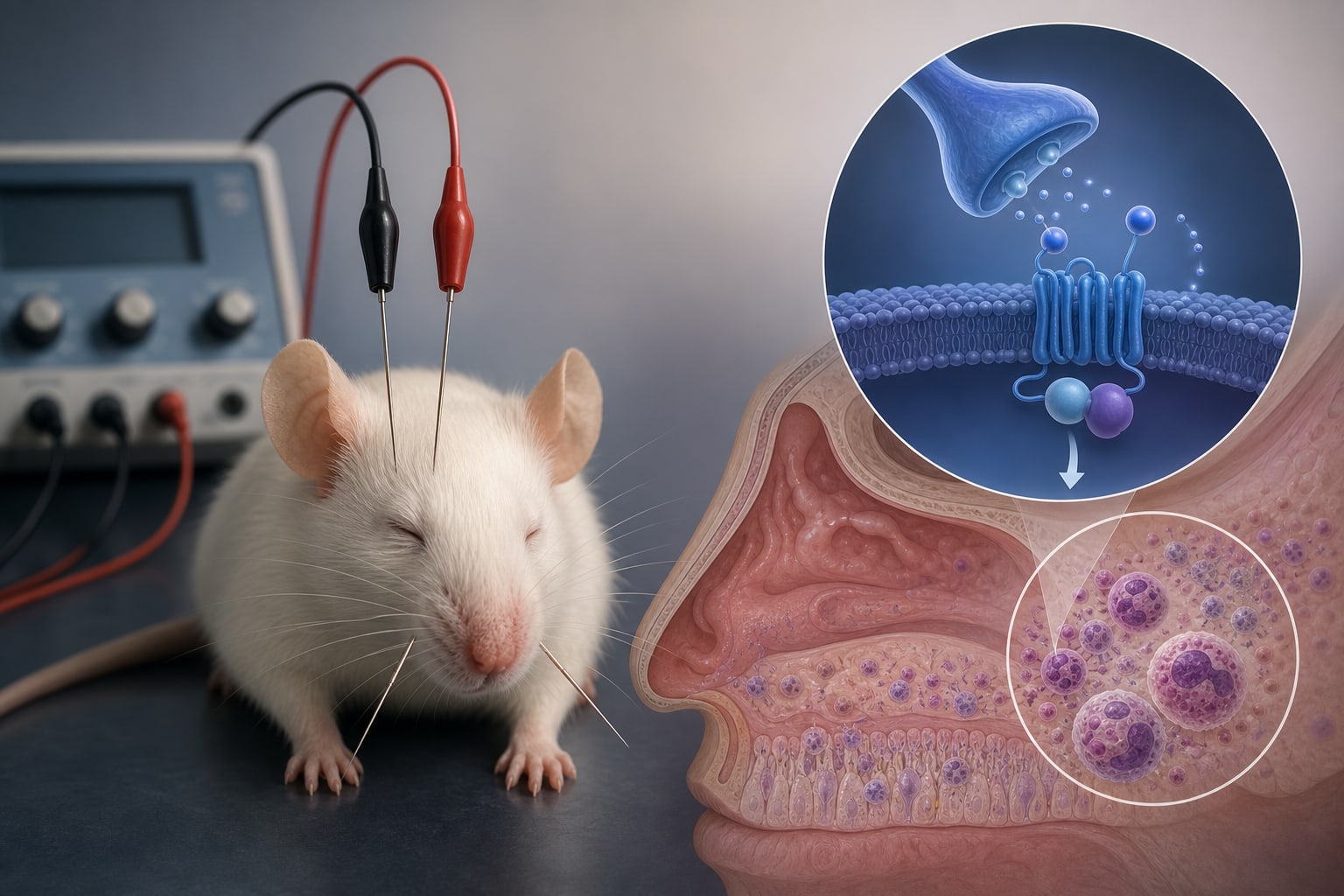
To investigate whether electroacupuncture (EA) attenuates eosinophilic inflammation in allergic rhinitis (AR) and to explore the underlying neuroimmune mechanisms.
Approach:
Key Findings:
EA reduced nasal rubbing, redness, and olfactory dysfunction, comparable to CLP.
Both EA and CLP reduced IL-5, IL-13, and serum OVA-specific IgE levels.
Only EA reversed OVA-induced nasal eosinophil infiltration and suppressed RNASE2A expression.
Pre-treatment with β2-adrenergic antagonist butoxamine abolished EA's effects on eosinophilic inflammation.
EA was associated with elevated plasma norepinephrine and epinephrine levels.
Interpretation:
EA reduces eosinophilic inflammation and AR behaviors through β2-adrenergic receptor activation, differing from standard antihistamines that primarily target mast cells.
Conclusion:
EA represents a promising complementary intervention for eosinophil-driven allergic rhinitis.