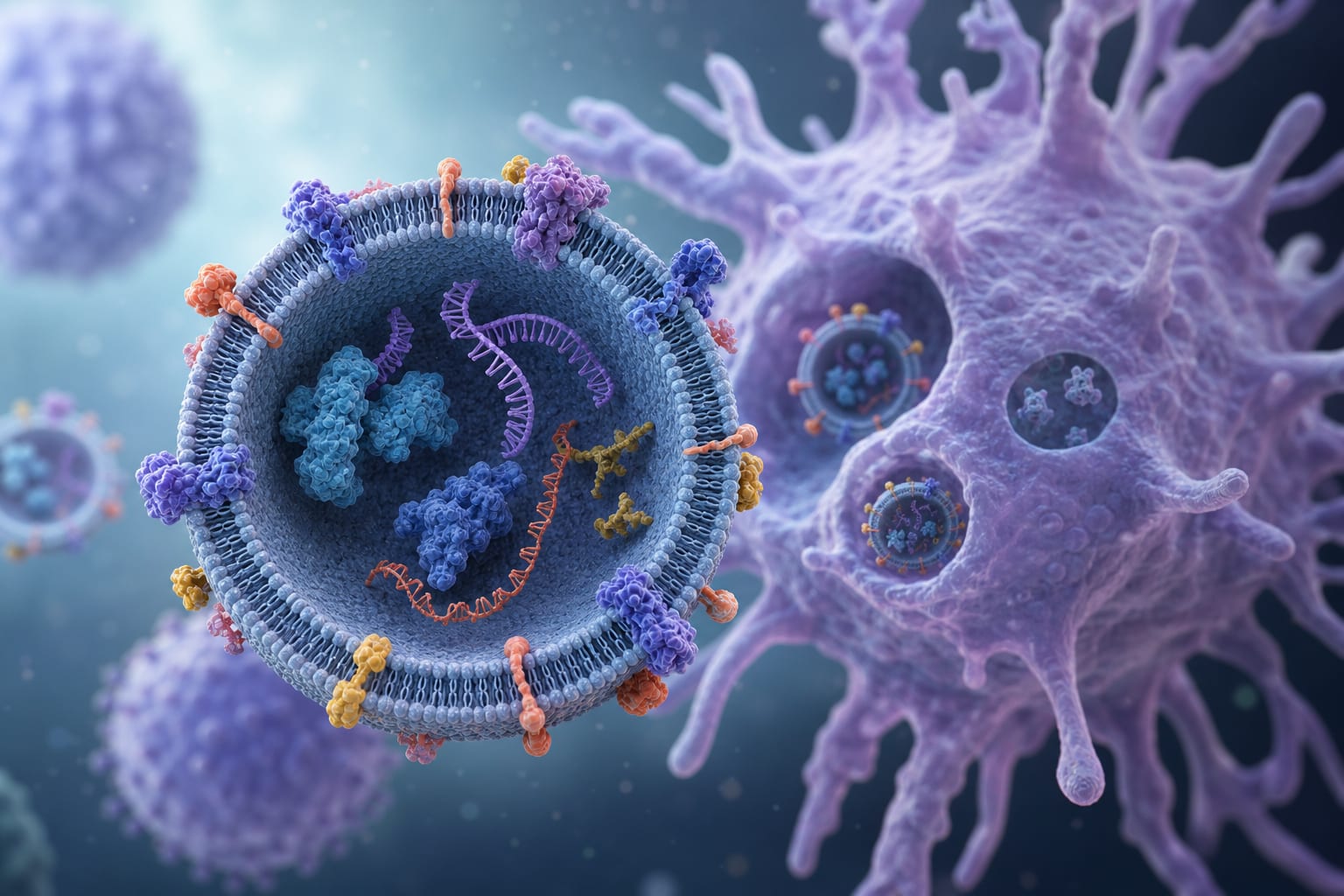
To explore the engineering strategies of extracellular vesicles (EVs) as potential vaccine delivery vehicles against viral infections, highlighting their significance in immunogenicity.
Approach:
Key Findings:
EVs provide diverse engineering opportunities for efficient viral antigen presentation.
Robust immune responses were elicited both in vitro and in vivo using engineered EVs.
A wide spectrum of viruses has been targeted, leading to versatile and pathogen-specific vaccine strategies.
Interpretation:
Advancing research in EVs could enhance understanding of their role in vaccine delivery and the mechanisms of viral infections.
Limitations:
Research on EVs as vaccine delivery systems is still in early stages, with many studies being preliminary.
Optimization of EV engineering for effective therapeutic applications is ongoing, facing challenges such as scalability and reproducibility.
Conclusion:
Substantial opportunities remain to harness the potential of EVs in biomedical research, particularly for developing targeted vaccines against viral infections.