Baicalin suppresses colorectal cancer proliferation and induces M1 polarization of tumor-associated macrophages by promoting proteasomal degradation of HK2 - Summary - MDSpire
Advertisement
Baicalin suppresses colorectal cancer proliferation and induces M1 polarization of tumor-associated macrophages by promoting proteasomal degradation of HK2
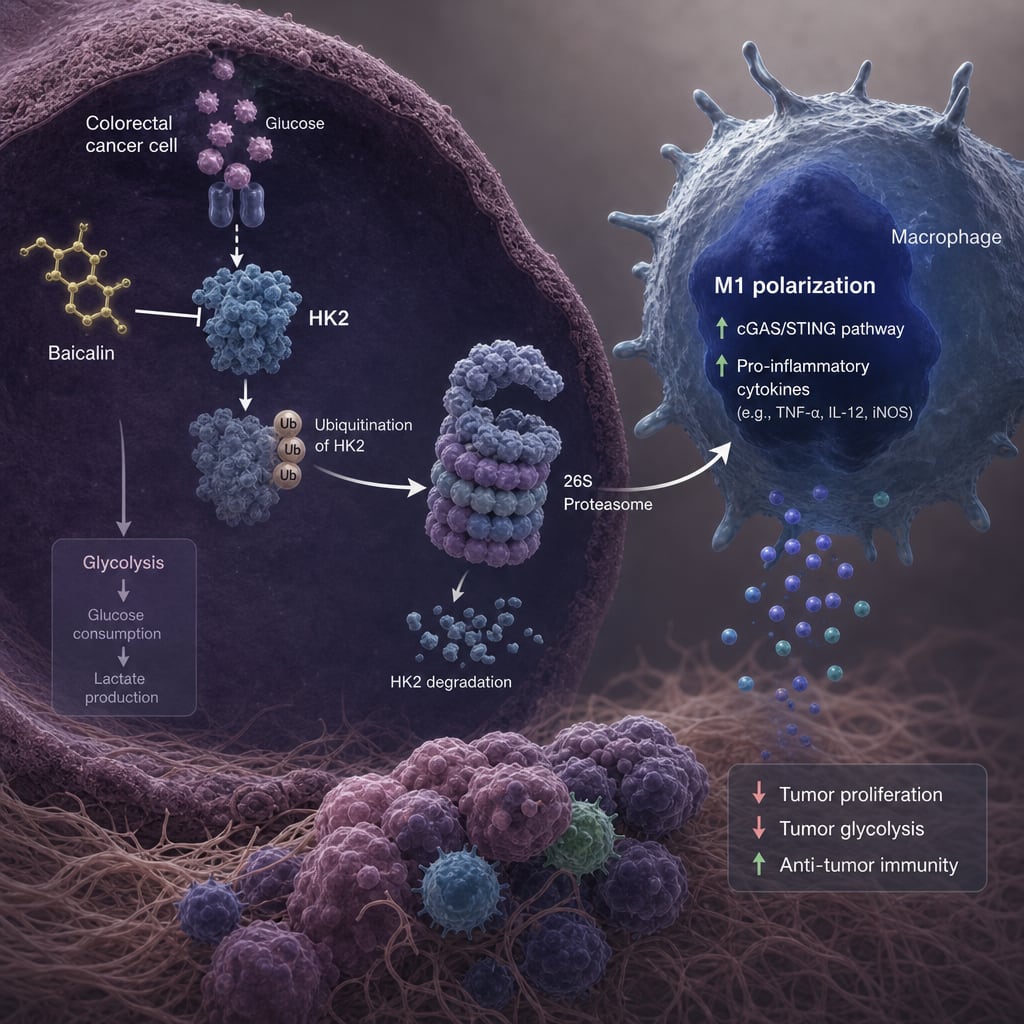
To investigate the effects of baicalin on colorectal cancer (CRC) cell proliferation and its mechanism involving hexokinase II (HK2) degradation and immune modulation, particularly focusing on the cGAS/STING pathway.
Key Findings:
Baicalin significantly suppressed CRC cell proliferation and colony formation, indicating its potential as a therapeutic agent.
Baicalin promotes ubiquitination and proteasomal degradation of HK2, which is crucial for its anti-cancer effects.
Baicalin reduces glycolysis and induces mitochondrial damage in CRC cells, contributing to its efficacy.
Activation of the cGAS/STING pathway leads to increased IFN-β production, enhancing immune response.
Baicalin promotes M1-like polarization of tumor-associated macrophages, reshaping the tumor immune microenvironment.
Interpretation:
Baicalin targets HK2 to inhibit CRC cell metabolism and reshape the tumor immune microenvironment, suggesting its potential as a therapeutic agent in CRC treatment.
Limitations:
The study primarily focuses on in vitro and animal models; clinical validation is needed to confirm findings in human subjects.
Long-term effects and potential side effects of baicalin were not evaluated, which are critical for assessing its therapeutic viability.
Conclusion:
Baicalin represents a promising therapeutic strategy for CRC by inhibiting HK2 and modulating the immune response, warranting further clinical investigation.