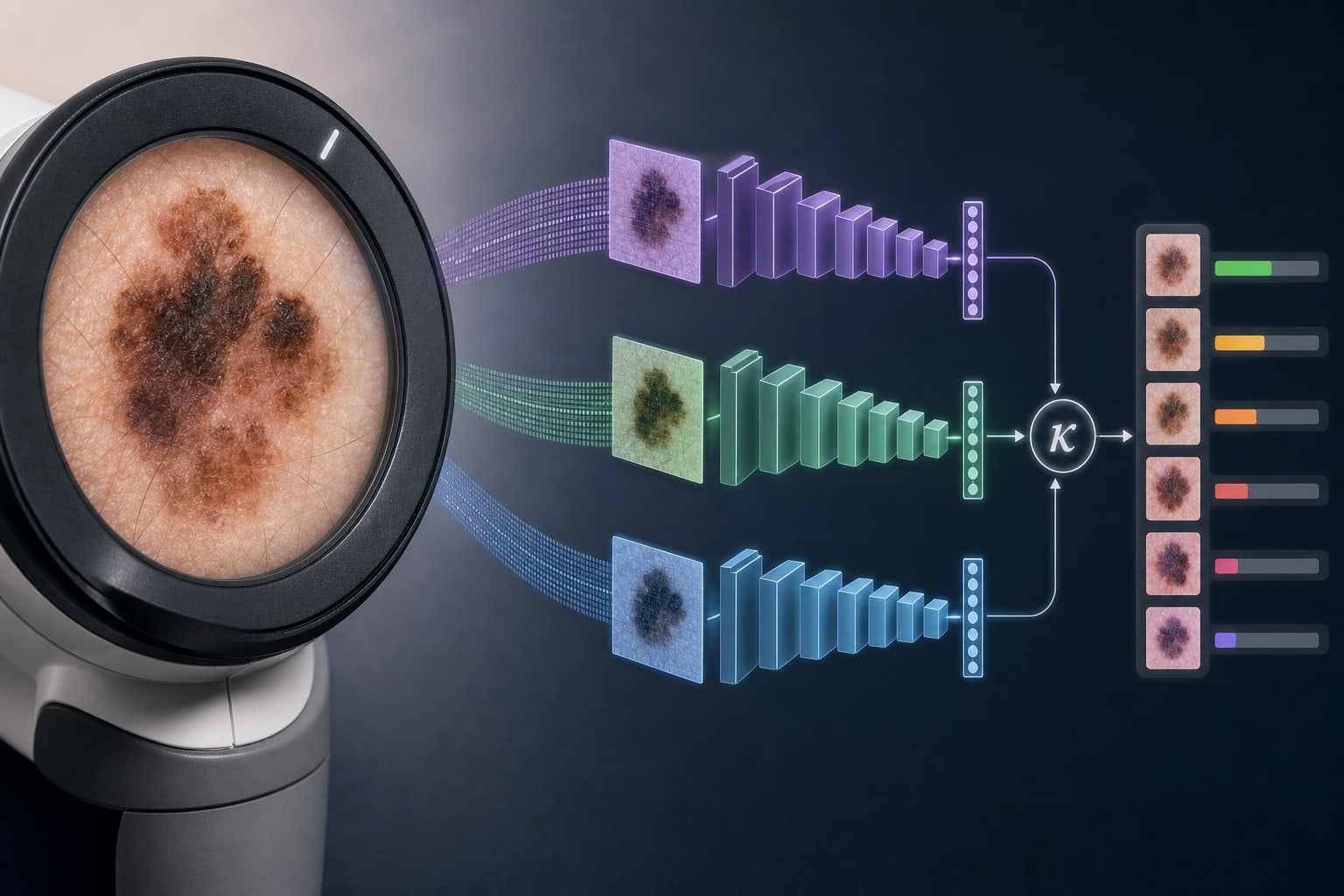
To enhance the classification of skin lesions by addressing challenges in dataset imbalance, transfer learning architecture selection, feature emphasis, and model aggregation.
Approach:
Key Findings:
The structured augmentation framework effectively reduced bias in skin lesion classification.
The TASE framework demonstrated improved performance in capturing both shallow and deep representations.
Triple-Attention mechanisms enhanced predictive accuracy by focusing on critical image regions.
Pre-prediction stacking configurations improved feature fusion and model robustness.
Interpretation:
The proposed methodology addresses significant challenges in skin lesion detection.
Limitations:
The study may be limited by the availability of diverse and representative skin lesion datasets.
Potential computational demands of the proposed models could restrict their applicability in resource-constrained environments.
Conclusion:
The Tri-Path Attention Stacked Ensemble model shows potential in improving skin lesion classification accuracy.