CFTR functions as a tumor suppressor in adenoid cystic carcinoma and its silencing reveals an associated vulnerability involving the Hsp70 chaperone system - Summary - MDSpire
Advertisement
CFTR functions as a tumor suppressor in adenoid cystic carcinoma and its silencing reveals an associated vulnerability involving the Hsp70 chaperone system
To investigate the role of CFTR in adenoid cystic carcinoma and its potential as a tumor suppressor.
Approach:
Gene Expression Analysis: Differential expression analysis of multiple transcriptomic cohorts identified CFTR as downregulated in adenoid cystic carcinoma.
Functional Experiments: Ectopic expression and knockdown of CFTR were performed in SACC-83 and SACC-LM cell lines, alongside RNA sequencing and Western blot analyses.
Pharmacological Inhibition: Hsp70 was inhibited using VER155008, and the heat shock response was activated by HSF1A to assess effects on cell viability and migration.
Xenograft Experiments: Subcutaneous xenograft experiments in nude mice evaluated tumor growth following stable CFTR knockdown.
Key Findings:
Low CFTR expression is associated with inferior overall survival in preliminary analyses.
CFTR acts as a tumor suppressor, with its ectopic expression suppressing cell proliferation, migration, and invasion.
CFTR knockdown enhances malignant phenotypes in cell lines.
Pharmacological inhibition of Hsp70 mimics the effects of CFTR restoration, reducing cell viability and inducing apoptosis.
Stable CFTR knockdown accelerates tumor growth in xenograft models.
Interpretation:
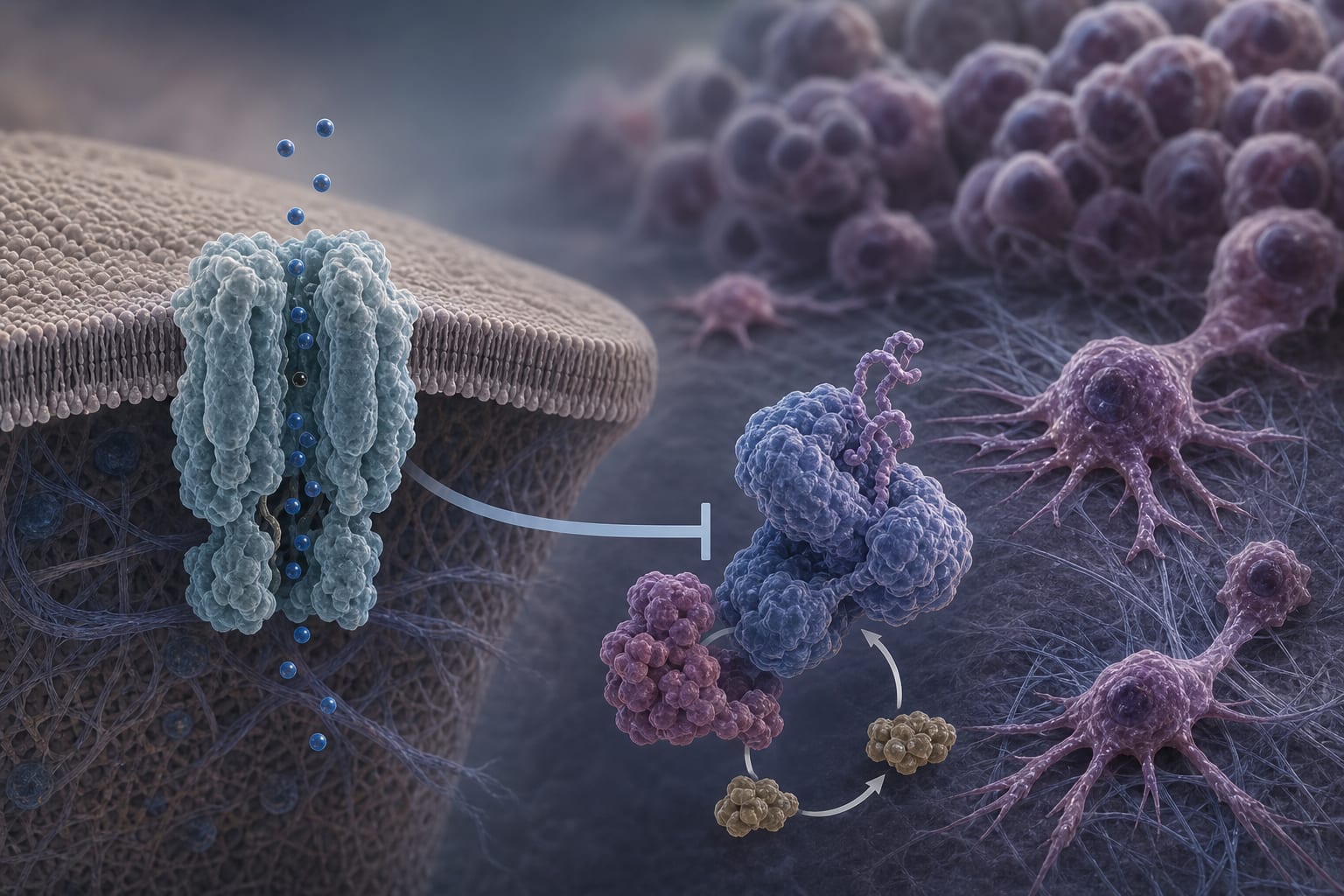
CFTR silencing in adenoid cystic carcinoma correlates with increased Hsp70 expression, suggesting a potential therapeutic target in Hsp70.
Limitations:
The association of low CFTR expression with poor survival requires validation in larger cohorts.
The study primarily relies on cell line models and xenografts, which may not fully replicate human disease.
Conclusion:
Targeting Hsp70 presents a preclinical rationale for further investigation in adenoid cystic carcinoma treatment.