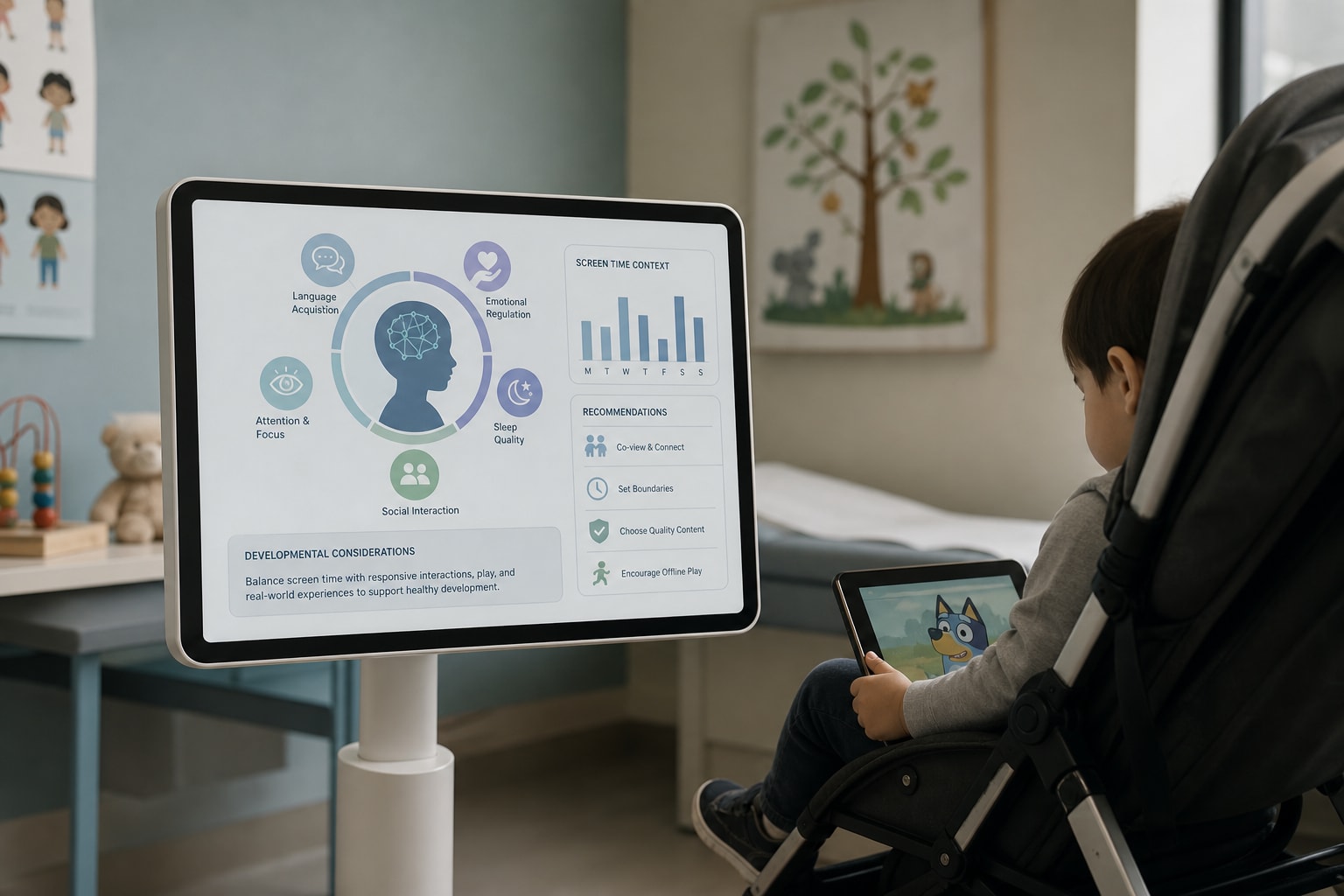
To explore the potential of AI tools in enhancing specific aspects of child development through interactive screen time.
Key Findings:
Higher screen time in early childhood is associated with poorer developmental outcomes, particularly in language and social skills.
Passive screen exposure can lead to language delays, attention problems, and social difficulties, highlighting the need for interactive content.
Interactive engagement during screen time can significantly improve developmental outcomes, making it a crucial focus for AI development.
Interpretation:
The author believes that AI can be designed to support child development by fostering interactive learning experiences that promote active engagement rather than passive consumption.
Limitations:
Current AI products are primarily designed for engagement rather than developmental benefits, limiting their effectiveness.
There is a significant lack of pediatric-focused guidelines for AI tools for children, which poses risks for their development.
Conclusion:
The author calls for urgent collaboration between pediatricians, technology companies, and parents to create AI tools that genuinely support child development, emphasizing the need for rigorous testing and evidence-based design to avoid potential pitfalls.
Interviews with hospital leaders and employed physicians highlighted financial pressures, perceived care-integration benefits, and unresolved operational tensions following acquisition.