Short-term efficacy and safety of recombinant human adenovirus type 5 combined with PD-1 immune checkpoint inhibitors and SOX regimen in neoadjuvant therapy of locally advanced gastric cancer: a retrospective study - Summary - MDSpire
Advertisement
Short-term efficacy and safety of recombinant human adenovirus type 5 combined with PD-1 immune checkpoint inhibitors and SOX regimen in neoadjuvant therapy of locally advanced gastric cancer: a retrospective study
To evaluate the short-term efficacy and safety of recombinant human adenovirus type 5 (H101) combined with S-1 plus oxaliplatin and PD-1 immune checkpoint inhibitors (SOXP regimen) in the neoadjuvant treatment of locally advanced gastric cancer (LAGC).
Approach:
Study Design: A retrospective study was conducted enrolling 25 patients with LAGC who received H101 combined with the SOXP regimen at The Affiliated Hospital of Guizhou Medical University between January 1, 2025, and August 30, 2025.
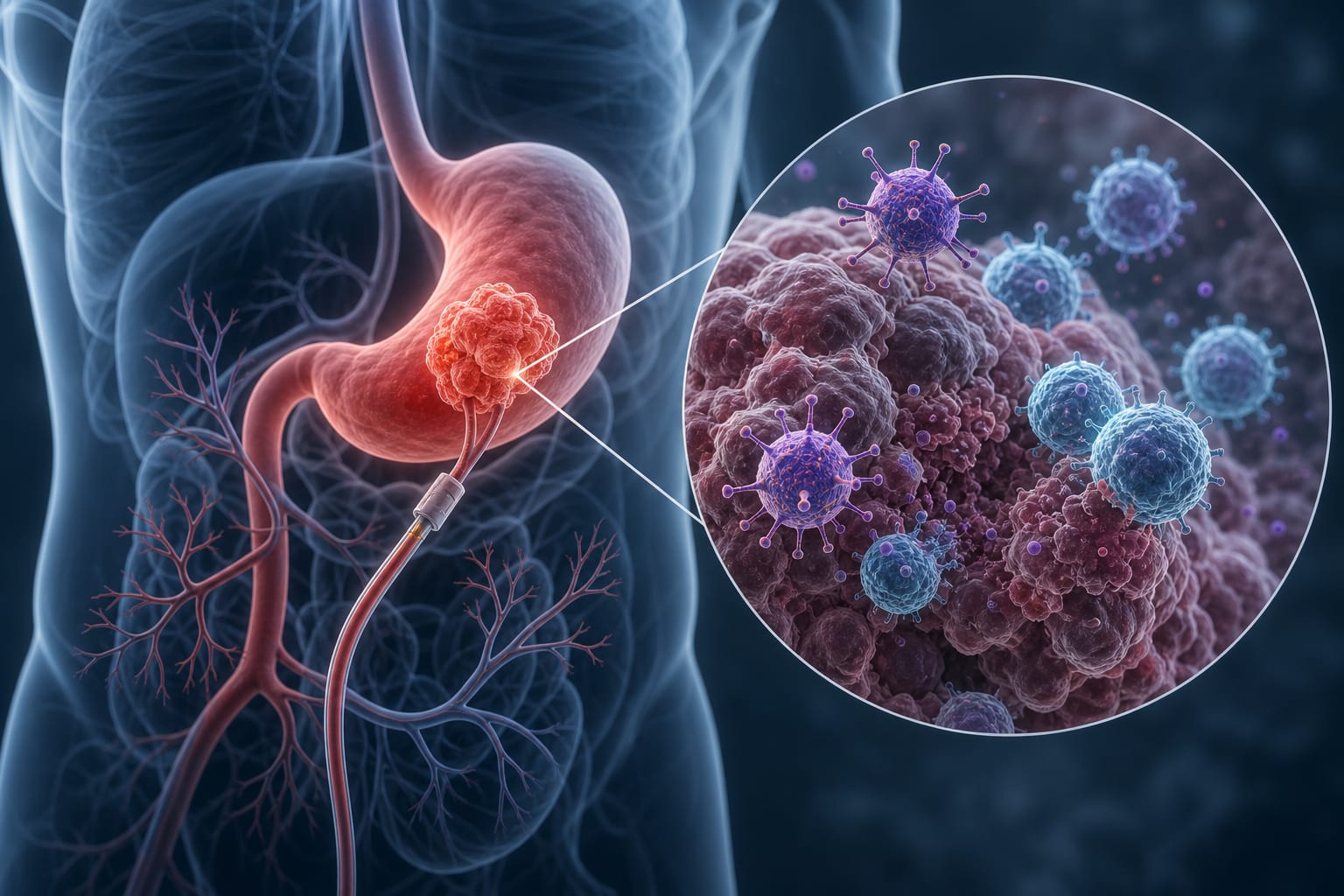
Treatment Administration: H101 was administered via interventional perfusion chemotherapy targeting the gastric cancer during the first cycle of neoadjuvant therapy.
Assessment: After two cycles of neoadjuvant treatment, tumor downstaging was assessed, followed by surgical intervention. The primary endpoint was the postoperative pathological response rate (pCR); secondary endpoints included objective response rate (ORR), duration of response (DOR), and the incidence of adverse reactions.
Key Findings:
Among 25 patients, 8 (32%) achieved a complete response (CR), 16 (64%) achieved a partial response (PR), and 1 (4%) achieved stable disease (SD).
The objective response rate (ORR) was 96% and disease control rate (DCR) was 100%, with an R0 resection rate of 100%.
The pathological complete response (pCR) rate was 40%.
Most adverse events were mild to moderate and manageable, with no grade 4 adverse events observed.
Interpretation:
The combination of H101 with the SOXP regimen exhibits promising short-term efficacy in the neoadjuvant treatment of LAGC, characterized by high ORR, DCR, R0 resection rate, and pCR rate. H101 administered via interventional therapy is safe in the treatment of LAGC.
Limitations:
The study is retrospective and involves a small sample size of 25 patients, which may limit the generalizability of the findings.
Further studies are needed to confirm these findings and assess long-term outcomes.
Conclusion:
The preliminary evaluation supports the potential clinical value of this therapeutic strategy for LAGC patients.