To highlight the critical care challenges in Somalia during conflicts and disasters and propose a structured referral pathway.
Approach:
Critical Care Readiness Assessment: Evaluated emergency and critical care readiness in 131 hospitals in Somalia, revealing a median readiness score of 0.31.
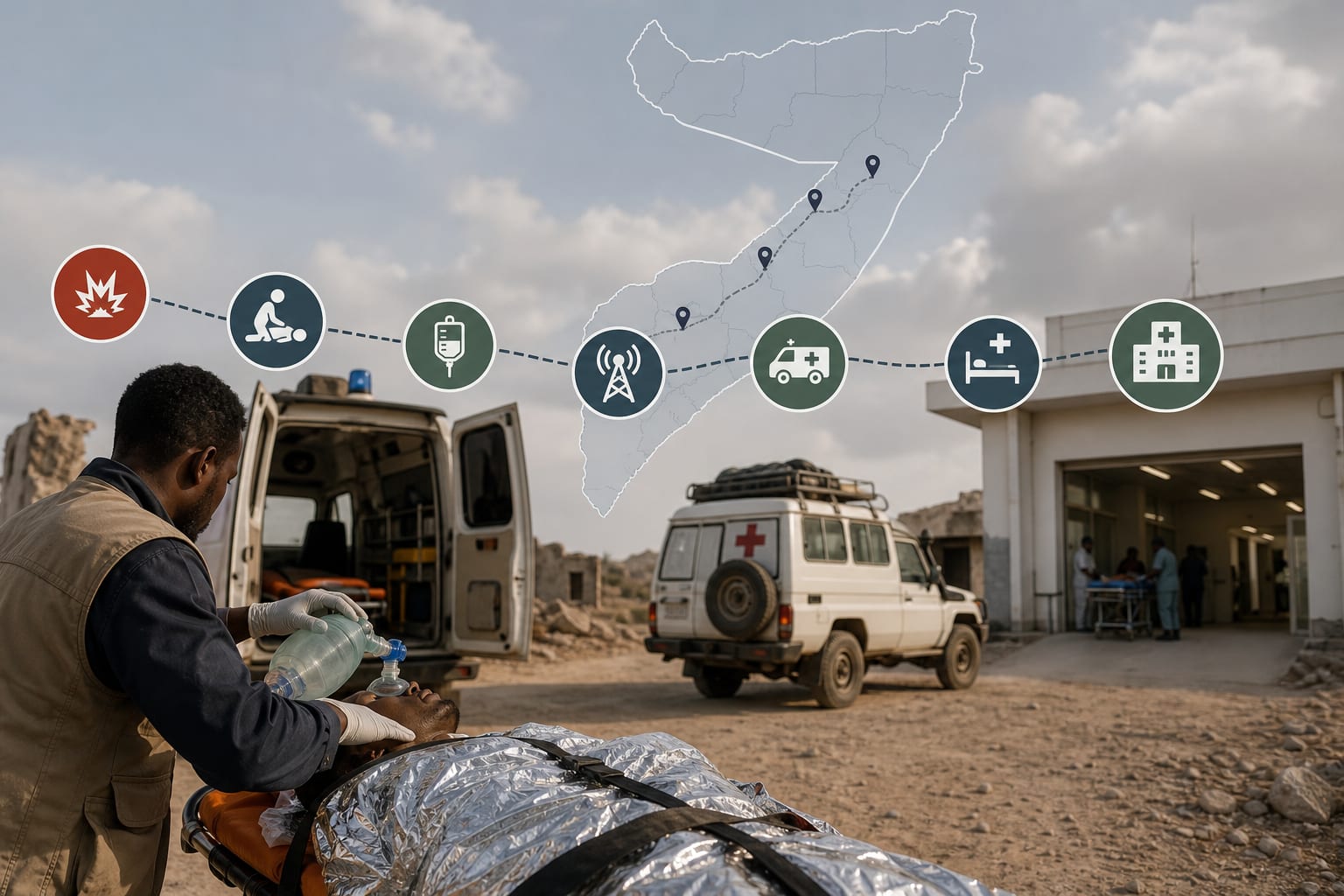
Referral Pathway Proposal: Proposed a conflict-adapted referral pathway integrating triage, stabilization, transport, pre-alert, and handover.
Operational Recommendations: Suggested using basic communication tools and contingency procedures for effective referrals in conflict settings.
Key Findings:
Over 80% of assessed hospitals in Somalia fell below the critical care readiness threshold.
Multiple interfacility transfers can delay care and risk patient deterioration.
A structured referral pathway can improve critical care delivery without sophisticated technology.
Interpretation:
The proposed model emphasizes the need for a systematic approach to critical care that begins before hospital arrival, particularly in conflict zones.
Limitations:
The study does not provide specific data on the effectiveness of the proposed referral pathway.
Challenges related to resource availability and training in conflict settings may hinder implementation.
Conclusion:
Improving the critical care pathway in Somalia requires collaboration among hospitals, ambulance services, and health authorities.