Integrated management of atrial fibrillation and comorbidities in the community: a generalist-specialist collaborative RCT and subgroup analysis - Summary - MDSpire
Conexiant’s news site is now MDSpire News. Learn more
Advertisement
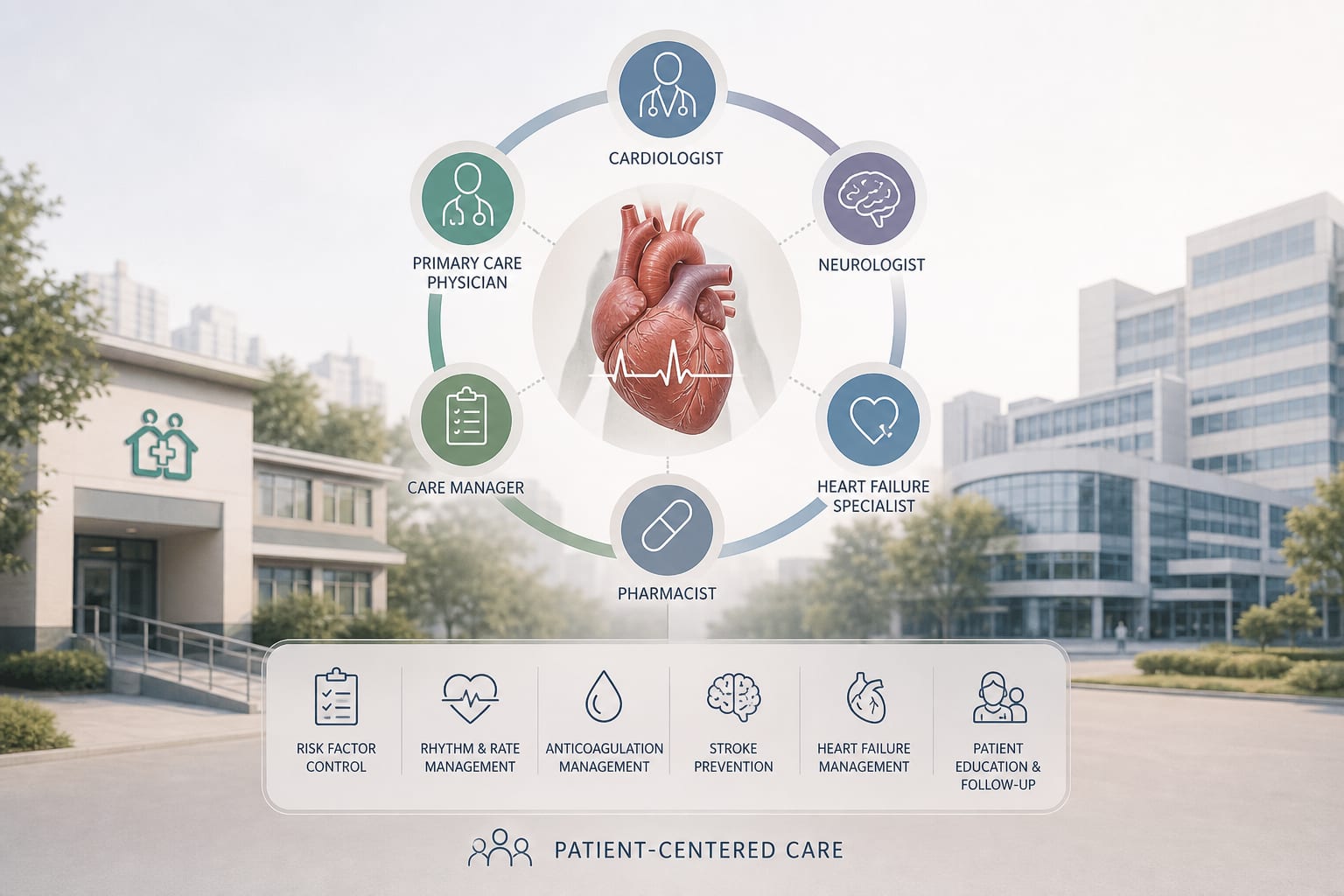
Collaborative Care Approach for Atrial Fibrillation and Associated Comorbidities in Community Settings: Results from a Randomized Controlled Trial and Subgroup Analysis
To develop, implement, and evaluate a community-based, patient-centered integrated care model for atrial fibrillation (AF) characterized by generalist-specialist collaboration and cardio-cerebrovascular co-management, and to examine whether its effectiveness varies across key patient subgroups.
Approach:
Study Design: A prospective, single-blind, randomized controlled trial was conducted with 160 patients with AF enrolled from community health centers.
Intervention: The intervention group received comprehensive management based on a collaborative framework between general practitioners and specialists, while the control group received routine chronic disease management.
Outcome Measures: Outcomes included attainment rates for BMI, blood pressure, blood glucose control, NT-proBNP levels, LVEF, medication use, and primary composite endpoint (heart failure or stroke).
Subgroup Analysis: Subgroup analyses were conducted based on age, sex, and CHA2DS2-VASc score.
Key Findings:
The intervention group had significantly higher attainment rates for BMI, blood pressure, and blood glucose control compared to the control group.
LVEF showed significant improvement in the intervention group, while NT-proBNP levels did not differ significantly between groups.
Standardized usage rates for anticoagulant and heart rate control medications were higher in the intervention group.
The incidence of the composite outcome (heart failure or stroke) was significantly lower in the intervention group.
No significant interactions were found in subgroup analyses for age, sex, or CHA2DS2-VASc score.
Interpretation:
The generalist-specialist collaborative integrated care model effectively improves risk factor control, cardiac function, and treatment standardization, and reduces major adverse cardiovascular events in community-dwelling AF patients.
Limitations:
The study was limited to a single community health service center.
The follow-up period was only 12 months.
Conclusion:
The benefits of the collaborative care model are consistent across age, sex, and comorbidity burden subgroups, supporting its broad applicability in primary care settings.
Investigators compared cardiovascular outcomes with tirzepatide and a placebo proxy in patients with type 2 diabetes and established atherosclerotic cardiovascular disease.