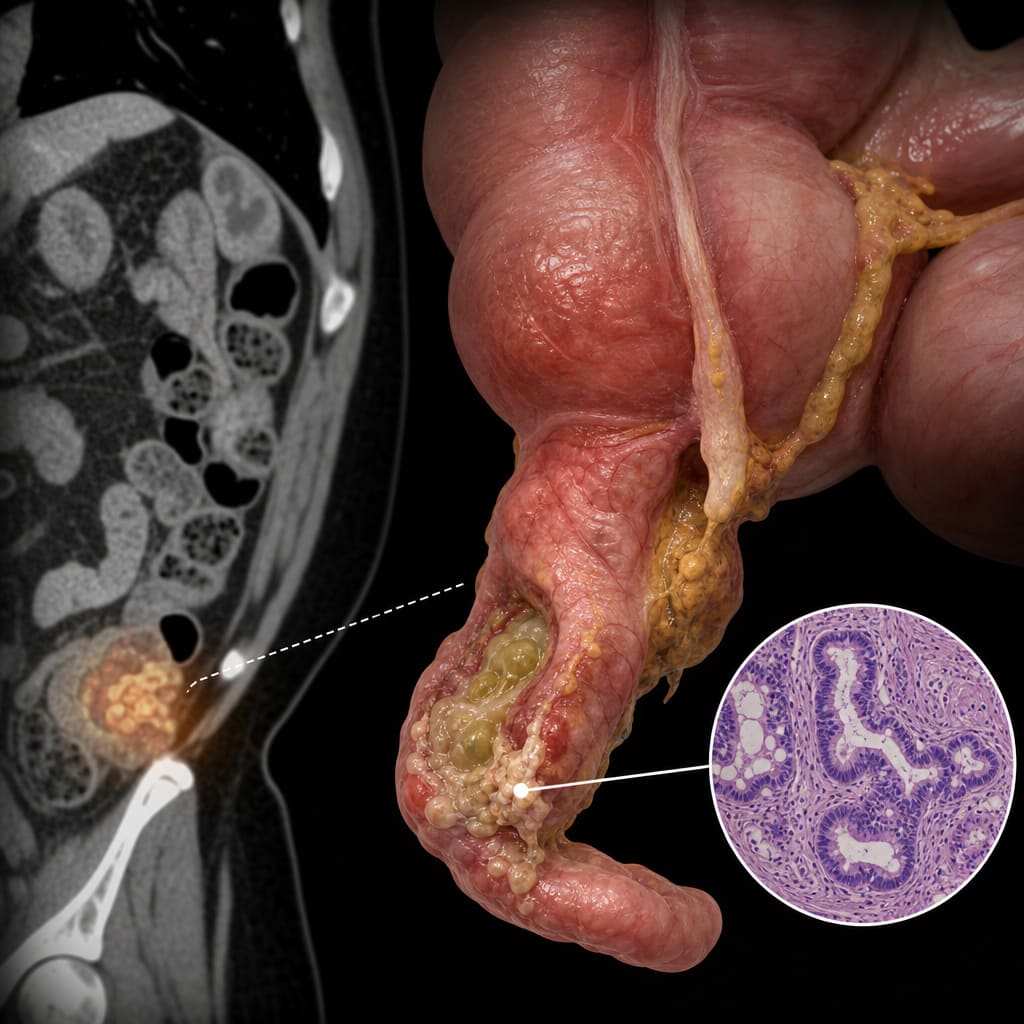
To enhance clinical awareness of ischemic colitis in preschool-aged children through a case study and narrative overview, highlighting its significance in timely diagnosis and management.
Key Findings:
Ischemic colitis is rare in preschool-aged children and often misdiagnosed due to atypical symptoms, which can lead to serious consequences.
The case demonstrated successful conservative management with bowel rest, intravenous fluids, and mucosal protective agents, achieving complete symptom resolution.
Histopathological examination confirmed chronic active colitis without signs of granulomas or ischemic necrosis, underscoring the need for careful evaluation.
Interpretation:
The favorable outcome from conservative management supports the notion that non-surgical intervention is effective for pediatric ischemic colitis, emphasizing the importance of early recognition and treatment.
Limitations:
The rarity of ischemic colitis in children limits the generalizability of findings and may introduce biases in the case study methodology.
The case study is based on a single patient, which may not represent broader pediatric populations, necessitating further research.
Conclusion:
Ischemic colitis should be considered in differential diagnoses for unexplained hematochezia in children, and increased clinical suspicion is essential for timely intervention; further research is needed to validate these findings.