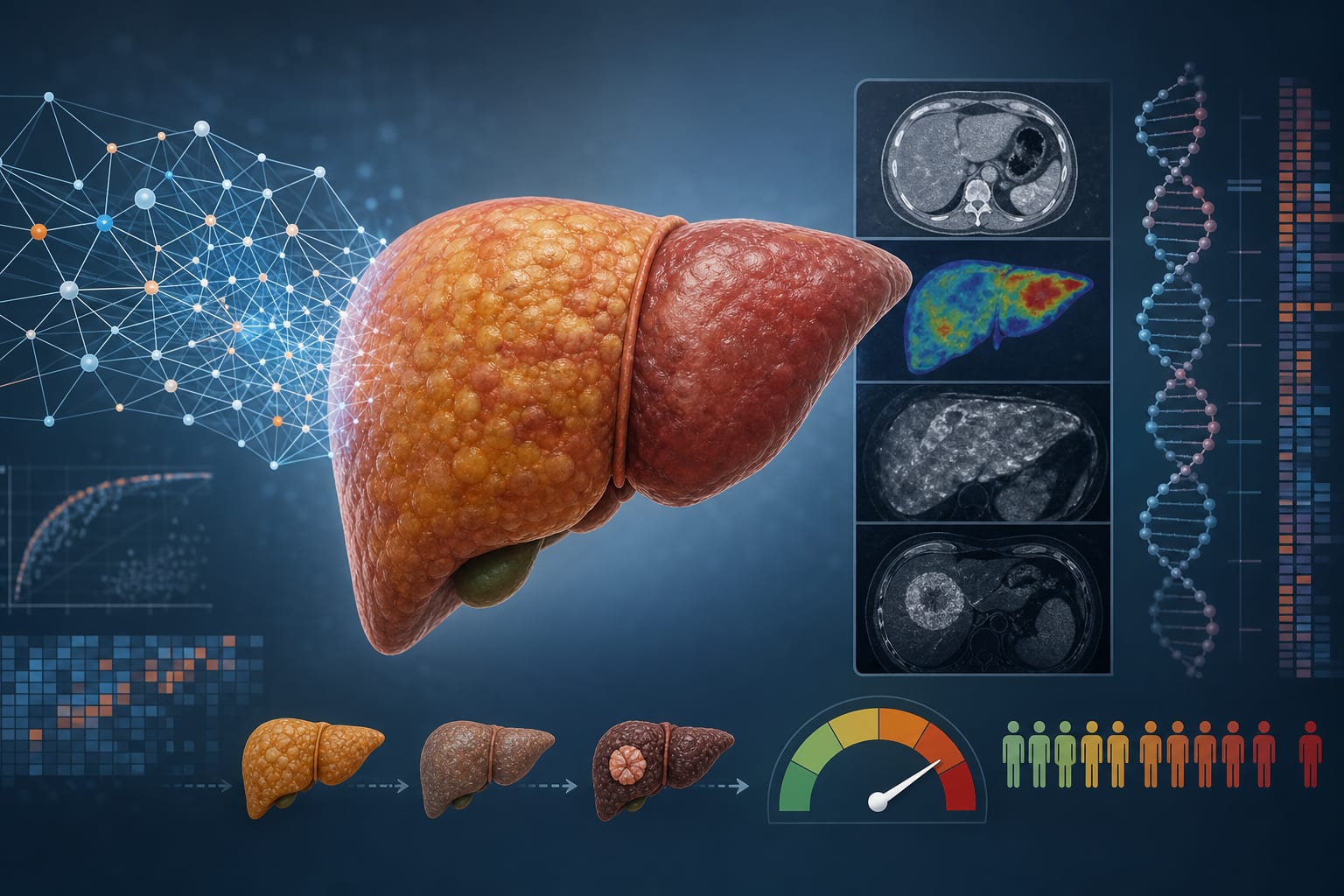
To evaluate the real-world feasibility of immune checkpoint inhibitor (ICI)-based retreatment in HER2-negative advanced gastric cancer and develop a biomarker framework to identify patients who may benefit from immunotherapy.
Approach:
Study Design: A multicenter retrospective study involving 144 patients who received ICI-based retreatment after progression on first-line ICI therapy.
Data Analysis: Utilized TCGA-STAD multi-omics data and differential expression analysis to identify immune/TME subtypes and candidate response-associated genes.
Machine Learning: Compared 14 machine-learning algorithms to construct the HNGCIscore, an exploratory immunotherapy-response classifier.
Validation: Performed protein-level validation of selected markers using immunohistochemistry.
Key Findings:
In the cross-line ICI continuation group, the objective response rate (ORR) was 6.85% and disease control rate (DCR) was 50.68%.
In the ICI rechallenge group, the ORR was 5.63% and DCR was 52.11%.
Median progression-free survival during retreatment (PFS2) was 3.0 months for cross-line and 5.5 months for rechallenge.
XGBoost algorithm provided the best discrimination among machine-learning models, leading to the development of HNGCIscore.
GBP1, IDO1, and CD72 protein expressions were higher in responders compared to non-responders.
Any-grade treatment-related adverse events occurred in 58.9% and 77.5% of patients in the cross-line and rechallenge groups, respectively.
Interpretation:
ICI-based retreatment shows measurable disease control and manageable toxicity in selected patients with HER2-negative advanced gastric cancer.
Limitations:
The study is retrospective and exploratory, requiring validation in larger prospective cohorts.
Findings are based on distinct real-world retreatment scenarios rather than randomized comparative cohorts.
Conclusion:
The TME-oriented HNGCIscore framework may help identify patients more likely to benefit from immunotherapy, but these findings are exploratory and require further validation.