To systematically review the latest clinical advancements, neural mechanisms, and challenges of closed-loop BCIs in post-stroke rehabilitation.
Approach:
Literature Search Strategy: A comprehensive search was conducted across multiple databases using specific MeSH terms and text words, focusing on studies involving stroke patients and closed-loop BCI systems.
Inclusion/Exclusion Criteria: Included studies had to involve stroke patients using closed-loop BCIs with clear reporting of rehabilitation-related outcomes. Excluded were animal studies and those using open-loop systems.
Qualitative Synthesis: Due to methodological heterogeneity, a qualitative synthesis was employed, introducing the Minimal Clinically Important Difference (MCID) to evaluate clinical benefits.
Key Findings:
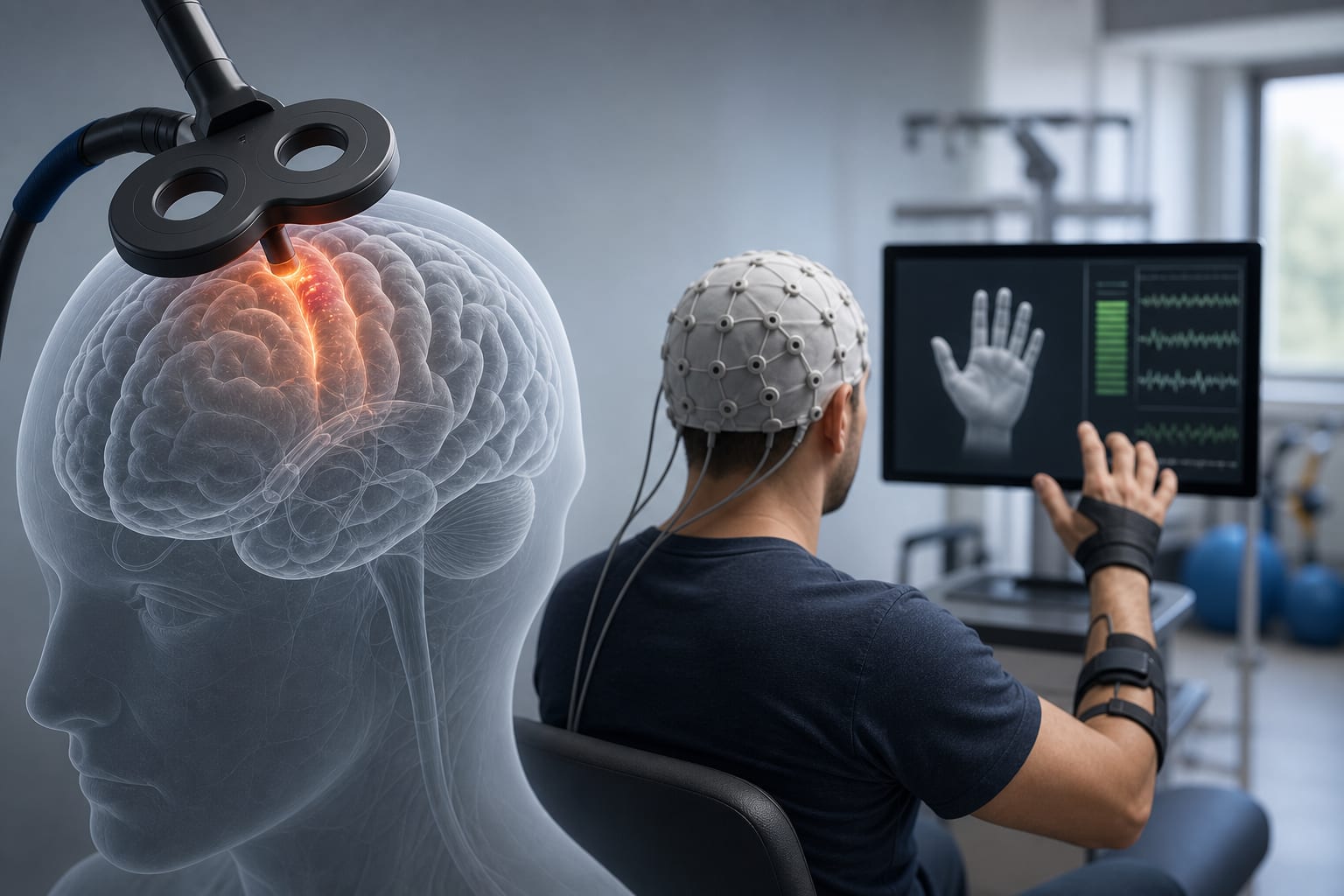
Closed-loop BCI technology demonstrates multi-dimensional application potential in stroke rehabilitation, promoting interhemispheric functional rebalancing and corticospinal tract remodeling.
Neurofeedback has shown initial efficacy in improving specific executive functions and attention, but the evidence is heterogeneous.
Adverse reactions to non-invasive devices primarily manifest as mild fatigue; for invasive systems, the incidence of device-related adverse events is approximately 5.6 per 1,000 device-days.
Interpretation:
Limitations:
High methodological heterogeneity in intervention paradigms and outcome measures across studies.
Limited quantitative meta-analysis due to variability in outcome assessments.