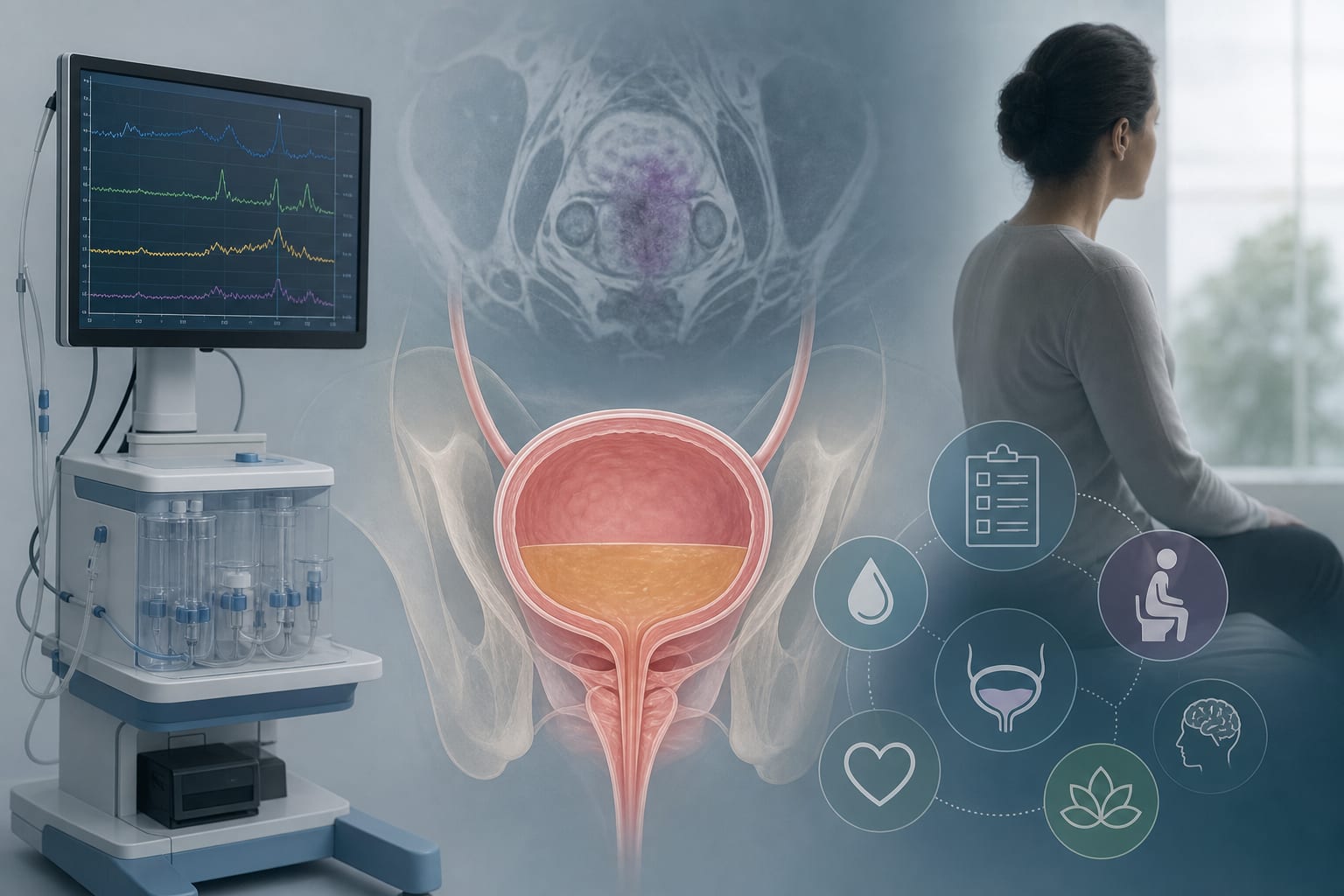
Multidimensional assessment of urinary dysfunction and quality of life after cervical cancer treatment: a multicenter study integrating urodynamics and patient-reported outcomes - Summary - MDSpire
Advertisement
Multidimensional assessment of urinary dysfunction and quality of life after cervical cancer treatment: a multicenter study integrating urodynamics and patient-reported outcomes
To evaluate urinary function, quality of life, sexual function, fatigue, and psychological well-being in women treated for cervical cancer, with particular emphasis on treatment modality and the integration of urodynamic findings with patient-reported outcomes.
Approach:
Study Design: Multicenter observational study including 132 women treated for cervical cancer, with assessments before treatment and follow-ups at 3, 6, and 9 months post-treatment.
Assessment Methods: Urodynamic testing and patient-reported outcomes using validated questionnaires (IIQ-7, UDI-6, SWLS, FACIT-F, HADS, FSFI).
Key Findings:
Urinary dysfunction was common and worsened over time, particularly in women receiving radiotherapy.
Objective findings indicated reduced bladder capacity and increased prevalence of detrusor overactivity in patients treated with radiotherapy.
Pain intensity, fatigue, anxiety, and depressive symptoms increased, while life satisfaction and sexual function declined, especially in patients receiving combined treatment.
Weak correlations were found between urodynamic findings and patient-reported outcomes.
Interpretation:
Cervical cancer treatment, particularly radiotherapy, is associated with persistent urinary dysfunction and declines in quality of life, fatigue, psychological well-being, and sexual function.
Limitations:
Limited sample size and potential selection bias.
Lack of long-term follow-up data beyond 9 months.
Conclusion:
Combining urodynamic assessments with patient-reported outcomes provides a comprehensive evaluation of treatment-related morbidity.
Dr. Michael Hassett of Dana-Farber Cancer Institute shared new findings showing deployment of eSyM, an ePRO-based, EHR-integrated symptom management program, was associated with statistically significant and potentially meaningful improvements in overall survival. Strategies to improve adoption of ePRO-based symptom management may be warranted.