Neutrophil-derived ROS as a rapid functional biomarker: diagnostic and prognostic performance of the Leukocyte ImmunoTest in infection and sepsis - Summary - MDSpire
Advertisement
Neutrophil-derived ROS as a rapid functional biomarker: diagnostic and prognostic performance of the Leukocyte ImmunoTest in infection and sepsis
To evaluate the diagnostic and prognostic performance of the Leukocyte ImmunoTest (LIT) in distinguishing infection and sepsis from non-infectious conditions.
Approach:
Study Design: A prospective observational study conducted in intensive care and internal medicine wards of a university hospital.
Participant Groups: Participants were categorized into three groups: inpatient controls (n=29), infection (n=47), and sepsis (n=106).
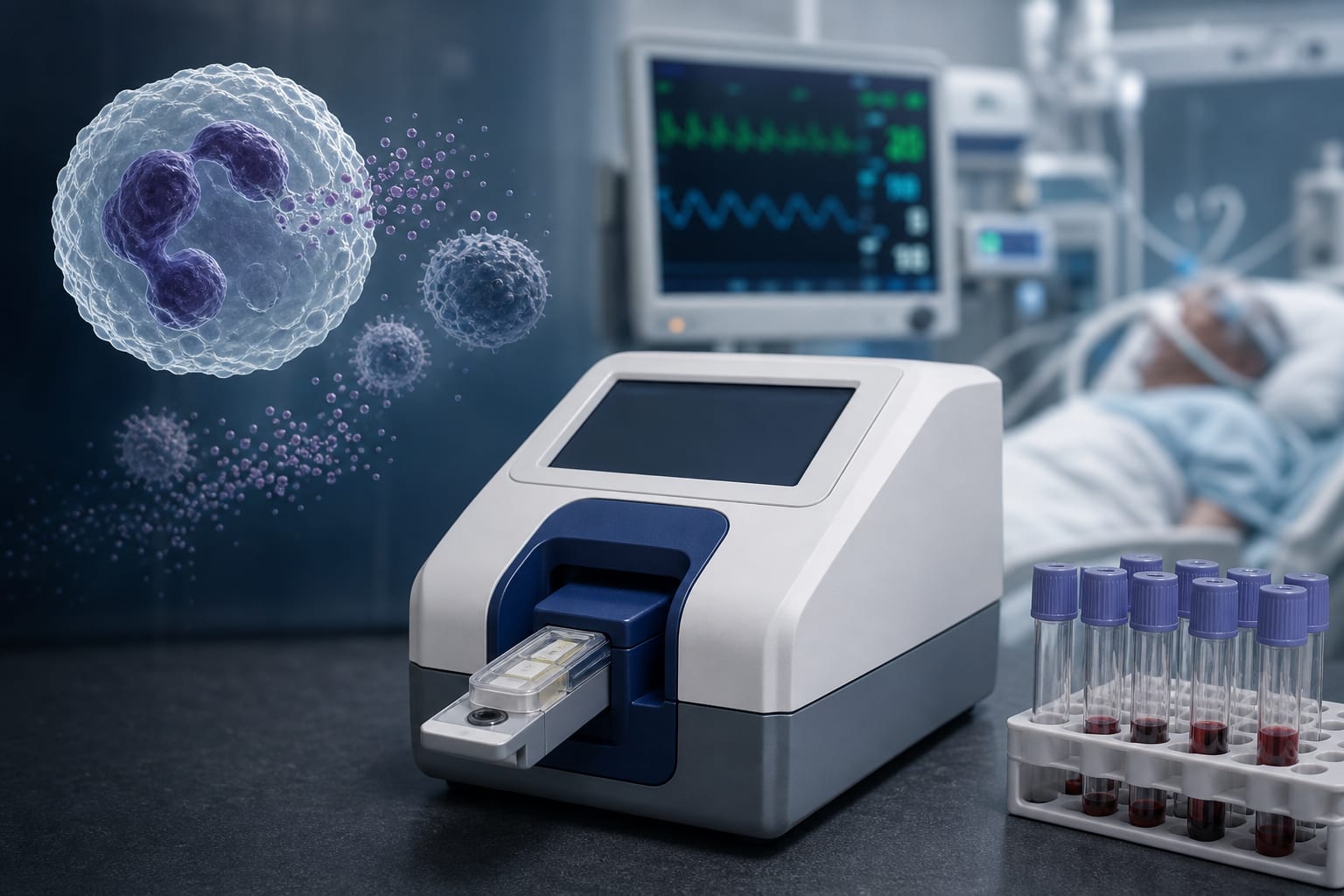
Testing Method: LIT was performed on whole blood samples, measuring neutrophil ROS production in relative light units (RLU).
Comparative Analysis: LIT results were compared with C-reactive protein (CRP), procalcitonin (PCT), white blood cell count (WBC), and neutrophil count (PMNL).
Performance Evaluation: Diagnostic performance was assessed using receiver operating characteristic (ROC) analysis.
Key Findings:
Median LIT values increased across diagnostic groups: 470 RLU in controls, 882 in infection, and 2466 in sepsis (adjusted p < 0.05).
LIT demonstrated good diagnostic performance for infection (AUC: 0.94, 95% CI: 0.911–0.968) and sepsis (AUC: 0.86, 95% CI: 0.795–0.915).
Higher LIT values were independently associated with increased mortality (HR:1.6, 95% CI:1.2–2.2; p=0.005).
Interpretation:
LIT is a rapid bedside immune assay that captures neutrophil activation dynamics.
Limitations:
The study was conducted in a single center, limiting generalizability.
Further multicenter studies are needed to confirm findings and clarify LIT's role in sepsis management.
Conclusion:
LIT may serve as a complementary biomarker in sepsis management, warranting further investigation.
Phase 3 ENHANCE-1 results showed higher composite clinical cure and microbiologic response rates with cefepime-zidebactam vs meropenem in hospitalized adults with complicated urinary tract infection or acute pyelonephritis.