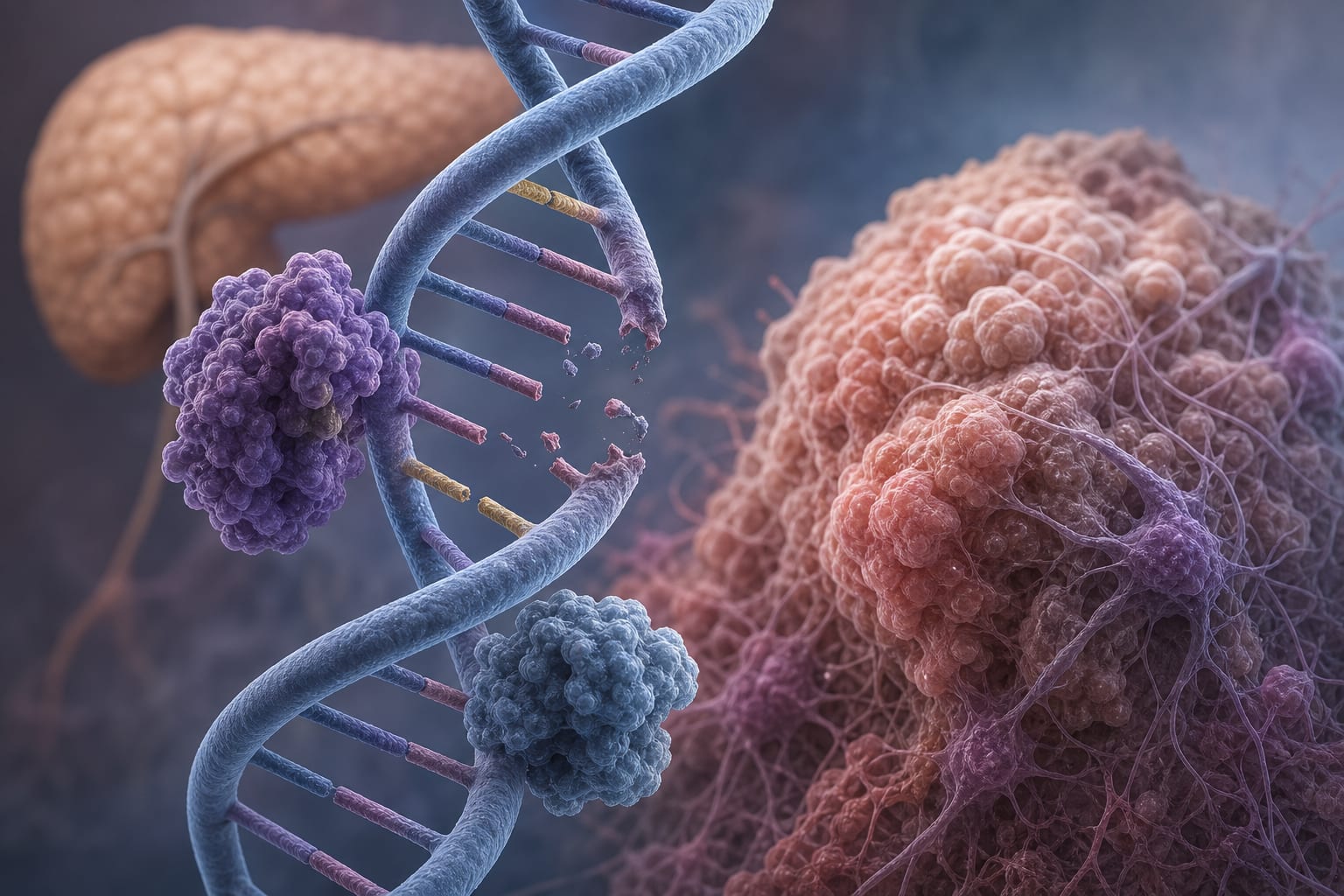
To systematically summarize the application and current clinical landscape of DNA damage response (DDR) targeted therapies in pancreatic cancer, emphasizing their potential to improve patient outcomes.
Approach:
Key Findings:
Single-agent DDR inhibitors face limitations including a narrow beneficiary population, resistance, and toxicities.
Combination strategies such as PAD/PADtal regimens and combinations with immunotherapy are emerging to enhance treatment efficacy.
Current challenges include limited accessibility, resistance mechanisms, the need for novel biomarkers, and the importance of adaptive trial designs.
Interpretation:
The review highlights a shift towards personalized, combination-based precision medicine in the treatment of pancreatic cancer using DDR-targeted therapies, addressing the urgent need for effective strategies.
Limitations:
Limited patient population that can benefit from current DDR inhibitors.
Challenges in overcoming resistance mechanisms, and the need for novel biomarkers and adaptive trial designs.
Conclusion:
The evolution of DDR-targeted therapy in pancreatic cancer is moving towards combination strategies to improve patient outcomes, emphasizing the need to address resistance mechanisms.