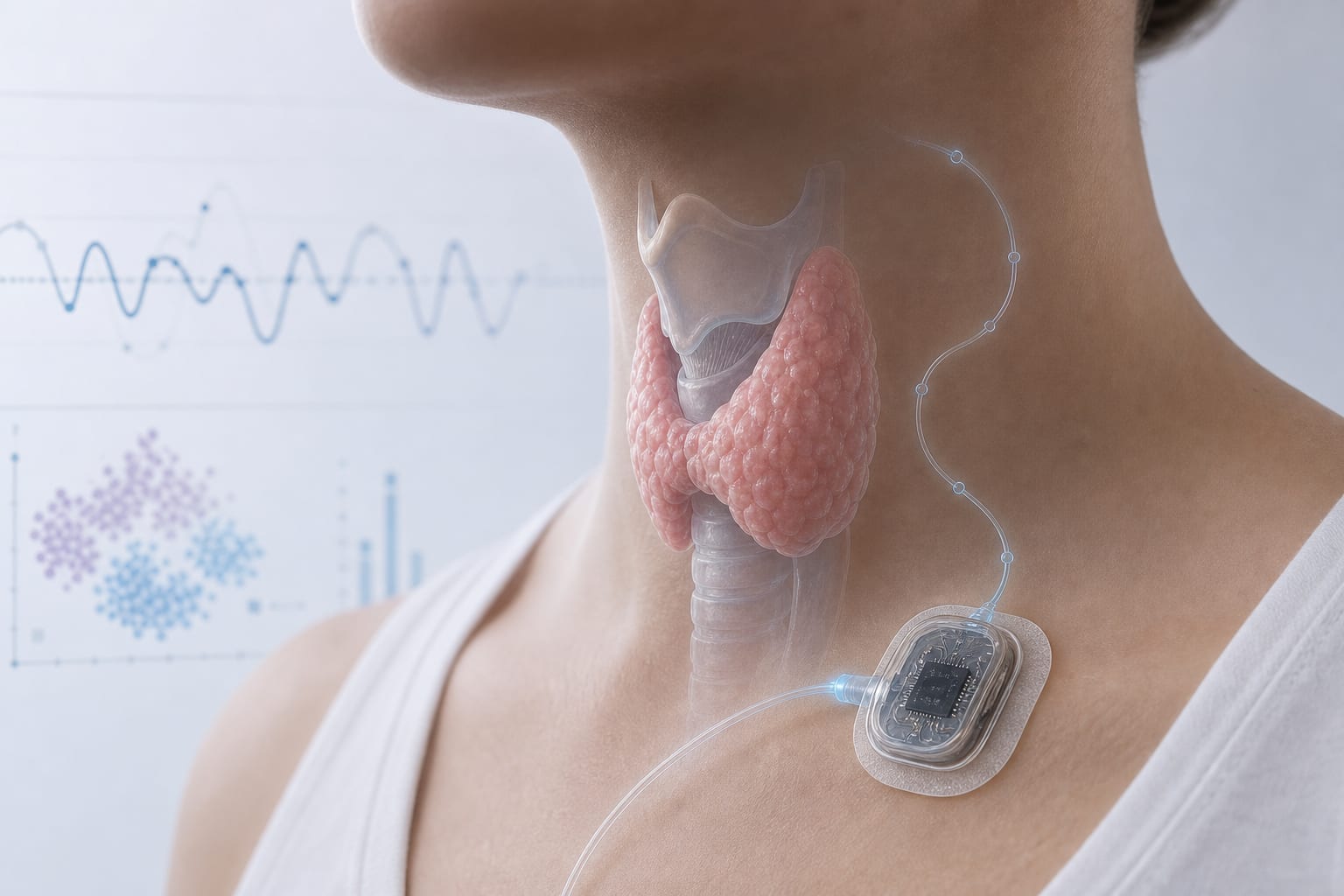
Smart thyroid-regulated drug delivery systems: a review of intelligent biosensor-integrated therapeutics for precision thyroxine replacement - Summary - MDSpire
Advertisement
Smart thyroid-regulated drug delivery systems: a review of intelligent biosensor-integrated therapeutics for precision thyroxine replacement
To review the limitations of current levothyroxine therapy, examine the clinical evidence for its underperformance, and propose an Intelligent Medicine Bot (IMB) for improved thyroid hormone replacement.
Approach:
Clinical Evidence Review: Examines the clinical evidence for why fixed-dose L-T4 therapy underperforms and its multi-organ consequences.
Technology Survey: Surveys maturing technologies such as thyroid hormone biosensors, machine learning dosing models, and miniaturized drug delivery devices, assessing their readiness levels.
Proposed Integration: Proposes the integration of these technologies into a closed-loop Intelligent Medicine Bot (IMB) and outlines the development pathway toward clinical translation, identifying key controversies and research gaps.
Key Findings:
Only about 34% of thyroidectomized patients achieve target euthyroidism post-operatively.
Levothyroxine therapy is characterized by significant variability in absorption and individual response.
Current fixed-dose L-T4 therapy fails to adapt to physiological changes in patients, leading to consequences such as cardiac arrhythmias, bone mineral loss, cognitive fog, metabolic disruption, and impaired fertility.
Interpretation:
The review highlights the need for a dynamic and responsive drug delivery system to better match the physiological regulation of thyroid hormones, addressing the limitations of current therapies.
Limitations:
Current dosing strategies do not account for individual variations in absorption and metabolism, leading to ineffective treatment.
Fixed dosing approaches are simplistic and often ineffective for diverse patient populations, resulting in significant variability in patient outcomes.
Conclusion:
The development of an Intelligent Medicine Bot could significantly improve the management of thyroid hormone replacement therapy by providing a more responsive and individualized treatment approach.