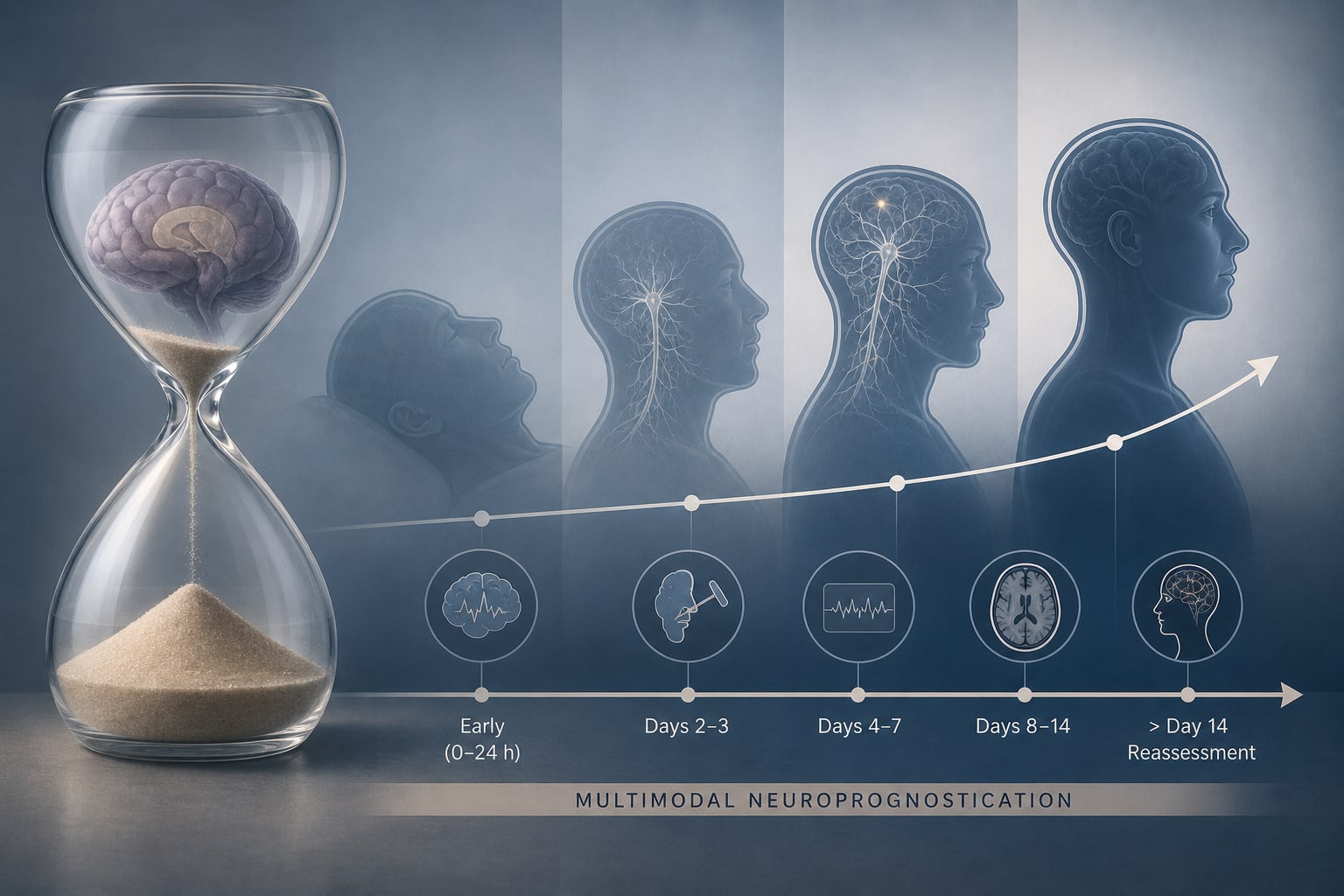
To analyze the implications of temporal factors and false-positive rates in neuroprognostic markers following cardiac arrest.
Approach:
Examination of Study Findings: The article discusses findings from Goetze et al.'s study on neuroprognostic markers, emphasizing the importance of timing in prognostication.
Analysis of False Positive Rates: It highlights how substituting initial assessments with later ones can significantly alter false-positive rates for various markers.
Prognostic Framework Development: The article suggests developing a dynamic prognostic framework that includes marker trajectories to improve clinical decision-making.
Key Findings:
False-positive rates for pupillary and corneal reflexes increased significantly when initial assessments were replaced with later ones.
No false positives were observed among patients with at least two unfavorable markers at day 14, but this does not confirm a true FPR below the prespecified 10% threshold.
The need for analyses anchored to time that examine marker trajectories is emphasized to improve bedside neuroprognostication.
Interpretation:
The findings indicate that the timing of neuroprognostic assessments is crucial and that relying solely on the presence of unfavorable markers may not be sufficient for reliable decision-making.
Limitations:
The study's findings may not adequately demonstrate that the true false-positive rate is below the prespecified threshold due to the small number of good outcomes.
The absence of observed false positives does not equate to a zero true false-positive rate, highlighting the need for caution in interpretation.
Conclusion:
A more nuanced approach to neuroprognostication that incorporates temporal factors and marker trajectories could enhance clinical decision-making following cardiac arrest.