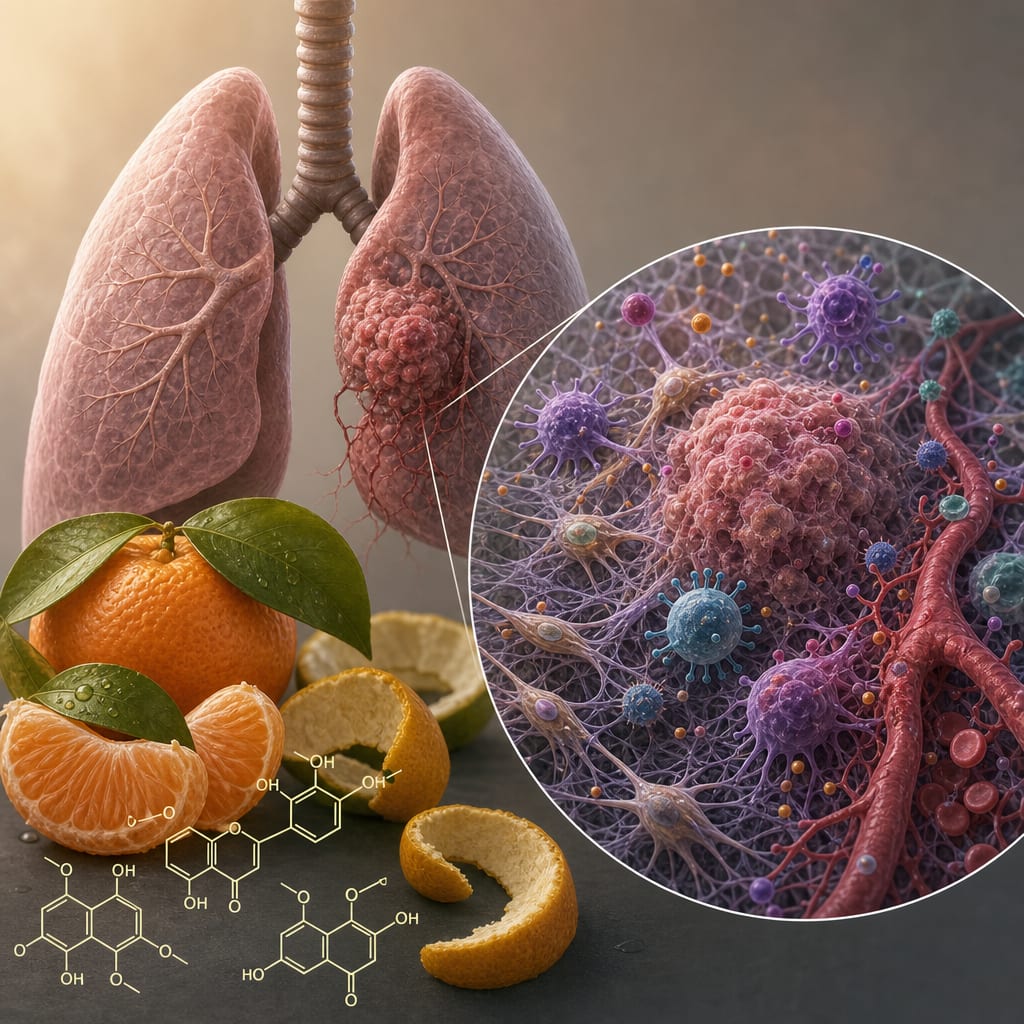
To review the modulation of the lung cancer tumor microenvironment (TME) by flavonoids from Citri Reticulatae Pericarpium (CRP) and discuss their potential clinical applications, including specific therapies and treatment strategies.
Key Findings:
CRP flavonoids can reshape the lung cancer TME by regulating oxidative stress and inflammation, with nobiletin showing strong anti-inflammatory and anti-cancer properties through specific pathways.
Emerging targets like ferroptosis and the cGAS-STING pathway are critical for future research, warranting further investigation into their mechanisms.
Interpretation:
The findings suggest that CRP flavonoids hold promise for enhancing lung cancer therapies by targeting the TME, though further comprehensive research is needed to fully understand their mechanisms and optimize clinical applications.
Limitations:
Most studies focus on single signaling pathways, lacking integrative mechanisms, which may limit the understanding of CRP flavonoids' full therapeutic potential.
Poor aqueous solubility and significant first-pass metabolism limit systemic exposure of core components, impacting their clinical efficacy.
Contradictory findings and methodological limitations exist in the current literature, necessitating more rigorous studies.
Conclusion:
CRP flavonoids present a potential avenue for lung cancer treatment by modulating the TME, but gaps in research and clinical translation need to be addressed, particularly in understanding multi-target interactions and improving bioavailability.